
NBIM quantifies the portfolio threat of economic fragmentation

A risk assessment of Norges Bank Investment Management’s portfolio reveals global economic fragmentation as the most threatening risk scenario analysed, with the fund’s latest stress test highlighting that alienated trade blocs, aggressive tariffs and restrictions on foreign investments could erase more than a third of the fund’s value.

The analysis, which was revealed as a part of NBIM’s 2025 results, puts a rare dollar figure on the deglobalisation trend. Typically investors look at the impact of deglobalisation qualitatively and in structural terms, not actual figures.

NBIM now stands at NOK 21 trillion ($2.2 trillion) and it estimates that the case of a “fragmented world” could wipe out 37 per cent or NOK 7.7 trillion ($803 billion) of its portfolio value.

In this “very severe” scenario, NBIM expects lower global growth and more market volatility, which could lead to less profitable companies and higher equity risk premiums as investors demand compensation for taking on more risks.

The number was calculated using a “hypothetical stress test” approach. The fund examined four risk events and quantified the potential impacts on the drivers of equity and fixed income returns: dividend growth, equity risk premium, inflation expectations, real rates, and term premium.

The projected asset prices, taking shifts of these factors into account are then compared to current market pricing to evaluate the portfolio impacts.

Sponsored Content

The second most damaging case for NBIM on a total fund level is a market correction around AI which would shave 35 per cent or NOK 7.4 trillion ($767 billion) off its portfolio. This is largely driven by possible losses in its equities portfolio – which stood at NOK 14.8 trillion ($1.5 trillion) at the time of analysis and could be halved should there be an AI sell-off –  but is slightly offset by potential gains in fixed income.

Most of the fund’s listed equities are passively managed due to its size, which means it has a mammoth exposure to technology stocks. NBIM has a $261.06 billion exposure to the Magnificent Seven stocks collectively.

If tech companies with their massive capex spend fail to deliver the productivity miracle investors are expecting can result in a “downward shift in expected cash and an increase in the equity risk premium, transmitted to broader markets through wealth effects and funding market stress,” the stress test report reads.

“In fixed income markets, central banks’ intervention would lower short-term rates while long-term rates decline somewhat on reduced growth expectations.”

The third risk, which is a regional government debt crisis, would slash 32 per cent or NOK 6.8 trillion ($691 billion) on a fund level. As governments in Europe and the US accumulate outsized sovereign debts, NBIM is seeing worrying signs around their ability to pay back investors especially given new defence spending commitments and pressure from politicians on central bank independence.

But the global impact of this scenario might be comparatively muted if the sovereign debt crisis is limited to one region, as some markets may even enjoy capital inflows as investors seek alternative safe haven assets. Still, it’s the factor likely to have the largest negative impact on NBIM’s NOK 5.6 trillion ($596 billion) fixed income and NOK 853 billion ($86 billion) real assets portfolios.

The final risk scenario that was stress tested was extreme weather events caused by climate change which NBIM believes would cut 20 per cent or NOK 4.2 trillion ($427 billion) of its fund value. The fund war gamed how its portfolio would respond if there was a significant drop in food production and disruption to supply chains, which would lead to higher inflation and lower growth, but concluded that any impact would be “moderate”.

While these tail risks are analysed as separate events, NBIM highlights that they could result in similar underlying macroeconomic shocks and create a vicious cycle of crises feeding into each other.

“A combination of these scenarios would produce larger losses than any single scenario considered separately,” the report reads.

“The most severe scenario this year is a ‘fragmented world’, which may turn even worse if it undermines AI investment returns.”

NBIM is also concerned that there are limited ways to hedge against some of these four scenarios. While gains in fixed income can offer some reprieve for the in the AI market correction scenario, the other three cases will hammer returns across all asset classes the fund allocates to due to higher discount rates and worsening growth prospects, the report says.

Overall, the fund returned 15.1 per cent in the year to December 2025 but underperformed the benchmark by 28 basis points.

Equities was the highest returning asset class (19 per cent) driven by its technology, financials and industrials exposure.

While real estate had a muted return (4.4 per cent), unlisted renewable energy infrastructure, which was approved as investments by the Norwegian Ministry of Finance in 2019, gained 18.1 per cent. It has been slow at deploying capital in the asset class but deputy CEO Trond Grande said it will now ramp up the pace with the build-out of a 20-person infrastructure team.

The biggest transaction in 2025 was a €4.5 billion ($5.2 billion) investment in Germany’s largest electricity transmission system operator TenneT Germany, and the infrastructure portfolio now stands at NOK 91 billion ($9.2 billion).

While the equities and fixed income portfolios contributed alpha (7 and 16 basis points respectively), real assets and asset allocation, where the fund was underweight equities, detracted 42 and 8 basis points respectively.

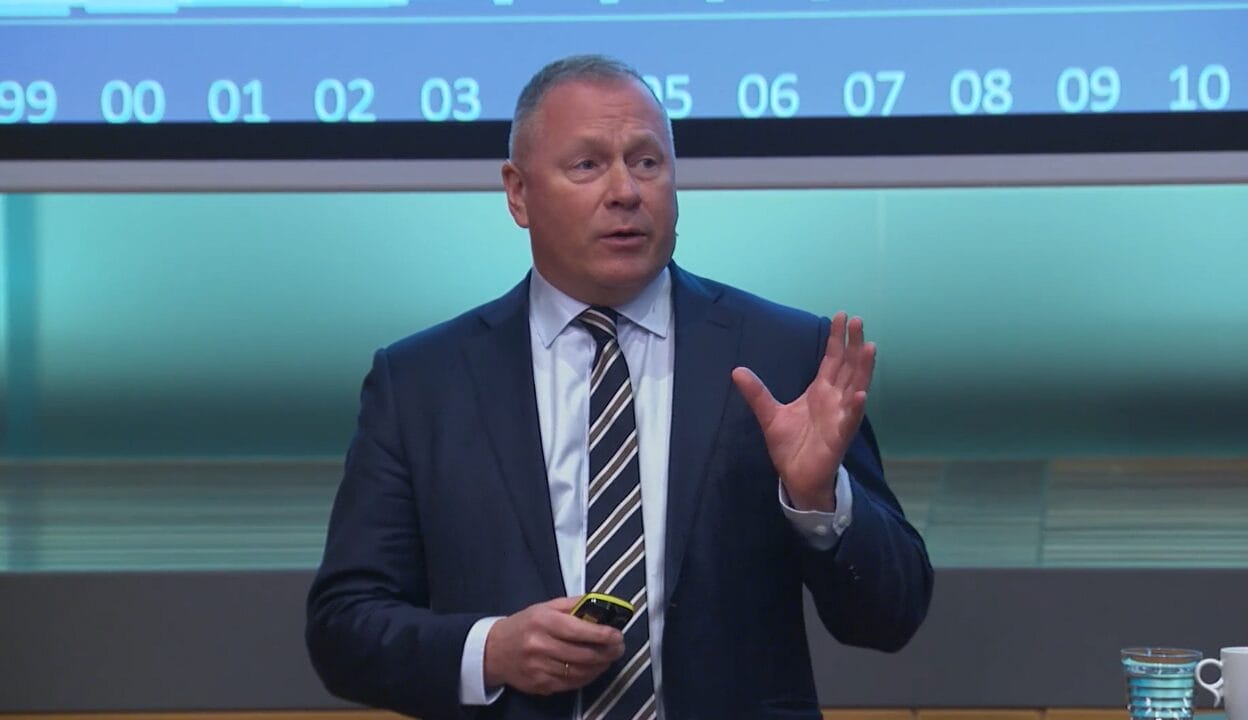
“The real estate [performance] numbers have been flat, but what we measure it against is a combination of stocks and bonds,” chief executive Nicolai Tangen said during a press conference.

Leave a Comment

La Caisse’s oil exit pays off as renewables portfolio pulls ahead of fossil fuels

La Caisse’s oil exit pays off as renewables portfolio pulls ahead of fossil fuels

Divesting from the oil sector has been a boon for La Caisse’s performance, as the Canadian pension giant says its energy investments have earned billions in value-add compared to the benchmark since the inception of its climate strategy. Head of sustainability Bertrand Millot unpacks the fund’s approach in an interview with Top1000funds.com.

Sort content by

Emerging markets vulnerable

Investors have pulled $83 billion from emerging markets since the beginning of the COVID-19 crisis, the largest capital outflow ever recorded, and the IMF and the World Bank are calling on G20 countries to show relief in dealing with their emerging market counterparts.

CIOs ride the corona storm

Even for long term investors who pride themselves on the big picture and horizons stretching far into the future, the unprecedented change of recent weeks is hair-raising. Enough liquidity on hand to take advantage of buying opportunities once they arise and comfortably pay benefits is crucial. We look at the strategies of investors around the world in response to the market conditions.

Experts call for price on carbon, now

Last Thursday, March 12 the US Senate Democrats’ Special Committee on the Climate Crisis heard from industry experts, including Bob Litterman and Frederic Samama, on the economic risks of climate change. They all pushed for a price on carbon and for action, now.

PFA navigates corona storm

In the six months Kasper Lorenzen has been CIO of the Danish fund, PFA, he has made moves in investment and decision-making that have resulted in the fund weathering the short-term coronavirus storm. He is however, wary of the long-term structural changes particularly to patterns of globalisation.

Investing in the 2020s

Change is on the horizon, and where there is change, there is disruption, Mercer’s global strategic research director advises investors to be clear on timeframes, be prepared for business as unusual and position portfolios for climate change. The next decade is likely to prove more challenging — now is not the time to give up on diversification.

Recession likely in six months: index

There is a 70 per cent chance a recession will occur in the next six months according to a new index measuring the state of the economy that uses a statistical method first applied to analysing human skulls.

Previous




