
The end of risk management: What finance can learn from climate science

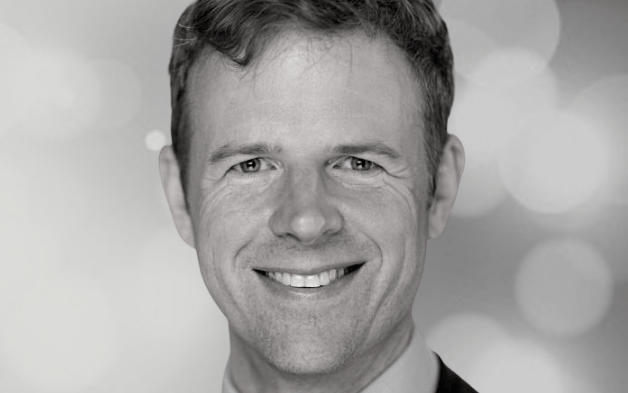
In this Fiduciary Investors Series podcast Amanda White talks to Professor Cameron Hepburn,  Professor of Environmental Economics, and the director of the economics sustainability programme, at the University of Oxford.

They discuss: some of the more recent energy innovations; and the ideal price on carbon; as well as what is needed to move to a net-zero carbon economy.

Importantly Professor Hepburn discusses the role of finance and the need to recognise that both the finance and climate environments are complex adaptive systems, and that backward-looking analysis is not appropriate for adequate risk management.

“We need to get out of the old paradigms,” he says. “Even the concept of the Black Swan, doesn’t really help us to capture the fact these distributions are not bell shaped, or fat tailed or non-normal distributions. These are interactions between parts of the economy that are shifting the distribution altogether. So these things that are supposed to be a 1 in 10,000 event become the mean because you’ve shifted the distribution.”

He ends by offering some advice to institutional investors on how they should be including climate risks and opportunities into their investment decision-making, and the best way of doing that.

Sponsored Content

About Cameron Hepburn
Cameron Hepburn is the Director of the Economics of Sustainability Programme, based at the Institute for New Economic Thinking at the Oxford Martin School. He is also Director and Professor of Environmental Economics at the Smith School of Enterprise and the Environment, a Fellow at New College, Oxford, and a Professorial Research Fellow at the Grantham Research Institute at the London School of Economics.He has published widely on energy, resources and environmental challenges across a range of disciplines, including engineering, biology, philosophy, economics, public policy and law, drawing on his degrees in law, engineering and doctorate in economics. He is on the editorial board of Environmental Research Letters and is the managing editor of the Oxford Review of Economic Policy. Cameron’s research is often referred to in the printed press, and he has been interviewed on television and radio in many countries.Cameron provides advice on energy and climate policy to government ministers (e.g. China, India, UK and Australia) and international institutions (e.g. OECD, UN organisations) around the world. Cameron began his professional life with McKinsey, and has since had an entrepreneurial career, co-founding three successful businesses – Aurora Energy Research, Climate Bridge and Vivid Economics – and investing in several other social enterprises, such as Purpose and Apolitical. He also serves as a trustee for Schola Cantorum of Oxford.

About Amanda White
Amanda White is responsible for the content across all Conexus Financial’s institutional media and events. In addition to being the editor of Top1000funds.com, she is responsible for directing the global bi-annual Fiduciary Investors Symposium which challenges global investors on investment best practice and aims to place the responsibilities of investors in wider societal, and political contexts.  She holds a Bachelor of Economics and a Masters of Art in Journalism and has been an investment journalist for more than 25 years. She is currently a fellow in the Finance Leaders Fellowship at the Aspen Institute. The two-year program seeks to develop the next generation of responsible, community-spirited leaders in the global finance industry

What is the Fiduciary Investors series?
The COVID-19 global health and economic crisis has highlighted the need for leadership and capital to be urgently targeted towards the vulnerabilities in the global economy.
Through conversations with academics and asset owners, the Fiduciary Investors Podcast Series is a forward looking examination of the changing dynamics in the global economy, what a sustainable recovery looks like and how investors are positioning their portfolios.

The much-loved events, the Fiduciary Investors Symposiums, act as an advocate for fiduciary capitalism and the power of asset owners to change the nature of the investment industry, including addressing principal/agent and fee problems, stabilising financial markets, and directing capital for the betterment of society and the environment. Like the event series, the podcast series, tackles the challenges long-term investors face in an environment of disruption,  and asks investors to think differently about how they make decisions and allocate capital.


For further reading go to The Smith School of Enterprise and the Environment, Oxford University

Leave a Comment

Why Asian equities’ growth will outlast the AI-driven semiconductor cycle

Why Asian equities’ growth will outlast the AI-driven semiconductor cycle

In the latest episode of the Fiduciary Investors Series, Liao spoke with Top1000funds.com Asia Pacific correspondent Darcy Song on why the convergence of innovation, demographics and improving shareholder returns makes Asian equities an increasingly compelling diversification trade for asset owners navigating a geopolitically fractured world.

Sort content by

Treasurer Steiner on Oregon’s private equity future

Top1000funds.com editor Amanda White speaks to Oregon State Treasurer, Elizabeth Steiner, about the future role and expectations of private equity, how a maturing of the asset class puts pressure on returns, and the private/ public asset mix in the fund’s four-yearly asset allocation review which has just begun.

CalPERS’ Stephen Gilmore on the total portfolio approach

Listen to the detailed interview between Top1000funds.com editor Amanda White and CalPERS' CIO Stephen Gilmore to gain insights into how a TPA mindset has the potential, through a shared focus on the total portfolio, to add value, simplify accountability and open new opportunities for investments.

The world in flux and Trump’s role in a new equilibrium

The second Trump administration has so far brought a lot of things: market shocks, volatile trade policies, and turbulent foreign relationships. But beyond the chaos, renowned geopolitics expert Stephen Kotkin says Trump has an unwitting role to help the world rebalance and reach a “new equilibrium” in the global order.

Why Asia is the future

In the midst of the great power rivalry between the US and China, “we need to carve out a future that works well for all of us” says National University of Singapore’s Danny Quah, in a talk examining the global economy and the role of Asia. Listen here.

Reversal of investment themes demands investors change their assumptions

Investors are currently facing the end of uncertainty around assumptions they have made for decades, and need to shore up their portfolios with greater inflation protection, more active management, and by fostering innovation, according to chief strategist at the Investment Management Corporation of Ontario, Nick Chamie who spoke to Amanda White in the Fiduciary Investors Series

Mandates need innovating to encompass sustainable investing

As carbon emissions continue to rise investors need to innovate on the nature of investment mandates says Colin le Duc, a founding partner of Generation Investment Management. He says real world impact is going in the wrong direction, even though sustainable investing is booming, and the credibility of transition plans is under scrutiny.   What



