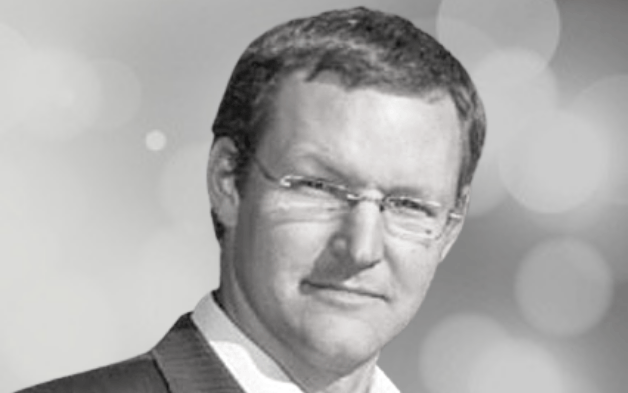

Improving alternative investment industry practices: John Claisse

In this Fiduciary Investors Series podcast, Amanda White speaks with John Claisse, the chief executive of Albourne Partners. Albourne, which is a leading consultant focused on alternative investments, has been advocating for better practice within the alternatives industry for many years and the discussion covers fee discovery and transparency; new initiatives around diversity and inclusion; and how alternative investment managers can incorporate ESG.

About John Claisse
John Claisse joined Albourne in July 1996, relocated from London to San Francisco in July 2013 and became Albourne Group CEO in August 2015. He is an equity partner and member of Albourne’s executive committee and also chairs the firm’s corporate planning council, which comprises Albourne’s function and region heads. Claisse helped develop the firm’s proprietary risk analytics and was formerly the senior analyst for quantitative equity strategies and multi-strategy hedge funds. He remains a portfolio analyst working with several public and corporate plans, large endowments and foundations. He holds a first class Mathematics Degree and a PhD from Sussex University.
Albourne is an independent advisory firm focused on hedge funds, private equity, real assets, real estate and dynamic beta. Founded in 1994, Albourne has over 250 clients with over $550 billion invested directly in alternative investments.

About Amanda White
Amanda White is responsible for the content across all Conexus Financial’s institutional media and events. In addition to being the editor of Top1000funds.com, she is responsible for directing the global bi-annual Fiduciary Investors Symposium which challenges global investors on investment best practice and aims to place the responsibilities of investors in wider societal, and political contexts.  She holds a Bachelor of Economics and a Masters of Art in Journalism and has been an investment journalist for more than 25 years. She is currently a fellow in the Finance Leaders Fellowship at the Aspen Institute. The two-year program seeks to develop the next generation of responsible, community-spirited leaders in the global finance industry.

What is the Fiduciary Investors series?
The much-loved events, the Fiduciary Investors Symposiums, act as an advocate for fiduciary capitalism and the power of asset owners to change the nature of the investment industry, including addressing principal/agent and fee problems, stabilising financial markets, and directing capital for the betterment of society and the environment. Like the event series, the podcast series, tackles the challenges long-term investors face in an environment of disruption,  and asks investors to think differently about how they make decisions and allocate capital.

Sponsored Content

Leave a Comment

Why Asian equities’ growth will outlast the AI-driven semiconductor cycle

Why Asian equities’ growth will outlast the AI-driven semiconductor cycle

In the latest episode of the Fiduciary Investors Series, Liao spoke with Top1000funds.com Asia Pacific correspondent Darcy Song on why the convergence of innovation, demographics and improving shareholder returns makes Asian equities an increasingly compelling diversification trade for asset owners navigating a geopolitically fractured world.

Sort content by

CPP Investments’ COVID journey

In this Fiduciary Investors Series podcast Amanda White talks with Geoffrey Rubin, chief investment strategist at CPP Investments, which manages the investments of Canada’s largest pension fund with about C$410 billion of assets. They discuss scenario planning, the benefits of total portfolio management, rebalancing and liquidity as well as the forward-looking view of the global

The end of risk management: What finance can learn from climate science

In this Fiduciary Investors Series podcast Amanda White talks to Professor Cameron Hepburn,  Professor of Environmental Economics and the director of the economics sustainability programme at the University of Oxford.

Coronavirus: Is this the end of globalisation?

A conversation with Stephen Kotkin, Professor in History and International Affairs, Princeton University.

Previous



