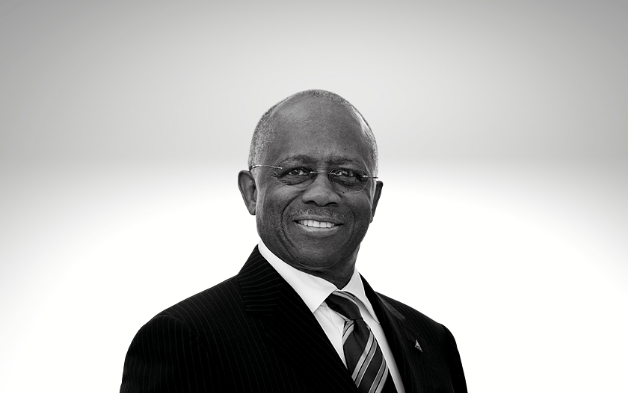

CalPERS’ chair leaves legacy of responsibility

Henry Jones, who will resign as president of the CalPERS board on January 21, leaves behind a new mindset at the fund of tackling big systemic issues.

In his time on the board Jones, who is resigning due to health issues, oversaw huge growth and stability in the AUM of the fund as well a shift to focusing on big strategic issues pertinent to its member base including issues of sustainability.

During Jones’ time on the board the fund grew from a low of $179 billion during the global financial crisis in 2019 to just over $500 billion, a milestone it reached in December.

Jones was the first African American president of CalPERS, a position he is very proud of.

He talked openly with www.top1000funds.com about his own experience of racism and the need for investors to tackle race issues in their investments.

Last year he said CalPERS has a moral imperative to confront racism and economic inequality.

Sponsored Content

In a Sustainability in a time of crisis podcast Jones discusses how CalPERS, the largest pension fund in the United States, is tackling these issues internally and through its investment allocations, and also how the industry can collectively change the status quo processes and behaviours around systemic inequality.

“Mapping racism as a systemic risk means we should track this across the portfolio, but right now we don’t have the tools or the data. It is not unlike where we were on climate as a systemic risk, we didn’t have the information and had to build a data model and action plan with our partners. We need to do that with addressing racism and have commissioned research on this,” he says.

In August 2016 the CalPERS investment committee adopted the fund’s sustainable investment strategic plan which among other things identified corporate board diversity and inclusion as a strategic initiative.

Over the past few years CalPERS has engaged 733 companies on the lack of diversity on its boards and since 2017, 53 per cent of those companies have added a diverse director to their boards.

In his resignation letter to the board on the weekend Jones said: “It has been the honor of a lifetime to serve on the CalPERS Board of Administration these past 14 years especially as the only elected African American Board member and the first African American elected president. I have been completely committed to the community of retirees throughout the state of California as well as to the members of CalPERS; and, to ensuring that CalPERS practices the highest ethical standards in protecting and building on the investments and assets of our members.”

Jones served four four-year terms on the CalPERS’ board including two terms as president and three years as vice president. His last day on the board is this Friday.

Jones was previously chief financial officer at the Los Angeles Unified School District where he oversaw LAUSD’s $7 billion annual budget. He retired in 1998.

Jones was also appointed chair of the International Corporate Governance Network in September last year.


Leave a Comment

Why traditional investment committees can amplify group biases

Why traditional investment committees can amplify group biases

Investment committee meetings, a governance cornerstone at every asset owner organisation, run the risk of amplifying group biases and social dynamics, and can push the IC towards recommending more extreme investment positions collectively than the average of their individual views. Bernhard Scherer, head of portfolio implementation at ADIA, unpacks the thesis in a new paper.

Sort content by

North Carolina TSERS: Taxpayers deserve better in governance overhaul too

Ditching the sole trustee for a five-person board will help bring North Carolina’s pension funds out of enduringly weak performance by encouraging risk taking, says treasurer Brad Briner, whose experience includes managing Mike Bloomberg’s money. Sarah Rundell spoke to the treasurer about the new governance and investment overhaul.

Dismantling DEI: Investors weigh the risks

Six months on from President Trump's executive order to dismantle once mainstream DEI programs, institutional investors reflect on concerns regarding returns, recruitment and engagement. Top1000funds.com surveys a variety of views amongst the disruption arguing it is an opportunity to reframe the issue and articulate what DEI means.

Lessons in governance at Alaska’s APFC

At a recent board meeting, trustees at Alaska's sovereign wealth fund APFC garnered insights on governance from recent turmoil at PSERS' and Ohio State Teachers.

Behind AustralianSuper’s global expansion

London-based AustralianSuper deputy CIO Damian Moloney oversees the global expansion plans of Australia’s largest superannuation fund. While a global presence has clear benefits for the fund and its members, Moloney’s advice to others contemplating the same is to plan extensively and build early.

Guardians of the Future: The evolution of New Zealand Super

New Zealand Super’s new chief executive Jo Townsend inherits an organisation with a strong culture but facing some challenges posed by rapid growth. An internal project aims to reduce complexity and focus on simplicity for a fund already rated by WTW as operating at global best practice levels.

Alecta doubles down on governance, risk management and culture

Sweden’s largest pension fund, the $126 billion Alecta, has spent much of the last year continuing to work on improving governance, risk management, competence and culture in the wake of a $2 billion loss in 2023 attributable to investments in US regional banks, including Silicon Valley Bank, turning sour.



