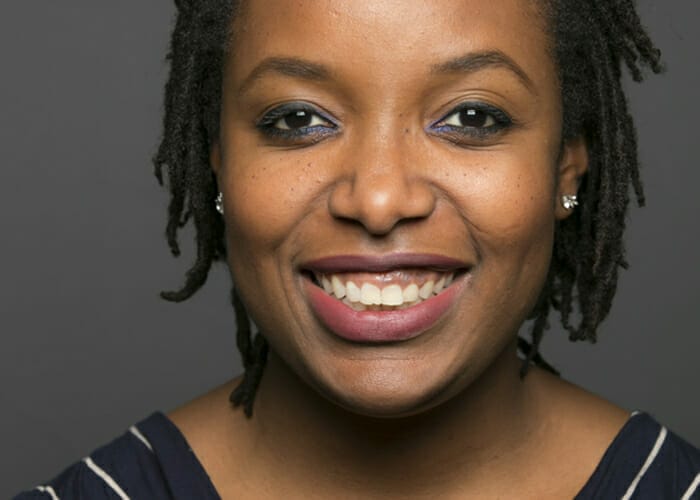

Exploring big ideas with Marisa Hall

Pension funds need a generation of investment professionals that are willing to be brave and less conservative than their predecessors if they are to move to the systems level perspectives on investment that is required for better returns and societal outcomes, according to the co-head of the Thinking Ahead Institute, Marisa Hall.

ESG 3.0 will require systems level thinking on investment, and intentionality to work on the system, rather than just ESG portfolio integration, she said in a Conexus Institute Exploring Big Ideas webinar.

The Thinking Ahead Institute encourages both bottom up and top down thinking to solve systemic problems and let “a thousand flowers bloom”. Its aim is to mobilise capital for a sustainable future and it sees merit in seeing the investment industry and its connected parts as a system

“We are working on ESG 3.0 around the need for systems level investing and systems perspectives on investment. As an investor you can work directly on the system which leads into better and stronger investment results,” Hall says. “What we are talking about is instead of having ESG in the portfolio we are calling for greater intentionality to work on the system, and then get additionality and value creation within your portfolio.”

She says to effect change leading pension funds are executing through multiple touch points including capital allocation and strategic tilting, engagement, bottom-up security selection and top-down systems level engagement such as influencing industry groups, looking at mandate design, longer-term time horizons, governance and organisational design.

“Pension funds need a holistic approach and a mindset that focuses on intentionality to change the system,” she says. “They need to do more than just delivering pensions for members. Delivering what’s best for your members and the sole purpose test is linked to doing good for society and the environment and maintaining that social licence to operate. How do you achieve that? You need a generation of investment professionals willing to be brave and less conservative.”

Sponsored Content

Hall says another “big idea” the Thinking Ahead Institute is exploring is the concept of value creation, and translating the measurement of ESG to what it really means to create value for different stakeholders.

“We have been working on this concept of value creation. What is value and who are you creating value for? One of key concepts is that by creating value for a particular group of stakeholders you may be destroying it for another group. Profit for shareholders and externalities an example of that,” she says. “This is what we talk about the concept of 3D investing – risk, return and impact. Every investment decision we make has an impact on society it’s just in the past we haven’t put a weighting on that. We are not just talking about impact investing but the impact of investing, of our everyday decisions.”

She says when asset owners, managers and corporates talk about creating value for clients there needs to be a fuller description of what that means, and that starts with defining the time horizon.

“For example, if you are looking at a benchmark over a year then some of that value has a risk of being reversed. We need to be more transparent about this.”

She called on investors to look at ways to translate granular ESG measurements into value creation for stakeholders, and is an advocate of integrated reporting.

“It’s the concept of double materiality, firms needing to look at how they report on financial metrics and how they create long term enterprise value creation for investors, and balancing that with the impact on people and planet. Beliefs are really important in that.”

She encouraged pension funds to think about their time horizon and the fact that sustainability and long-term value creation potentially requires tradeoffs between current and future members.

“Your role as an asset owner is to understand those tradeoffs and balance intergenerational risks and needs, and that is tied into your role as a fiduciary and also your own career risks.”

Leave a Comment

Pension funds confront the question of who owns AI

Pension funds confront the question of who owns AI

As the use of AI within asset owners evolves, organisations are grappling with the governance question of where the strategy and accountability sit. Darcy Song looks at the treatment of AI organisationally within a number of high-profile funds, including OTPP, AustralianSuper, CPP and Norges Bank.

Sort content by

CPP Investments on how AI redefines core investing roles and processes

CPP Investments’ trials show AI agents can handle key investment tasks end-to-end. In an interview, chief operating officer Jon Webster says tight governance, and the right human oversight, is the difference between breakthroughs and mistakes.

Proxy voting: Trump tightens the screws, but sole reliance on proxies rare

Institutional investors have played down the impact that President Trump's executive order to limit the power of proxy advisors will have on their investment processes, with pension funds suggesting proxy inputs only form a part of their voting decisions. However, the development feeds into an ongoing crimping of investor power.

Minnesota overhauls governance as CIO gets more mandate power

Chief investment officer of the $150 billion Minnesota State Board of Investment will gain authority to hire and fire managers without board approval in a governance overhaul approved this week that will sharply fast-track decision-making. The change follows an 18-month asset allocation study which has resulted in some portfolio finetunes.

HESTA prepares AI investment framework for total fund clarity

The A$98 billion ($64 billion) Australian super fund HESTA is laying the groundwork for a more systematic framework for using AI across its total portfolio, solidifying use cases in research, forecasting, risk management and private assets that all centres on the objective of “seeing risks earlier and clearer”.

CPP hires former AIMCo Singapore head to bolster TPA 

After hiring former CalPERS' investment chief Ben Meng six months ago, Canadian pension giant CPP Investments has added another seasoned pension executive, Kevin Bong, to its investment team, in a sign that the C$732 billion ($530 billion) behemoth is staffing up to focus on alpha and enhance total portfolio management.

Accountability, performance at the heart of Temasek’s three-way split

Singapore’s Temasek has unveiled its biggest organisational overhaul in more than a decade, splitting its investment portfolio into three entities to “sharpen” investment focus, boost accountability and align performance metrics. It came as the fund targets a 60/40 split between the “resilient” and “dynamic” assets to weatherproof its portfolio.

Previous



