
Creating safe zones for team decisions

Psychological safety is a rich concept in team management. In a psychologically safe team, members feel accepted and respected. They are encouraged to be themselves without the fear of negative consequences to self-image, status or career. But what does it have to do with making better collective decisions?

In institutional investing, we make decisions together, not alone. However, groups vary significantly in their effectiveness. Some groups successfully correct the errors of their members through interaction, while others actually amplify errors. So what makes some groups better decision-makers than others? In this article I explore one aspect.

How a group thinks and decides collectively depends on the thought processes inside each member and the interactions between members. One of the underpinning pillars for the wisdom of crowds is diverse opinions.

To be able to access diverse opinions in a group, there are two conditions. First, we need to have a team that is cognitively diverse. That is, the members of the group have genuinely different perspectives and process information differently. Second, members of the group are willing and encouraged to express their own opinions unreservedly, however much they may conflict with other opinions.

Over recent years we as an industry have increased our awareness of cognitive diversity and have established initiatives to move away from a rather homogenous talent pool. Bravo to the good work!

But this is a long and hard process. Change doesn’t happen overnight. Also the impact of cognitive diversity on team performance is not exactly linear. As the team becomes increasingly diverse, there is an increased risk of dysfunction in team process and performance when the tension of social differences starts to build up. So I can’t quite say to you just go out and recruit more members who are different to your existing team. It really depends.

Sponsored Content

Is there anything else we can do while slowly pushing the cognitive diversity train forward? The answer is yes. That is to make your team a psychological safe zone for disagreement and diverse opinions.

How can we make this happen? There are cultural aspects you can work on and there are specific techniques you can implement.

Let me start with the team culture. Is your culture focusing on creating harmony inside the team to the extent that it starts to get in the way of bringing out alternative viewpoints? Or is your culture built around idea meritocracy where the team collectively gives a fair share of attention to all ideas, regardless of whose ideas they are?

Your choice will lead to very different team member behaviour. If members are discouraged to share their dissent, what is the point of having a cognitively diverse team anyway? If collectively we focus more on the ideas rather than the source of ideas, the best ideas are more likely to win out, as opposed to the ideas of the highest paid person in the team.

Creating the right team culture normally involves leaders setting the right tone, leading by example, correcting the wrong behaviours and rewarding the right behaviours.

The team I am part of does pretty well on this front. Every now and then a new member joins the team and experiences a cultural shock. The intensity of intellectual argument can lead to a certain level of discomfort for someone new to the environment. But the key is to learn to disagree and debate without descending into heated personal arguments. We might often disagree but no one is disagreeable. It is ok to attack the ideas. It is not ok to attack the person.

Not every team is comfortable with this high level of openness. There is, however, still the option to use certain techniques to deliberately create psychological safe zones for members.

A pre-mortem is one of them. Gary Klein is credited by many to be the first to introduce the concept of pre-mortem as a management practice. “Unlike a typical critiquing session, in which project team members are asked what might go wrong, the pre-mortem operates on the assumption that the “patient” has died, and so asks what did go wrong. The team members’ task is to generate plausible reasons for the project’s failure”.

There are two key benefits of doing a pre-mortem exercise. One, it creates an effective psychological safe zone for team members to openly talk about failure. It can head off fears that discussing things going wrong will be perceived as an attack on leaders’ judgement or as evidence of being a poor team player. It takes the team out of the context of defending its plan. In addition, an effective pre-mortem makes team members feel valued for their intelligence and creativity to think differently, a counter to overconfidence and group-think. In addition, it actually makes people more creative.

Another technique is ‘devil’s advocate’. While the conventional interpretation of the role is taking an opposing view for the sake of argument, it is no doubt more effective if someone who genuinely holds an opposing view is assigned the role. In doing so, the value of cognitive diversity is embraced by deliberately empowering the voice of an opposing view.

So here is the final pitch to someone who is managing a team that makes important collective decisions. Keep up the good work on building cognitive diversity. At the same time, make the best use of the cognitive diversity that already exists in your team. Break barriers to openness so people are not cautious about sticking their necks out. Create a psychologically safe space for your team.

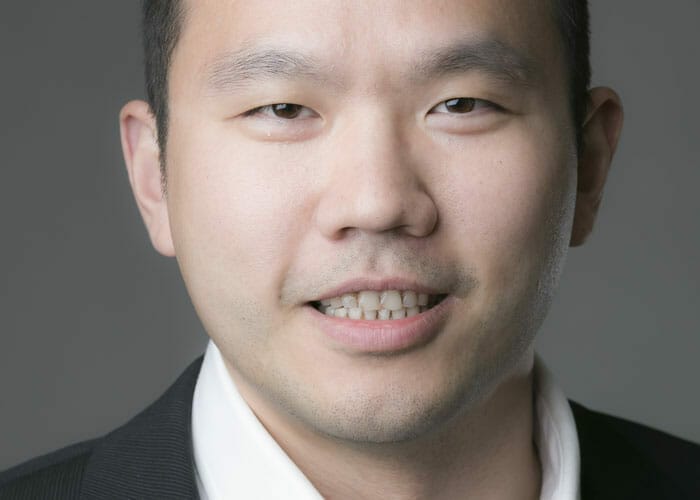
Liang Yin is a senior investment consultant in the Thinking Ahead Group, an independent research team at Willis Towers Watson and executive to the Thinking Ahead Institute.

Leave a Comment

Pension funds confront the question of who owns AI

Pension funds confront the question of who owns AI

As the use of AI within asset owners evolves, organisations are grappling with the governance question of where the strategy and accountability sit. Darcy Song looks at the treatment of AI organisationally within a number of high-profile funds, including OTPP, AustralianSuper, CPP and Norges Bank.

Sort content by

Sweden’s FTN focuses on fees and returns in latest procurement

Lower management fees and higher returns defined the latest selection process at the Swedish Fund Selection Agency in its latest awarding of active global equity mandates to 12 managers, its largest and most ambitious €20 billion ($23 billion) procurement so far.

Chicago Teachers: Where succession fears put managers on watch

In a recent investment committee meeting, trustees at Chicago Teachers heard how succession risk at external managers can hit not only returns but also managers' ability to bring ideas into the investment process and consistency around portfolio construction and implementation.

Why asset owners should not outsource innovation

Asset owners have traditionally counted on external asset managers to pursue bold innovations rather than stretching their limited internal resources to do so. But leading Stanford academic Ashby Monk has warned in a new paper that this long-standing model is distilling short-term thinking in pension management.

CalPERS board warned of risks in AI investments including China innovation

An investment banking expert has warned the CalPERS board of the risks inherent in AI, emphasising the importance of investors understanding how their exposure to AI is at risk because of Chinese competitors.

Dutch pension funds face tech reckoning, warns central bank

The Netherlands' Central Bank has warned the country's pension funds that their €150 billion ($177 billion) investments in tech companies, representing almost 43 per cent of their listed equities portfolios and 8 per cent of their total balance sheet, is at risk from a potential AI bubble.

NBIM prioritises trading efficiency, AI and culture in three-year plan

The largest investor in the world, Norges Bank Investment Management, is investing in AI to reduce costs, increase trading efficiency, and make better active decisions. The fund has set out its three-year strategy which also includes focusing on targeting managers with more flexibility to express negative views.



