
Towards sustainable stock exchanges

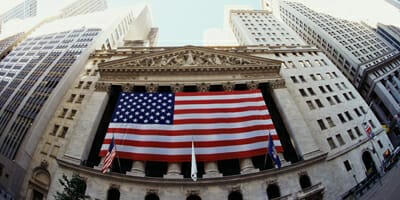
Wall Street is not normally synonymous with sustainability. But today, the United Nations Secretary-General Ban Ki-moon will ring the closing bell at the New York Stock Exchange to welcome NYSE Euronext into the Sustainable Stock Exchanges Initiative, joining NASDAQ OMX and leading emerging market exchanges from Turkey, South Africa, Egypt, Brazil and India.2013-07-24_Closingbell_

Why would exchanges be interested in sustainability? In large part, they are responding to the needs of a key stakeholder: institutional investors. Since the financial crisis and incidents such as the Deepwater Horizon, Marikana in South Africa, phone hacking by News Corporation journalists, and numerous illegal and unethical activities within banks, investors are increasingly aware of how risk can be hidden in a portfolio (and sometimes in plain sight). Health and safety, relations with workers and communities, environmental management, human capital development, corporate integrity and ethics are all areas that, if managed well, underpin the future prosperity of companies. These environmental, social and corporate governance (ESG) factors were traditionally viewed as non-financial and largely ignored by analysts – until something went wrong. No longer. These factors are now being taken very seriously and integrated into investment decisions by many of the largest fund managers and pension funds in the world. And not for ethical reasons, but because these issues – and how they are being managed – matter to investment performance.

The market for ESG information, both on the broker and the specialist research sides, has increased dramatically in recent years as has the volume of reporting by companies. A study by Si2 and the IRRC Institute found that in the S&P 500 only one company did not disclose some kind of sustainability information. However, in many cases, the information disclosed is not up to the task. Bloomberg data show that only one quarter of the 20,000 or so global listed companies covered provide data across environmental, social and governance issues. Of the companies that do, a minority is providing investors with the metrics and meaningful disclosures they need to compare how well different companies are managing these types of risks. Researchers from St Andrews University found that for the companies which report greenhouse gas emissions, three quarters report emissions from only part of their operations. Many corporate responsibility reports are still too imprecise to be useful to investors and offer little in the way of quality data or frank assessments of the material risks the company is facing around these emerging issues.

Stock exchanges as part of the solution

Stock exchanges are one of the most important intermediaries between listed companies and their investors when it comes to information flows. That’s why a group of 30 institutions, led by Aviva Investors, has been calling on the world’s largest exchanges to encourage better reporting. So what are the leading exchanges doing to help address the problem?

First, they are raising awareness and improving standards among listed companies, using both carrots and sticks. A number of exchanges have developed ESG disclosure guidance and training programs for listed companies, showcasing best practice. In a few markets, such as South Africa, sustainability and integrated reporting have been built into listing requirements. In Malaysia, the exchange has teamed up with the regulator to make sustainability reporting mandatory on a “comply or explain” basis.

Second, they are developing ESG indices. There are now around 50 such indices being offered by 16 exchanges around the world, many of which have stimulated fund products based on them. These include the long running FTSE4Good at the London Stock Exchange and more than a dozen from NYSE Euronext and NASDAQ OMX. Many emerging market exchanges now have ESG or sustainability indices, and companies see inclusion in these as a badge of honour.

Sponsored Content

Third, they are developing specialist exchanges for niche funds and products such as microfinance, impact investing, carbon trading and other sustainability themes, providing greater liquidity and accessibility to investors.

Exchanges are also beginning to practice what they preach, with many producing their own sustainability reports.

Commitment to trust and investability

While there has been a lot of activity, particularly around the development of ESG indices, delivering the type of quality information from listed companies requires an additional collective push, and that is why NYSE Euronext’s decision to join the Sustainable Stock Exchanges initiative is such good news. The Sustainable Stock Exchanges Initiative – convened by the UN Global Compact, UN Conference on Trade and Development, Principles for Responsible Investment and UN Environment Program Finance Initiative – asks exchanges to “voluntarily commit, through dialogue with investors, companies and regulators, to promoting long-term sustainable investment and improved environmental, social and corporate governance disclosure and performance among companies listed on our exchange”.

For emerging market exchanges, the business case is clear. It is about building confidence, trust and investability. These exchanges have been leading the way on this agenda. For emerging market exchanges, their main goal is building confidence in companies and capital markets, and the best way to build trust is through transparency.

The dynamic is different in developed markets, where many exchanges are now listed companies with their own shareholders, and they operate in competitive markets. There is a perception that if one exchange or jurisdiction gets too far ahead of the rest, then companies may shop around for places to list that make life easier and we end up with a race to the bottom. If the industry recognises that greater transparency and better quality data is what is required – and demanded by investors – then exchanges and regulators need to move in lock-step, ideally on a global basis. The Sustainable Stock Exchanges Initiative is an effort to bring exchanges, companies, investors and regulators together to make this happen.

Today is the second time a UN secretary-general has rung the bell at the New York Stock Exchange. The first was in 2006, when Kofi Annan launched the Principles for Responsible Investment. Since then, over 1200 institutions have signed the principles, with over US$34 trillion publicly committing to invest responsibly. Let’s hope that today, the secretary-general’s  bell ringing represents the start of an equally successful effort to bring stock exchanges, regulators, companies and investors together to deliver the type of corporate transparency that we need.

Dr James Gifford is executive director of Principles of Responsible Investment.

www.unpri.org

Leave a Comment

The future belongs to investors who can adapt

The future belongs to investors who can adapt

Canada's HOOPP has officially adopted the total portfolio approach since the start of 2026. Unpacking the move, the fund's managing director and head of total portfolio group Jacky Lee writes that while the approach doesn't magically make the return better, the fact that it frees the investment team from outdated processes and gives investment leaders the flexibility to act is what gives it an edge.

Sort content by

End of the beginning for responsible investment

Recent reflections on this month’s five-year anniversary of the Lehman Brothers collapse have focused on a variety of developments since the crisis: from reform to remuneration, sovereign debt to shadow banking, and from offshore tax to the Occupy movement. However, one significant area that has been largely overlooked has been the rise of sustainable and

Precarious world needs effective G20

General secretary of the International Trade Union Confederation, Sharan Burrow, spoke to the Lowy Institute for International Policy in Sydney, Australia on Thursday August 1 about the need for an effective G20 in a precarious world. Ladies and Gentlemen, The global economy is no more stable today than it was six years ago, and the

Asset-backed funding: desperate or innovative?

On one hand, the decision by one of the United Kingdom’s leading foods businesses, Dairy Crest, to plug its £84-million ($130-million) pension deficit with cheese smacks of desperation. Any proactive investment strategy to get the $1.2-billion pension fund back on track has been abandoned for a funding measure using unconventional sponsor assets to plug investment

Gloom at NAPF attests to investor adventure

One year on and the job of trustees gathered at the United Kingdom’s National Association of Pension Funds, NAPF, annual investment conference in Edinburgh hasn’t got any easier. As the search for optimism in a low-return world endures, the conference seems to be caught in a time loop. Compared to last year, deciding on the

The smoking gun at CalSTRS

For a pension fund that describes itself as “ponderous”, the $154-billion California State Teachers’ Retirement System, CalSTRS, has moved uncharacteristically swiftly in recent months. The second largest public pension fund in the United States, the plan for teachers and faculty is in the process of divesting its holdings in gun manufacturers following the massacre at

Will infrastructure ever find wings?

It’s difficult to ignore the clamour around infrastructure investment, the asset class of the moment. Lloyds TSB and the London Pensions Fund Authority recently joined founder members of the Pensions Infrastructure Platform, PIP, a government initiative to encourage pension funds to invest more in infrastructure. The Universities Superannuation Pension Scheme, USS, just increased its allocation

Previous



