
PRI signatories to set priorities

The financial system is an integral part of modern societies.

Financial services – banking, savings, investment and insurance – play a critical role in supporting and enabling economic growth and development.

The system enables individuals, organisations and governments to borrow and store their income for future use; it enables custodians or trustees to protect and build financial value; and it allows governments to support the wellbeing of their citizens.

But despite these important contributions, the system does not function as effectively as it should.

It can fail to deliver on the needs of the societies in which it operates, it can undermine sustainable development and it can damage the health of the natural environment.

As was seen in the wake of the global financial crisis, the lack of stability and resilience of the sector can have major negative impacts on the global economy as a whole.

Sponsored Content

From the perspective of institutional investors, these impacts can arise as a result of the nature of the relationship between investors and companies or practices in the delegated investment chain and because of the structure and operation of markets as well as externalities in the economy.

These may take the form of principal-agent problems, over-reliance on short-term return-seeking behavior, or a lack of attention to the environmental, social and governance consequences of investment decisions.

While actors in the financial system can work to enhance its sustainability, through strengthening corporate disclosures and risk management processes, and by encouraging the better oversight of markets, in reality, the opposite happens, with financial actors – through their actions both individually and in aggregate – weakening the system and in turn, undermining their ability to fulfil their own roles.

As part of the development of the next generation vision for responsible investment, the PRI will soon release a draft 10-year responsible investment blueprint for an extended period of consultation.

The draft blueprint will address the accountability of signatories to their responsible investment commitments, recognition of differences in the depth and quality of responsible investment practices, the role of the sustainable development goals in investment activities, and most importantly, how signatories can contribute to a sustainable global financial system.

The draft blueprint will ask “What is a sustainable financial system?” and propose a statement of purpose for the system.

It will also propose desirable characteristics of the system, drivers of change that will affect the development of the system, and causes of risk as well as opportunities within the system.

In doing so, the blueprint will build on the work of others.

The financial system has been studied extensively since the financial crisis of 2008 and the PRI will seek to learn from the work of leading investors, academics, policymakers and leading international economic institutions.

We will consider the system as a whole, but focus on the part of the system that investors can influence.

In short, we will work in areas where the PRI and its signatories are well-positioned for action.

This is work for which the PRI has been preparing for some time.

The PRI has built up competencies in policy reform and practice change over the past few years.

In 2013, our case for greater involvement in public policy was broadly supported by signatories.

In 2014, we commenced our work on fiduciary duty and are now implementing policy programs in eight countries.

We also recently released our analysis of the role of asset owners in setting investment beliefs, investment strategies and responsible mandates to influence the operation of the delegated investment chain.

But the priorities for this work are to be set by the PRI signatories.

In the coming months, signatories will be asked to provide feedback in writing and through one of 20 signatory workshops around the world.

We will also engage financial system experts and stakeholders in our work to support a sustainable financial system.

This discussion will culminate at “PRI in Person” in Singapore in September, with a discussion of the feedback received by that stage.

The proposed ten-year responsible investment blueprint will be published in early 2017 and will include the projects and proposed interventions investors should pursue to promote a sustainable financial system.

Our express aim is to seek five to 10 projects or points of intervention for action over the next decade, but we will also have built a framework that the PRI can use to review and prioritise its work in order to promote a sustainable system in future.

It is our hope that by conducting this work, we as investors – a critical part of the financial system – will be better equipped to contribute to the resilience of the financial system and, in turn, better deliver on the needs of society, support sustainable economic development and the health of the natural environment.

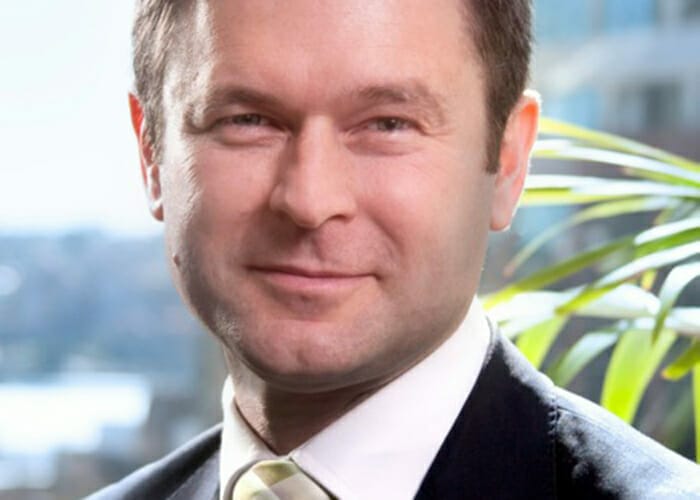
Nathan Fabian is director of policy and research at PRI

Leave a Comment

The future belongs to investors who can adapt

The future belongs to investors who can adapt

Canada's HOOPP has officially adopted the total portfolio approach since the start of 2026. Unpacking the move, the fund's managing director and head of total portfolio group Jacky Lee writes that while the approach doesn't magically make the return better, the fact that it frees the investment team from outdated processes and gives investment leaders the flexibility to act is what gives it an edge.

Sort content by

Moving from risk 1.0 to risk 2.0

As investors move into 'risk 2.0', how should they change their modelling approach and investment toolkits? WTW global head of portfolio strategy Jeff Chee outlines in this column why investors should consider principles such as greater use of qualitative risk measures.

The future is a riskier place than the present

In this regular column for Top1000funds.com, Tim Hodgson of the Thinking Ahead Institute argues that the future is riskier not only because it is uncertain, but because the quantum of risk increases with time. He unpacks what this means for investors' risk analysis and the term 'risk premium'. 

Risk depends on your mental model of reality

A lot of words have been written to explore what risk is, but Tim Hodgson of the Thinking Ahead Institute makes the case that risk looks different to different models of reality. This column is the first of a six-part series exploring risk management for investment systems, or ‘risk 2.0’.

Resilience: Abdicating from transformational change?

Will the relentless pursuit of efficiency undermine our ability to build a resilient and sustainable future? Andrea Caloisi, a researcher at the Thinking Ahead Institute at WTW, explores how complex systems, driven by short-term optimisation, may be fuelling long-term fragility.

Wisdom: The jewel in the dirt-pile of intelligence

In his regular column for Top1000funds.com, Tim Hodgson, co-founder of the Thinking Ahead Institute at WTW, reflects on the dangers of unconstrained action, the limits of efficiency, and why long-term sustainability may depend on knowing when not to act.

Are we waiting for a superhero to save our world?

Can climate inaction be reversed, or will we keep waiting for someone else to act? Jessica Gao, researcher at the Thinking Ahead Institute at WTW, explores how individuals, investors, and companies can step up to lead the transition - before it's too late.



