
US sovereign wealth fund could be a game-changer – if it’s well governed

The deadline to release a detailed plan for the proposed US sovereign wealth fund (SWF) came and went, but it was crickets from the White House. The entity was expected to be unveiled at the beginning of May – 90 days after President Donald Trump signed the executive order to establish the fund on February 3.

Reportedly, the delay was because the White House was not satisfied with the approach taken by Treasury Secretary Scott Bessent and Commerce Secretary Howard Lutnick, who were tasked to jointly develop the fund and had already submitted their proposal, CBS News said, citing people with knowledge of the matter.

With minimal details released, there has been wide speculation around the ‘how’s of the SWF, including its funding source, governance structure and investment objectives, as well as the ‘why’s – does the world’s deepest capital market really need a sovereign investment vehicle? And is now a good time when the nation’s running on a dual deficit?

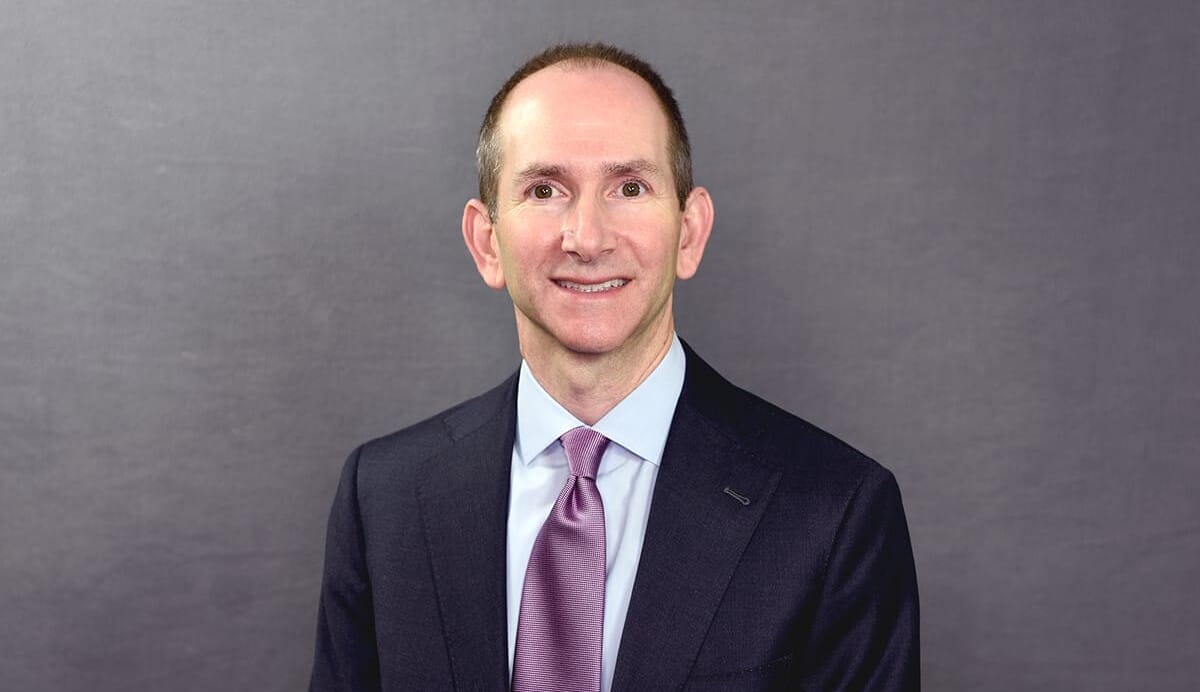
But for Stanford academic Ashby Monk the issue is perhaps being overcomplicated. As the executive and research director of the Stanford Research Initiative on Long-Term Investing, Monk has observed SWFs’ rise and rise with keen interest over the past two decades.

“A lot of people are focused on where the money is coming from [for the US SWF], and my point is that doesn’t matter as much as the goals,” he tells Top1000funds.com.

“I need to understand what your goals are, then we can see what a strategy could be to achieve those goals, and how does that strategy need to be governed, organised, implemented and operated.”

Sponsored Content

He recently co-authored a research paper which outlined several potential funding designs for the proposed US fund, including from government cost-cutting via initiatives such as the Department of Government Efficiency; new commodity revenues from expanded oil and gas operations; privatising federal assets like loan receivables; and ‘regulatory rent’ by monetising permits or regulatory approvals for companies like TikTok.

The US fund could also issue debt, Monk suggests – it is a practice adopted by some SWFs like Abu Dhabi’s Mubadala Investment Company and Malaysia’s Khazanah Nasional. But the paper argues that no matter how the fund is eventually launched the key is to “prioritise transparency, strategic clarity, and disciplined execution”.

“Every time you set up a new sovereign fund, you get this blank sheet of paper… on the admin, on the organisation, on the goals, all that stuff. How fun. There is this neat opportunity, especially if you get the governance right, to do something innovative,” he says.

Monk’s paper suggests that due to the inherent government oversight and ownership of SWFs, it will be prudent to adopt an arm’s-length or even double arm’s-length governance structure so that the fund can still make commercially driven and independent investment decisions.

There are some lessons from SWFs around the world. For example, the US SWF can “literally copy and paste” the arrangement in place at the Canada Pension Plan, Australia’s Future Fund or the New Zealand Superannuation Fund where funds are overseen by an independent board, Monk says.

“You let the politicians do the [board] appointments, but the selection committee weeds out everybody that is not appropriate. That’s the type of path that I think would give comfort to the market [about a fund’s independence],” he says.

President Donald Trump has loosely described the objective of the US SWF in the executive order as being for the “sole benefit of American citizens”. Monk believes this means it is likely to be a sovereign development fund – a type of SWF “that strategically pursues both commercial returns and specific domestic policy goals”, the research paper says.

In that sense, the US fund could seek inspiration from Ireland’s Strategic Investment Fund, Sweden’s AP6 or Singapore’s Temasek in terms of having clear mandates to drive industrial development, economic diversification and support growth in sectors that are of national priorities, on top of return objectives.

But it is hard to say if any single SWF has the perfect governance setup. Even the poster child of well-run sovereign funds, Norges Bank Investment Management, is subject to political influence, Monk highlights.

“People often point to NBIM as the role model, but I think that’s because they’re quite comfortable with Norway’s form of democracy,” he says.

“The [Norway] Ministry of Finance really dictates pretty interesting things about that fund – they say which companies they should divest from… and which asset classes they’re allowed to invest in.”

Monk recalls a recent conversation he had with the Ireland Strategic Investment Fund’s founding CEO, Eugene O’Callaghan, who having established a sovereign investment fund from the ground up said apart from governance, another key to success is talent. But the two are closely intertwined.

The rumoured head of the US SWF is Michael Grimes. Reuters reported that the technology investment banker left Morgan Stanley in February to take up a new role in the Department of Commerce. He has spearheaded several high-profile IPOs including Facebook, Uber and Airbnb.

“My guess is that this new fund is all about attracting foreign capital into parts of our economy that are under invested, or into new parts of the economy that don’t exist yet, and that means you need really talented investors to be at the helm of the sovereign development fund,” Monk says.

“If you have the governance right, you can recruit talented people that are credible, then you can attract co-investors. and you can start to build these capital markets in places where they have started to fail.

“Because they [other investors] are not pricing the risks correctly in these areas riddled with uncertainties, when what you want is people to see these as priceable risks that you can go in and get compensated for taking. You need really smart people to go do that.”

Leave a Comment

Returns, resilience and reinvention: What private markets’ top brass are worried about

Returns, resilience and reinvention: What private markets’ top brass are worried about

Senior executives from some of the world's largest private market managers gathered in Berlin this month with a collective understanding: managers who move slowly on AI face not just weaker returns but the risk of owning businesses that have been competitively displaced before they can exit.

Sort content by

Future Fund flags expansion of active equity program

Emerging markets, Europe and Japan are all in focus for Australia’s sovereign wealth fund as it looks to ramp up active equities and diversify its exposures, as the fund grows wary of US markets amidst heightened political uncertainty.

Litigation, fees and structures: Why 401(k) plans won’t jump into alts, yet

President Trump has fired the starting gun on encouraging America's 401(k) plans to invest in private assets but corporate plans remain concerned about fees, structures and litigation. Meanwhile many DB funds are voicing their concerns about how it might impact access to investments, alpha, and change the asset class.

CPP hires former AIMCo Singapore head to bolster TPA 

After hiring former CalPERS' investment chief Ben Meng six months ago, Canadian pension giant CPP Investments has added another seasoned pension executive, Kevin Bong, to its investment team, in a sign that the C$732 billion ($530 billion) behemoth is staffing up to focus on alpha and enhance total portfolio management.

ACERA eyes global, more active approach for $6.6b equity portfolio

The $13.2 billion Alameda County Employees’ Retirement Association fund is planning a major overhaul of its equity portfolio, shifting from a passive US-focused approach to a more global, actively-managed strategy in an effort to boost returns. The shift will result in manager terminations and searches.

Accountability, performance at the heart of Temasek’s three-way split

Singapore’s Temasek has unveiled its biggest organisational overhaul in more than a decade, splitting its investment portfolio into three entities to “sharpen” investment focus, boost accountability and align performance metrics. It came as the fund targets a 60/40 split between the “resilient” and “dynamic” assets to weatherproof its portfolio.

NBIM divests firms linked to Gaza and West Bank crisis

Norway’s $2 trillion sovereign wealth fund has divested from US machinery manufacturer Caterpillar and five Israeli banks in its equity portfolio as it ratchets up pressure on firms contributing to rights violations in Palestinian territories.

Previous