
UTIMCO harvests SPAC boom

Last year’s SPAC boom which saw 677 SPCAs raise an estimated $200 billion provided an unexpectedly rich seam of returns to the University of Texas Investment Management Co portfolio (UTIMCO). SPACs, or so-called blank check companies without any assets, float on the stock market and raise money from investors at which point they hunt and merge with private companies looking to go public and list.

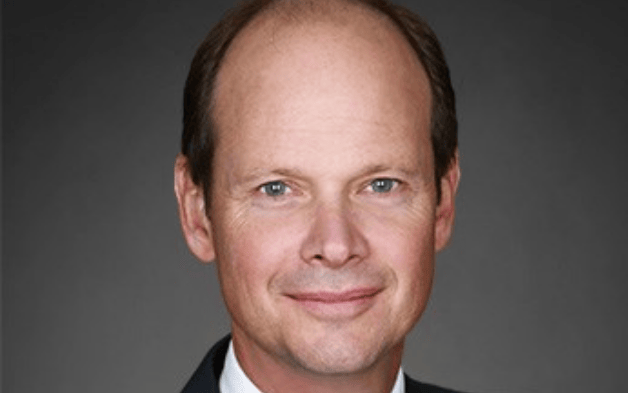
Some of UTIMCO’s private assets were acquired by SPACSs in a process that achieved both liquidity and good valuations, said Rich Hall, UTIMCO’s new CIO responsible for investment strategy and selection and risk management at the $68 billion portfolio, taking over from Britt Harris who will remain President and CEO. Most recently UTIMCO’s investment team have developed strategies to arbitrage the market where Hall estimates there are still around 500 SPACs looking for acquisition targets.

The SPAC boom is part of the wider listing largesse that characterised 2021 as the capital markets roared back to life coming out of the pandemic. IPO markets have been at all-time highs, raising an estimated dollar value of $500 billion over the last two years, said Hall speaking at UTICMO’s December board meeting. UTIMCO benefited from the boom, particularly when some of the fund’s venture capital managers jumped through the IPO window to distribute significant cash back to the endowment. “It is market wisdom that when the IPO window is open you jump through it because you never know when it will close,” said Hall.

China challenge

In contrast, the growing regulatory crackdown in China has caused a more challenging investment backdrop in the capital markets. The Chinese government’s active regulation and intervention in the market in line with its social stability and political objectives has left the listing plans and investor hopes inherent in fast-growing Chinese corporates like Ant Group, and most recently ride hailing app Didi, in tatters. Elsewhere, investors have got burnt by the Chinese government’s decision to turn tutoring and education businesses into not-for-profit. “Many firms had investments in these sectors, and they’ve suffered significantly,” said Hall, adding that UTIMCO has no intention of allocating more to China. “We are very comfortable where we are.”

Still, uncertainty in China did little to dent UTIMCOs portfolio which grew by $15 billion last year on the back of robust contributions and exceptional investment returns, enabling it to distribute $2 billion to the university and medical systems it serves.

The portfolio is structured to provide diversity across different economic regimes with equity the wealth creator (propelled particularly by private equity), real return providing inflation protection and stable value countering the threat of deflation. For the year ending August 2021 UTICMO achieved a one-year return of over 30 per cent with every portfolio contributing alpha. The fund’s ten-year return sits at 10 per cent, well above a target of 7.5 per cent set to ensure the endowment doesn’t lose purchasing power through inflation.  “We target 100bps of alpha every year and on a 10yr basis, we are running 20 basis points ahead of that,” said Hall.

Sponsored Content

It leaves UTIMCO comfortably within Wilshire Trust’s universe of 13 similarly sized endowments with high allocations to private equity and venture. “We are in the bottom ten percent in terms of risk and the top 20 per cent in terms of return. Relative to a broad peer universe, we feel like we are doing pretty well,” Hall told the board.

Looking ahead

Looking ahead, Hall flagged enduring concentration in the US equity market. However, despite the fact the top ten stocks in the S&P 500 represent 30 per cent of the index; trade at a premium (to the index) and significantly move the market, he said these stocks’ influence was not “unwarranted” given they are the most profitable and fastest growing businesses around and can support higher multiples. Elsewhere, he noticed that although valuations are high, the dispersion of valuation is also high. “Managers still believe they can find good investment opportunities for us.”

A tone that informs his wider macro analysis of the year ahead. The sprint for returns is over and investors should now prepare for a marathon; the easy money has been made in terms of market returns but there is still some gas left in the economic tank – he doesn’t see a bear market ahead and is moderately risk-on.

Inflation (and strong wage gains) are risks and he warns supply chain disruption will continue to thwart business performance, observing how UTIMCO hears much more mention of both in earnings calls. Reflecting on the supply chain crisis, Harris stressed the dangers and damaging impact of the energy Transition going so quick it triggers spikes in energy prices and fuel shortages, recently visible in Europe.

However, above all that lies a still greater risk. If central banks turn suddenly hawkish and increase the frequency and magnitude of rate rises compared to what is already priced into the market, Hall warned that investors will face a far more challenging 2022.


Leave a Comment

Sampension: Why there are many reasons to be optimistic

Sampension: Why there are many reasons to be optimistic

Now is not the time to reduce risk, argues Henrik Olejasz Larsen, chief investment officer of Sampension, Denmark’s $50 billion pension fund for public and private sector employees. In an interview with Top1000funds.com, he says corporate profits have not deteriorated, and although the market has been tested from multiple directions, the underlying optimism driving equities is strong enough to overrule the negative impact of geopolitical risk.

Sort content by

Data is changing investors ability to integrate ESG

The growth and availability of data is allowing investors to see progress on their de-carbonization efforts and contributing to increased investor confidence around decarbonisation, said John Quealy, chief investment officer, Trillium, the asset manager with nearly 40 years at the forefront of ESG thought leadership and responsible investing.

Investors talk inflation strategies

Three leading investors from around the world - USS from the UK, IMCO from Canada and APG from The Netherlands – discuss the importance of modelling and their strategies for investing in an inflationary environment, including allocating to inflation linked emerging debt and infrastructure.  

Carol Geremia on the need for transformational change

Carol Geremia, president, MFS Investment Management, urged FIS Maastricht delegates to help create a new investment model.

Robeco: Leadership, data, sustainability and talent key to year ahead

Karin van Baardwijk, chief executive, Robeco, opens the Fiduciary Investors Symposium at Maastricht University outlining the asset manager's priorities. Talent management, data analysis, leadership and sustainability will all play a role in navigating the year ahead.

The value of reporting, measuring and enforcing DEI

Intentional and actionable work on DEI is required to bring the investment industry’s talent composition closer to the broader society it serves, experts say.

New Mexico’s shakeup: Private markets in; risk parity out.

As he prepares to put more money to work in private markets, New Mexico’s new CIO Michael Shackelford discusses why he is paring back on risk parity and removing private credit hedge funds, and his preference for open-ended funds.

Previous



