

University of Texas Investment Management Co (UTIMCO), the $69.2 billion asset manager and one of the largest public endowments in the US, is hoping for a soft economic landing but planning for a recession. That means honing a playbook that ensures the investor has ongoing liquidity to make distributions; is not over its skis in terms of capital calls and commitments and has the firepower on hand to invest in opportunities.
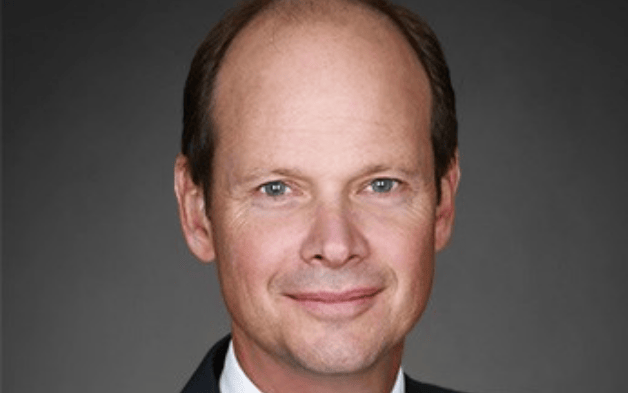
In a worse-case scenario, given UTIMCO’s correlation to equity, if the stock market declines 20-50 per cent that could equate to an $11-24 billion decline in the value of assets under management. “It’s a lot of money,” said Richard Hall (pictured), president, CEO and CIO in a recent board meeting at the fund’s Austin headquarters.
Against the backdrop of contrasting analysis from UTIMCO’s trusted advisors – JPMorgan and PIMCO, for example, predict a soft landing but analysis from BlackRock and Bridgewater Associates is skewed to a hard landing – the investor is maintaining a neutral position but modelling how much the S&P could potentially decline should corporate earnings take a pounding.
“We will get through it, even if bad things happen next year,” he said.
Rebalancing in action
In an example of UTIMCO’s determination to invest in opportunities (and classic rebalancing strategy) Hall detailed how the fund pocketed a $2.3 billion gain out of the sharp fall in equity markets at the end of 2022.
UTIMCO steadily bought around $2 billion of stocks, continuing to buy even though the market’s continued fall exposed losses on earlier purchases. At the bottom, that collective purchase program had lost a negative P&L of about $200 million, he said.
The subsequent rally provided a $450 million total uplift on that basket of purchases which the team have gradually unwound overtime to maintain its neutral position.
“We sit today with a $238 million gain from having done that,” he said, underscoring the importance of staying neutral when clear market signals are absent and demonstrative of classic rebalancing and buying assets as they get cheaper in the belief that markets recover.
Under the hood of UTIMCO’s rolling asset allocation the team have introduced modest changes. For example, UTIMCO has bought down bonds by 3 per cent and is slowly adding real estate and infrastructure. “That stability doesn’t mean not doing anything. We rebalance month to month, selling expensive assets,” he reiterated.
In another corner of the portfolio, Hall has an eye on the interplay between cash and bonds. If rates stay higher for longer the fund will continue to hold cash. But if recession comes into view and the Federal Reserve begins to lower rates, the environment will become better for bonds and worse for cash and UTIMCO will position to benefit from the price appreciation in bonds.
Hall said that the recent performance in the equity market could hold clues as to what lies ahead. Struggling fundamentals in many smaller companies could be “the canary in the coalmine,” flashing trouble ahead.
Still, the team shared that the recent outperformance in the equity market (driven in the main by 10 stocks) underscores the importance of fundamentals; reaffirming that corporate sales, growth and margins bring the best returns – and that investors in a cap weighted index will do well as long as large companies pull returns higher. “What the market did was reward fundamentals,” said Hall. “Fundamentals matter and companies with better fundamentals appreciate more in value, most of the time.”
Looking into recent returns
Hall said that UTIMCO’s returns have been knocked by legacy portfolios in emerging markets and poor returns in natural resources, where although oil and gas did well, metals and mining worked against the portfolio. In contrast, public equity supported the portfolio once it reverted to solid trend.
“Long-term we try to run the portfolio at 100 basis points of alpha,” he said.
The bulk of UTIMCO’s assets are in an endowment funds portfolio which returned 6.7 per cent.
Public equities, one of UTIMCO’s biggest portfolios, experienced strong returns in developed markets and good returns in emerging markets. Private equity performed “slightly negatively” because although buyouts and private credit did well, venture and emerging markets allocations dragged.
In private markets, Hall predicts tougher times ahead for venture capital as companies seek to raise cash against the backdrop of lower valuations. In contrast, he said buyouts will remain stable.
Turning to hedge funds, he said managers are finding good spread opportunities between companies they are long and companies they are short. In real estate, UTIMCO is long-term bearish on office, more bullish on industrial and multi-family with a focus on US growth markets.
Still, as a contrarian investor, the team has begun to explore opportunities in office which might just be the right point in the cycle to go back in.








Leave a Comment
You must be logged in to post a comment.
Login