
Understanding complexity at BCIMC

On the first page of the British Columbia Investment Management Corporation (BCIMC) annual report is a flow chart titled “complexity and connections”, outlining how the Japanese earthquake and subsequent tsunami and nuclear disaster sent shock waves through the global economy.

Understanding complexity and both the risks and potential opportunities that can arise from an increasingly connected but heterogeneous global investment environment is central to the future plans of one of Canada’s largest institutional investors.

BCIMC manages more than $92.5 billion in assets for 40 clients, including 11 public-sector pension funds in British Columbia, Canada.


Rethinking and getting real

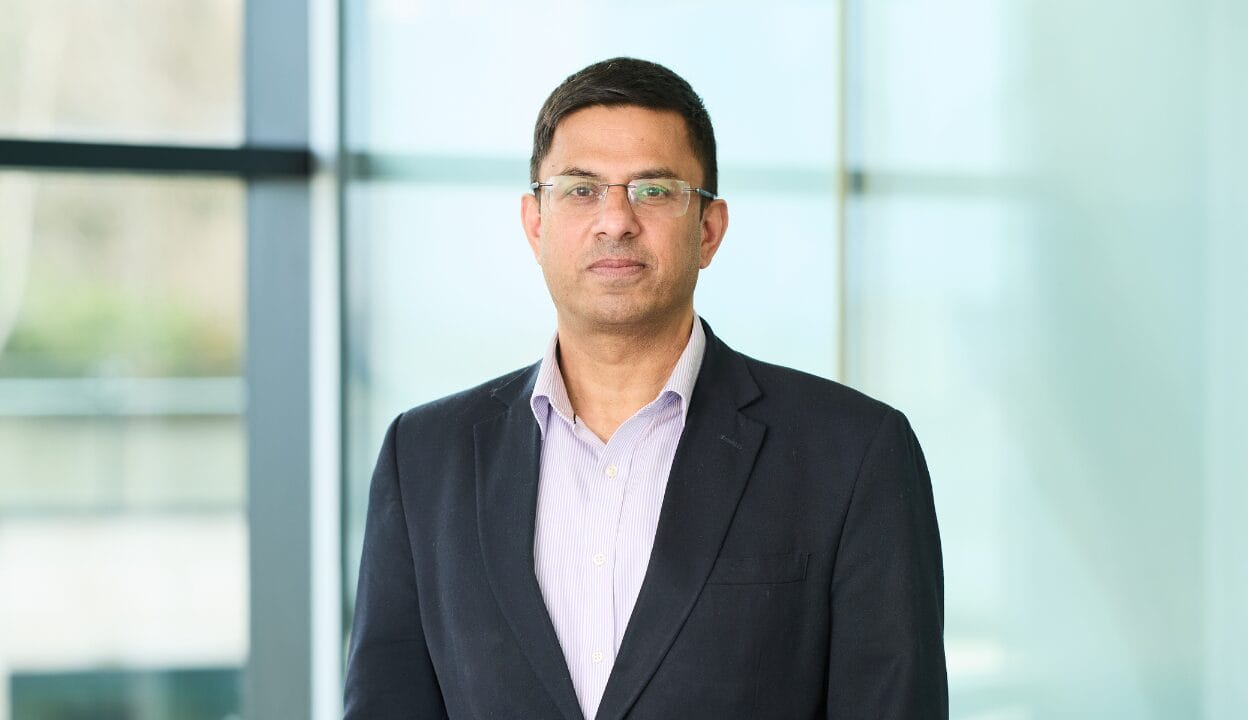
Chief executive and investment officer Doug Pearce says being a truly global investor that now invests in more than 43 different countries requires radically rethinking old investment approaches.

Sponsored Content

This involves both a re-evaluation of the way the BCIMC’s clients decide its strategic asset allocation, which will involve shifting from a conventional mean-optimisation approach based on modern portfolio theory to using aspects of thematic investing.

It will also involve increasing real assets, both as a reaction to increased client demand but also in response to a low-returns environment BCIMC believes will be here for at least the medium term.

BCIMC has set itself the ambitious target of having 30 per cent of total assets under management exposed to real assets by 2014-2015. To do this, it has targeted up to $1.4 billion in infrastructure commitments annually, $1.2 billion to private equity and $1 billion to real estate.

The private-equity, real-estate and infrastructure-and-strategic-investment buckets currently represent a little less than 25 per cent of the portfolio.


One bucket, two streams

This will also involve splitting its infrastructure-and-strategic-investment bucket into two streams: infrastructure and renewables.

The primary focus of the infrastructure stream will be on core infrastructure assets such as water, electricity and gas utilities, waste disposal and energy, including electricity generation, transmission and storage. It also encompasses transportation, including roads, railways, bridges and waterways.

Renewables will include timberland, agriculture and other sectors such as renewable energy.


Increasing internal capacity

BCIMC is also continuing to incrementally add to its internal investment team, which currently manages 65 per cent of assets in house, including 60 per cent of the public-equity allocation, all of its allocation to bonds and mortgages, and part of its private-equity, infrastructure and real-estate holdings.

By 2014-2015, the corporation will manage 70 per cent of assets in house, moving to 75 per cent by 2018-2019.

BCIMC has identified areas where it needs to increase its capacity, including the operational side of its private-equity and infrastructure programs, as well as in the development aspect of its real-estate portfolio.

The push to rethink its investment approach includes the internal investment team challenging conventional investment thinking and strategies, Pearce says.

“Right now we think a lot of that [modern portfolio theory] has broken down. Looking at 20-year histories of correlations and standard deviations in a global portfolio does not make a lot of sense to us,” says Pearce.

“We know we want to be in different markets for diversification, for returns and also because of where the growth is. The developed world is probably doing 2 to 2.5 per cent and emerging markets are much stronger in terms of GDP growth, which we think will eventually result in capital-market growth.”

“Looking in the rear-view mirror doesn’t make sense to us. We are looking at what we can do in these markets and we are trying to assess risk on a different basis other than volatility.”

Pearce notes that volatility is still an important measurement of risk, but the investment team is now challenging itself to look at risk in a much more holistic way, including what certain exposures are in the portfolio based on major investment themes.

BCIMC has been working closely with a global management consultancy to identify these emerging investment themes and where opportunities might lie.Pearce points to population growth, demand for food and energy, demographic change and global healthcare needs, and the rise of the consumer in Asia as some of the themes the investment manager has identified.It is an approach that looks beyond traditional asset buckets to looking at where in the value chain of a particular theme the best relative risk/return opportunities may lie.“The most important asset allocation decision is how much do we put into these thematic investment ideas versus what instrument we use such as if it is a bond or a stock. So, it changes the nature of asset allocation,” Pearce says.

BCIMC plans to also incorporate its thematic investment approach directly into its offering to clients. Currently the fund offers 65 pooled-fund options to clients that are typically asset class- or subset of asset class-focused.

The investment manager will launch thematic-based pooled funds that are not asset-class constrained.

Research and deploy

The investment team has identified healthcare and food production as two immediate areas that are requiring more research, with the manager combining its own research capabilities with those of its consultant.

Three years ago  BCIMC added 12 investment staff, forming its own in-house research team.

In addition, the corporation is bolstering its links with academia, collaborating with the University of British Columbia’s Sauder School of Business on a two-year project to develop an approach to forecasting asset-class returns in the future.

Pearce says that while thematic investing approach identifies both opportunities and also seeks to identify exposure across the portfolio to these same themes, it increases the demand for better information and better technology.

BCIMC has flagged increasing its technological capacity so it can gain ongoing and timely information on the exposure of the portfolio to certain key themes.

“Technology is one of the two major inputs into the whole investment process here. We look at our portfolio in the traditional set of lenses, and what I am asking people to do is to look at the portfolio with different lenses,” he says.

“An example would be: what is our real exposure to China? There are a lot of European and North American companies that have extensive revenues that come from China. So, maybe we should be looking at the portfolio in terms of source of revenue exposure.”


Managing concentrations in exposures

Like other commodities-based economies, Canada is exposed to a potential slow down in the Chinese economy. Pearce says that managing concentrations in exposures is particularly relevant for the Canadian investor given finance, energy and mineral sectors accounting for 77 per cent of the Canadian equity market as of March 31,  according to internal BCIMC analysis using the TSX Capped Equity Index.

“If we look across all these sectors, we would find our exposures are pretty short in some areas, due to these types of companies not really being in Canada,” he says.

“We don’t have very many large food or healthcare companies, for example. There are a whole bunch of sectors we don’t really have much of and we believe they are growing fast in other parts of the world and it might be worthwhile for us to say, ‘ok, let’s diversify.”

Almost two-thirds of the total assets under management are in Canada, with the next biggest regional exposure the US at 18 per cent, Europe 7.8 per cent, emerging markets 7.6 per cent, Asia 4.1 per cent.


BCIMC combined-pension return for its clients

PERIOD

RETURN

COMBINED-MARKET BENCHMARK

Year to March 31, 2012

5.9%

3.8%

20 years

8%

7.9%

15 years

7%

6.8%

10 years

6.2%

5.9%

5 years

3.3%

3.3%


BCIMC’s asset allocation as of March 31 2012 was:

Public equities 45.0%

Fixed income 26.8%

Real estate 14.4%

Infrastructure and strategic investments 5.3%

Private placements 4.4%

Mortgages 4.1%


Leave a Comment

Finland’s Elo: Larger equity allocations promise new media scrutiny

Finland’s Elo: Larger equity allocations promise new media scrutiny

As Finland's pension funds prepare to increase their equity allocations to unprecedented levels compared to global peers, they must also navigate a new and unfamiliar risk. Elo's chief investment officer Jonna Ryhänen explains the fund's investment approach going forward and how it will manage stakeholder and media scrutiny as they react to swinging volatility and returns.

Sort content by

UPS pension fund’s opportunistic future

The United Parcel Service corporate pension fund is finalising an asset liability study this year which will result in a new strategic asset allocation. The $28 billion US fund, typically has a lower allocation to fixed income than its peers and has a reasonably aggressive portfolio for a corporate defined benefit fund. It is a

Centrica focuses on dynamic decision making

For the Centrica pension fund, which adopts a liability-matching portfolio approach, last year was busy for appraising new opportunities arising out of the fact banks are no longer lending. This year its focus is on being more dynamic. Amanda White spoke to chief investment officer of the £5.5 billion ($9 billion), Chetan Ghosh. The Centrica

HOOPP’s strong funding status driven by liability hedging

The $51.6 billion Canadian fund, HOOPP, returned 8.55 per cent for the 2013 financial year, exactly half the return of 2012. But it finished the year in a better position than the year before, demonstrating that returns are only half the story. Amanda White spoke to Jim Keohane about the funds liability-driven investment style.  

Australian fund leading the way on real assets

The $15 billion Australian super fund for hospitality workers, HOSTPLUS, has a 10 per cent allocation to infrastructure and is aggressively increasing its allocation to real assets. David Rowley spoke to chief investment officer, Sam Sicilia, about what the fund seeks from real assets.   A quarter of the $15 billion in assets held by

ABP considers smart beta benchmarks

APG, which manages ABP’s assets, has been using smart beta strategies for implementation for three years, the fund is taking it a step further and is now considering tilted benchmarks.

Ohio SERS reduces hedge funds

This year the $12 billion Ohio School Employees Retirement System is prioritising projects that fulfil the board’s desire to find income from alternative sources and manage risk, including allocating more to real assets, and initiating an RFP on a risk management system. Farouki Majeed speaks to Amanda White about the fund’s investment program.   With

Previous