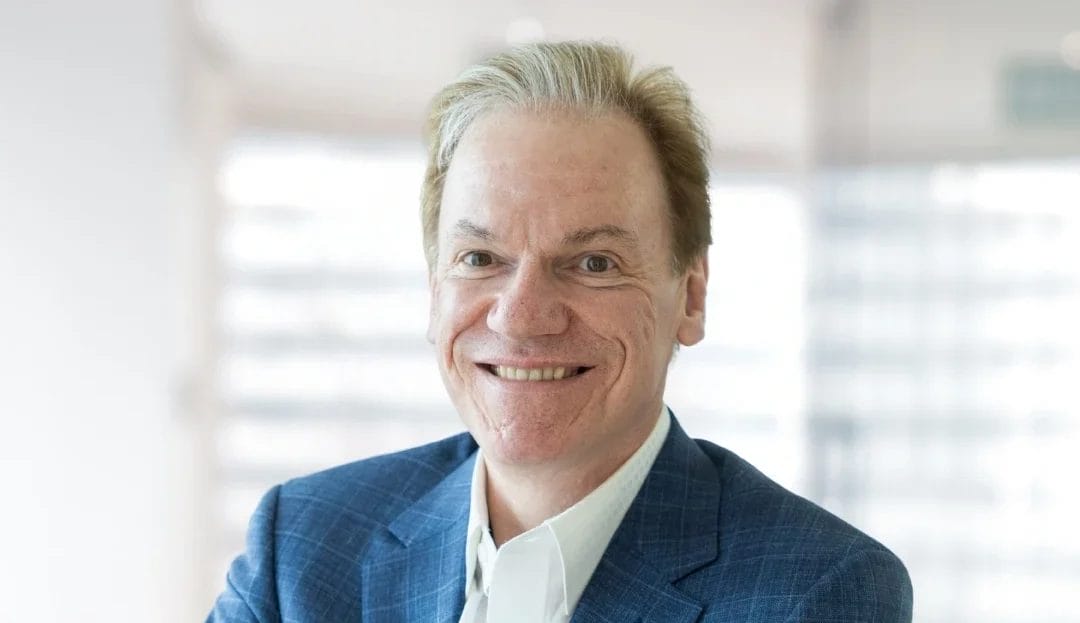

TPA’s flexibility keeps OPTrust focused on ‘the mission that matters’

With investment markets uncertain, being an investor with a global view and the flexibility to take advantage of opportunities has seen OPTrust “doing well”, its chief investment officer James Davis says. An evolution of its total portfolio approach keeps it focused on the key metric that matters to members: generating the return needed to pay pensions.

The evolution of the total portfolio approach used by OPTrust has been critical to the investment team’s ability to take advantage of the current uncertainty in markets according to chief investment officer, James Davis.

“Markets are absolutely crazy, everyone is hoping we will see something to alleviate the uncertainty, but we are doing well through it,” Davis says. “Being a global investor makes all the difference in this type of environment.”

The most recent evolution of the TPA journey, that began a decade ago when Davis introduced the member-driven investing strategy, is folding all the liquid market asset classes into one fund with a single investment objective.

“The team has a lot of flexibility, if it wants to be in credit, or gold, or equities or whatever they want to be in as long as it is liquid, they have huge freedom,” Davis says.

The newly named total portfolio management group, formerly the capital markets group, has flexibility to adjust the portfolio so long as it is within the risk budget that the CIO decides is acceptable, considering input from the portfolio and market review committee. This committee which includes senior management across investments, finance and risk meets every two weeks to discuss the overall portfolio and macro environment, and dynamically sets the desired risk profile and foreign currency exposure.

Sponsored Content

More recently the total portfolio management group has been dialling down credit exposures significantly, Davis says, recognising that credit spreads were quite tight especially late last year.

“It wasn’t something I directed them to do,” he says.

Another recent example is the geographical exposures within equities.

“They have been concerned about the situation in the US especially the concentration risk in the Mag 7, and have been exploring opportunities outside of the US,” Davis says.

They have also recently been allocating more to external hedge fund managers, looking specifically for uncorrelated alpha.

“The way the team approaches external managers is very different given this TPA mandate,” Davis says. “They are very focused on absolute return and finding uncorrelated strategies and managers that complement the beta strategies that we run internally.

The structure also allows the fund to look at assets that don’t fall within an asset class.

“It allows us to look at the spectrum,” Davis says.

“For example, are data centres real estate or infrastructure? Some people didn’t invest because they couldn’t decide what it was,” he says.

“We were early movers in gold and that served us well last year. We had more than 6 per cent in gold last year, and that was because the TPA process doesn’t force us to hold things in a benchmark or relative to the benchmark.”

Davis says the investment team is focused on excellence and continuous improvement.

“We can always be building on something better, striving to be more and more innovative,” he says. “We were early movers in machine learning and we are focusing on that and more recently in developing our AI capabilities.”

Systematic investing supports the focus on portfolio resilience and being able to adjust the portfolio through the portfolio completion team.

“It’s great to have something rules based when difficult times come.”

The evolution of TPA

Davis joined the fund as CIO in September 2015 and introduced the member-driven investing strategy and so began the decade-long evolution of its own unique total portfolio approach.

The idea was to stay focused on the key metric that was important for members, the funded status.

Davis says that naturally led to TPA because the aim is not to beat a benchmark but a focus on “the mission that really matters”, which is earning the return needed to pay pensions.

In a slightly unique take on TPA, and to take advantage of the fund’s natural strengths, the approach starts with the ideal illiquid assets allocation and then the portfolio is completed with liquid asset exposures to get the best portfolio to meet objectives.

“While in the perfect TPA-world all capital is at competition, I was always challenged by that because there’s a different liquidity horizon for different assets. So I felt we had to treat liquid and illiquid assets differently,” Davis says.

Private equity and infrastructure were already managed by the same team, and the private markets group uses skills from both asset classes.

“It’s one of our secret sauces in our overall recipe,” Davis says. “It allows us to look at the entire spectrum of private markets as a continuum, as a single pool of capital.”

To manage the overall risk in the fund it was necessary to be able to adjust the liquid portfolio due to changes in the illiquid portfolio or the macro environment. So a capital markets team was internalised, as a kind of portfolio completion group, allowing the use of leverage which was important for managing risk.

“That is something difficult to do if you don’t have internal capabilities,” Davis says.

The fund still uses external hedge funds and credit managers, as well as external managers in private markets.

The maximum potential allocation to illiquid assets is currently 60 per cent, but the actual allocation is less.

“We have a higher allocation to assets we think offer the highest possibility of value creation for the risk we take. We try to maximise that if the opportunities are there, but teams don’t have to be invested,” he says.

“If there’s no good opportunities within the illiquid portfolio then the overall allocations will go down and the allocation to the liquid completion portfolio will go up.

“Right now we have an abundance of liquidity which is important given the uncertainty in this current environment.”

Davis believes that opportunities will present themselves in infrastructure and private equity “in the next little while”, so OPTrust is well positioned to be able to capture some of those.

In addition he’s confident that the uncertainty in public markets will present opportunities.

“Volatility and uncertainty allows for bargain hunting, and more differentiation,” Davis says. “Before if you weren’t in tech stocks you were missing everything, now more variation and less correlation across different stocks and asset classes creates opportunities. There are also opportunities in the commodities space as well, so we are keeping a close eye on those.”

Davis says a concern about inflation is ever-present at the back of his mind.

“It’s hard to predict which way the economy will go, but the potential for inflation is higher now than the past several decades,” he says.

“Positioning the portfolio to capture gains in an inflationary environment is difficult but it can done.”

Leave a Comment

How CPP is evolving risk management for a faster, more interconnected world

How CPP is evolving risk management for a faster, more interconnected world

In an environment where multiple risks are emerging and their effects are compounding on the portfolio, CPP Investments' chief risk officer Priti Singh says the $572 billion fund is rethinking risk management from the ground up, shifting from reaction to preparation and embedding risk thinking earlier in investment decisions. She speaks to Amanda White about the fund's risk approach.

Sort content by

CPP Investment’s COVID journey

In this Fiduciary Investors Series podcast Amanda White talks with Geoffrey Rubin, chief investment strategist at CPP Investments, which manages the investments of Canada’s largest pension fund with about C$410 billion of assets.

Active ESG focus pays at Norway’s OPF

Active equity has been the main driver of performance at Norway’s biggest municipal pension fund, the $11 billion Oslo Pensjonsforsikring, which uses the same exclusion list as Norway’s giant $1 trillion sovereign wealth fund.

UPS: Risk assets and virtual happy hours

The $50 billion pension fund for employees of United Parcel Service, which has a preference for managed account relationships with its managers, is poised to increase its allocation to risk assets.

The importance of resilience

Already OPTrust’s portfolio can best be described as resilient. But CIO James Davis, who started his career in October 1987, expects global macro economic changes from this crisis that we have never seen before and he wants to position the portfolio for whatever is around the corner.

CalPERS: Leverage, liquidity, inflation

In this Fiduciary Investors series podcast Amanda White talks to Ben Meng, chief investment officer of CalPERS, the largest pension fund in the United States. Meng, who oversees an investment office of nearly 400 employees and manages investment portfolios of roughly $400 billion, talks about the fund’s plan to achieve its 7 per return target - including the use of leverage – the liquidity management of the fund and how it could deploy capital during the crisis, and the inflation.

Harvard endowment goes net zero by 2050

The Harvard endowment is about half way through its transition to external investment management and will work with its service providers to implement the university’s new directive, to position the portfolio in line with net-zero greenhouse gas emissions by 2050.

Previous



