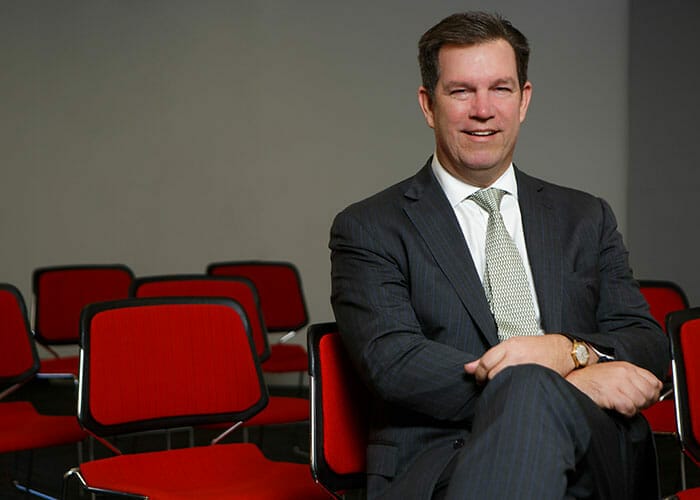

When the $62 billion not-for-profit super fund QSuper opens its doors to all comers from June 30 next year, the fundās chairman, Karl Morris, does not expect it to be swamped by new membership applications or transfers.
The 550,000-member QSuper has been ready to become a public-offer fund for many months; the timing of the Queensland government announcing the date for the change was more to do with waiting until another fund ā LGIAsuper ā was properly prepared to go public-offer on the same date. While QSuper caters to employees of the Queensland state government, the smaller ($10 billion) LGIAsuper is the fund for Queensland local government employees.
āPersonally, I donāt see that weāre going to get an absolute flood of new members coming into QSuper overnight,ā Morris says. āItās a very competitive space. [But] I might be surprised; there might be a bit of a windfall from people we know have been wanting to join the fund but havenāt been able to.ā
Morris says that initially, at least, becoming a public-offer fund will shore up QSuperās defences against leakage.
āWeāve had $30 million weāve had to send to other super funds because [members] are no longer government employees,ā he says. āI donāt like doing that when I have those people saying āwhy canāt I remain?ā I think itās bloody awful that weāve got to shift them out. I also think itās bloody awful also that we canāt take relatives on as well.ā
Share and share alike
Being an open-offer fund will mean QSuper has to more actively raise its brand awareness, ābut I like to think weāll do that in a responsible and reflective way, reflecting our membersā best interests,ā says Morris.
āWe will do a significant amount of analysis and ask for feedback from our members on what they think is appropriate in increasing our brand awareness, particularly in Queensland,ā he says.
But donāt expect to see the fundās branding appearing on football players or a sports stadium. What being a public offer fund might allow QSuper to do more efficiently, however, is offer to other funds some of the solutions that it has developed for its own members.
āFor example, our new insurance business,ā Morris says. āAt the moment weāre just going to insure our own members, but whatās to say another super fund doesnāt come to us and say āwe have a very aligned membership base; we donāt want to go to whoever; would you think about covering our members as well?ā It will allow us to do those sorts of things. And in the insurance business it is a capacity business, a scale business.ā
That sharing approach could extend to other aspects of fund operation as well, Morris says, overcoming some of the inefficiencies inherent in having every fund independently trying to solve the same problems as all the other funds.
āThereās a lot of us reinventing the wheel,ā he says. āI look at other industries that Iām involved in that have the same problems. Thereās not as much sharing that goes on. Weāre all solving the same issues and weāre all spending the same amount of money solving those issues. I would have though that in the not-for-profit world weād have been a little bit more sharing.
āI think thatās one of the things QSuper is very good at. We donāt feel that everything we do is proprietary; weāre there to help other superannuation funds with things that we think weāre a little bit more cutting-edge on.
āThereās been a couple of great examples that have been announced recently, [such as the income account transfer bonus], and some other tax things that weāve been able to do that are a great benefit to our membership base, that I donāt see as being particularly proprietary to us. Itās just that weāve done a bit more of the heavy thinking and lifting than some others.ā
Super funds need to think about āwhole memberā
Morris says all superannuation funds, not just QSuper, need to think more creatively about the value they offer to fund members beyond just investment returns and retirement account balances. He says funds need to start doing more to address the āwhole memberā.
āSome of the headwinds weāve got at the moment, with lower contributions going forward, everyoneās talking about lower returns going forward, and I would think our contributions are going to be less going forward, our returns are going to be less, [so] what are we going to do for our members thatās going to be bigger and better thatās going to help them? Whether it [is] through financial literacy and education, [or] giving them personal advice. How do we deliver that personal advice, whether it is through digital, or direct? There are a number of touch points there.
āI think were going to have to invest our membersā money in terms of maybe weāre not going to provide them a return in terms of increased [account balances] but value in other forms, thatās going to be cheaper mortgage rates, or exposure to other bits of advice for their life.ā
In this context, super funds will look increasingly like other vertically integrated financial institutions, but Morris says he believes funds come from a better starting position than others.
āSuperannuation is going to be the basis of it,ā he says. āSuperannuation funds are trusted, I think, over banks. Banks are going to try aggregation, and theyāre going to go hard at that. Weāre already getting a bit of pushback from people.
āOn [QSuperās online management tool for members] Money Map, you can have mortgages and leases and assets and your whole financial dashboard.
āAt the moment we donāt have access to it, itās just for [the member], but at some stage [the member] is going to turn that on and say, you know, I do want you to have a look at that because I think youād actually think differently about my super if you knew all about this.
āIf I had to say one thing about us going forward [it is] that personal advice ā structuring things for your financial situation ā is the most important thing that we can do. The cohorts were the start; Money Map is the second.ā
Not rushing into robo advice
An aspect of its operations that QSuper will not be sharing with other funds is financial advice for members. With 550,000 members and 45 advisers, theyāre going to have their hands full just meeting in-house demand. And while other funds are actively exploring the implementation of robo advice offerings to help get more advice to more members, Morris says QSuper isnāt rushing in.
āI went on behalf of QSuper and visited a couple of the robo advice groups in the US last year, and itās something that weāre keeping an eye on,ā Morris says. āAt this point in time, I canāt quite see how it works for our members when we have such good default options, which is kind of what robo advice is trying to do. It is something weāre keenly watching, potentially I think more for the post-accumulation stage.
āWhen we were in [the US], the problem with robo advice is itās great if you give them cash ā bang, done ā but if youāve got assets that need to be transferred, itās a complete nightmare. Itās quite a conundrum that a lot of us have, as to how best to use it. And to some extent it may be best utilised by the actual adviser, rather than by the member. So thatās what weāre keeping an eye on.ā
No āmagic puddingā
Morris says the board and management of QSuper are āspending a huge amount of timeā considering better retirement options for fund members. Morris says that while about 3 to 4 per cent of its members currently move into decumulation phase each year, that number will increase.
āThe most interesting thing now is when someone retires ā and youāve got to think a lot of people are going to retire and also require the age pension ā how [do] we give them some insurance on longevity?ā he says. āSo weāre spending quite a bit of time looking at structuring products that could assist those of us who are lucky enough to live a little bit longer.
āI donāt think there is any magic pudding when it comes to it all. I look at the work that weāre doing and I think weāre at the forefront of some of that thinking. Weāve looked all around the world for how other people have done it. Weāve been very close to the Rotman School of Management out of University of Toronto, and looked at how other funds have tried to solve this. Unfortunately, a lot of other funds around the world are DB funds and donāt really have the same issue that we have.ā
Morrisās role as chairman of the QSuper board stands out in a CV that also includes being executive chairman of Ord Minnett, a director and master member of the Stockbrokerās Association of Australia, and deputy federal director of the Liberal Party. He is on the board of the Catholic Foundation of the Archdiocese of Brisbane, is a governor of the University of Notre Dame Australia, and patron of Bravehearts.
But he is also on the board of the RACQ, and āthereās another great example of a member-based organisation, a not-for-profitā, he says.
āSo I had a very good understanding of what the differences would be coming into a not-for-profit, purpose-driven organisation,ā he says. āThe culture and the differentiation of QSuper to a lot of the other funds was something I understood, and culturally was very aligned to, so I was attracted to it on a number of different levels. And also just the fact ā as you put it ā Iāve been on the ādark sideā.ā
Morris says that despite their very different commercial imperatives, he sees some parallels between Ord Minnett and QSuper.
āQSuper was attractive to me just due to the fact that the one thing about Ord Minnett is we also have this culture that the client comes first,ā he says. āIt mightnāt be member comes first, but client comes first.
āAnd I was very much attracted to [QSuper] for the fact that I knew it wasnāt broken. When I went into QSuper there was nothing to fix. It is an unbelievably, extremely efficient, culturally aware fund. Whichever way you look at it, it is an extremely busy place. The insurance that weāve done; IT upgrades that weāre doing continuously; the open offer, changing all sorts of architecture within the business; thereās a lot happening within the fund and itās an exciting place to be, at the forefront of some of the things weāre doing better for our members. That was the attraction.ā


Leave a Comment
You must be logged in to post a comment.
Login



