
PMT’s new index shakes up its equities

Pensioenfonds Metaal en Techniek, the €72 billion ($82 billion) Dutch metal industry pension fund, has introduced a new index for its €16 billion ($18 billion) developed market equity portfolio, after two years of research and development. The index has been especially constructed to integrate the investment concerns of the fund’s beneficiaries, ESG factors and long-term returns. It employs a combination of active choices and a benchmark, bringing a new dynamic to the fund’s passive strategy.

It doesn’t compromise PMT’s long-term excess return target of 1.5 per cent a year above the change in the value of its liabilities and it slightly improves the portfolio’s risk profile.

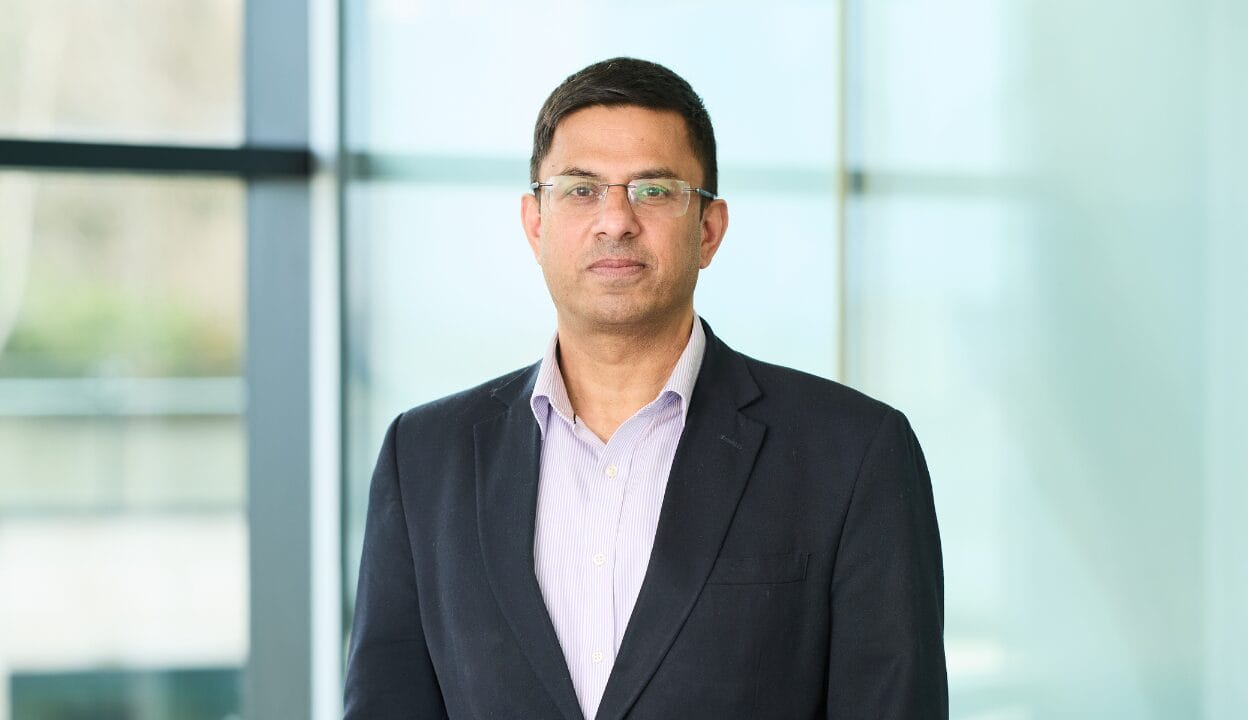
“We have made explicit choices on which companies we would like to have in this new benchmark, which we own and created ourselves,” fund CIO Hartwig Liersch says.

The benchmark of 800 companies, half the number in the MSCI World Index, excludes tobacco, weapons (nuclear, controversial weapons and civilian firearms) fur and adult entertainment stocks, in line with the opinions and preferences of the fund’s beneficiaries. Its combined holdings in these four sectors had amounted to €1.3 billion ($1. 4 billion). The benchmark also selects companies according to their ESG scores and long-term sustainability, in a process PMT developed along with its fiduciary manager, MN. Index provider MSCI produced the data from which to draw companies’ ESG scores; asset managers BlackRock and JP Morgan also partnered in the collaborative process, which will continue and evolve.

“Developing a new approach means we have to keep working together and finetuning the portfolio once it is implemented,” Liersch says.

Much of that ongoing collaboration will comprise integrating manager research in the active element with the index investment. “The mandate is standardly passive, in as much as it follows a benchmark, but it comes with the addition that we want the managers to conduct research on how the portfolio is doing, compared to the standard MSCI benchmark,” he says.

Sponsored Content

Fewer US stocks

The development process involved intensive back testing to check diversification and any unintended style drift within the smaller investment universe and new criteria. “We put in some limits on certain company exposures but found that the diversification was intact and unchanged,” Liersch says.

Applying ESG filters to the European and US equity allocations screened out more US companies. It was a change the fund has decided to maintain in the index. US stocks, which would normally account for 65 per cent of the benchmark, now account for about 60 per cent.

“We thought about changing the regional shift and giving a larger exposure to the US to accommodate this,” Liersch explains. “However, we eventually decided to keep with our clear choice on the companies we didn’t want in the index. We, therefore, have more European exposure.”

He attributes this to European companies being more ESG-aware and more willing to provide ESG data. He also believes the reduced US exposure within the index helps with diversification.

“It is not a problem from a return perspective,” he asserts. “We back tested the returns and they are comparable with outcomes if we had the original US concentration. The US is still the biggest region but because it is less concentrated, we actually think it is even better from a regional diversification perspective now, too.”

ESG ratings like ‘credit ratings’

Selecting which ESG scores to use was another interesting part of the process.

“As more companies give data, it gets much easier to adjust the scores,” Liersch says. He also believes that the flow of data will grow as companies increasingly realise the importance of ESG to investors. “Companies can see that investors are using the scores and if they are good at ESG, they have a real interest in providing more data. ESG ratings are becoming the same as credit ratings, and companies care a great deal about their credit rating.”

The new portfolio is also cost-efficient. The standard passive management costs are the same as before, and although the research component costs extra, this is balanced out because PMT no longer pays for a smart-beta allocation, which the new portfolio replaces.

Next, PMT plans to build a similar index for its €3 billion ($3.4 billion) emerging-markets equities portfolio. The pension fund has also developed a benchmark with financial and ESG criteria for its €4 billion ($4.5 billion) emerging market debt portfolio. This comprises testing to see if a particular country fits within the fund’s beliefs and benchmarks.

“All potential countries would be tested on PMT’s own financial and ESG criteria before they would be eligible for inclusion in this benchmark,” Liersch says.

Across the whole portfolio, PMT has excluded companies based on its beneficiaries’ beliefs. “Realising we could exclude these companies from the whole portfolio has been a key takeaway,” he says. “We began by only talking about developed market equity, but this is a principled opinion and, as such, is valid for the whole portfolio.”

The impact of members’ feedback on the pension fund’s strategy is nuanced. He describes an important ongoing “dialogue” with members that feeds into strategy.

“Climate change and ESG have more traction in society and this manifests in the pension fund. As a fund for the manufacturing sector, we have also experienced technological change and the impact of climate regulation,” he says. “The opinions and preferences of our members do not fluctuate that much. They have a long-term view.”

The practical application of beneficiaries’ wishes has also been one of the most rewarding and informative elements of the process.

“PMT has a tendency to approach problems technically and this process has got us out of our technical world,” he says.

Leave a Comment

How CPP is evolving risk management for a faster, more interconnected world

How CPP is evolving risk management for a faster, more interconnected world

In an environment where multiple risks are emerging and their effects are compounding on the portfolio, CPP Investments' chief risk officer Priti Singh says the $572 billion fund is rethinking risk management from the ground up, shifting from reaction to preparation and embedding risk thinking earlier in investment decisions. She speaks to Amanda White about the fund's risk approach.

Sort content by

Understanding complexity at BCIMC

On the first page of the British Columbia Investment Management Corporation (BCIMC) annual report is a flow chart titled “complexity and connections”, outlining how the Japanese earthquake and subsequent tsunami and nuclear disaster sent shock waves through the global economy. Understanding complexity and both the risks and potential opportunities that can arise from an increasingly

CPPIB doubles logistics spend in China

The $165.8-billion Canadian Pension Plan Investment Board (CPPIB) has substantially increased its investment in logistics properties in China, doubling its funding of a partnership with the Goodman Group. It is the second time in a year that CPPIB has doubled its exposure to logistics properties in this Chinese joint venture, with its latest injection of

AustralianSuper
pivots to Asia

Asia will be a growing part of investors’ portfolios, predicts the chief investment officer of AustralianSuper, Mark Delaney. He is steering the $43-billion fund towards the Asian century with up to 45 per cent of its international equities now in emerging markets. Asia represents about half of this emerging market exposure and, despite the flight

A catalyst for change: PGGM owns ESG

Not content to sit back and wait for the market to move, PGGM decided to learn by doing and launched its own responsible-equity portfolio three years ago. In line with its belief that sustainability pays, PGGM’s portfolio has a long-term investment horizon that integrates financial and environmental, social and governance (ESG) factors with active ownership.

NYCRS CIO focuses on the achievable

Reducing equities, expanding the resources and changing the RFP process are on the agenda of New York City Retirement System (NYCRS) chief investment officer, Larry Schloss, as he makes structural and investment changes to turn the $123-billion fund around. Two and a half years in to what is most likely only a four-year tenure –

OMERS sharpens strategic focus

OMERS Strategic Investments (OSI) is more than the international co-investment arm of Ontario Municipal Employees Retirement System (OMERS), it is the vehicle which the system uses to shape and implement several key parts of its strategic plan. OSI is one of five investment groups that fit under the OMERS Worldwide brand. The other four groups

Previous