
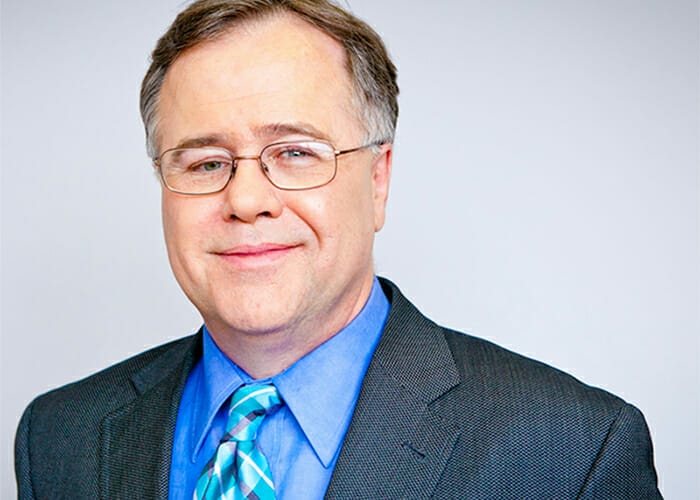

Impressive statistics from Canada’s OPTrust, manager of C$18.4 billion ($13.9 billion) in assets for 87,000 former and current public-service employees in Ontario, make enviable reading for pension funds weighed down by deficits and low returns. In 2015, the fund returned 8 per cent and remained fully funded. Over its 21 years of operation, its investment portfolio has realised an average annual return of 8.4 per cent and, on average, 73 cents of every pension dollar paid to beneficiaries in the mature plan is generated by investment returns.
“Our investment strategy is based around the interests of our members, first and foremost,” explains Hugh O’Reilly, president and chief executive of the fund. “We are investing … to protect the funded status of the plan; we are not beating a benchmark. We take risks to generate returns but we will not jeopardise our funded status or our level of contributions. We see ourselves as a pension fund and not an asset manager.”
Prioritising members has led to a member-driven investing (MDI) strategy that O’Reilly contrasts with better-known liability driven investment (LDI), in which strategy is shaped around the cash flows needed to fund future liabilities.
“Some pension funds have adopted LDI, while others seek to maximise their returns,” O’Reilly says. “There is no right answer. We are driven by our members, by demographics and by what makes sense to us. If one looks at the Canadian model, therein lies a recipe for success founded in a few factors. Our plans are governed independent of the government and unions. We have internal investment teams, which allows us, generally speaking, to run the pension plan at a low cost, and our contributions are strong.”
Putting members first lay at the heart of last year’s successful navigation of volatility and low returns.
“Last year, we assessed the funded position and, seeing that we had a surplus, we set about steps, from an investment perspective, to preserve that surplus.” O’Reilly’s strategies included protecting the fund against Canada’s depreciating dollar, hedging the public-equity exposure and ensuring a strong alternatives portfolio, all mixed with a resolute belief in his team’s ability – although he does acknowledge some good fortune.
“We have skilled investors and it’s important to recognise those skills,” he says, but adds that “markets have a way of humbling you.”
Looking ahead, he sees continued uncertainty, which he plans to counter with strong alternative allocations.
“While US markets have reacted positively to the incoming administration, we are somewhat concerned [that they] may be overly optimistic,” he says. His strategy is to continue to hold robust allocations to real estate, private equity and infrastructure, which together account for a third of the fund’s assets. All are internally managed.
Infrastructure involves strategic partnerships and accounts for 12 per cent of assets under management. Through 2017, O’Reilly will look particularly at mid-market opportunities around the $100 million-$150 million mark.
“The market is expensive for larger assets like toll roads; we have changed our focus to smaller projects.” In 2015, he committed to four new infrastructure investments in North America, Europe and Australia, totalling $636 million; the portfolio generated a net return of 7.0 per cent in that year.
For private equity, O’Reilly has a sanguine approach, at a time when opportunities to invest are competitive and expensive.
“There is no pressure on us to put money out the door,” he says. “Only where we see opportunities that make sense to us do we pursue them.” Private equity represented 9.2 per cent of net assets at year-end 2015, up from 7.3 per cent at year-end 2014. The private-equity portfolio generated a net return of 14.4 per cent for 2015.
The public-equity allocation is managed externally but O’Reilly and his team are in the process of bringing the bond and foreign exchange allocations in-house. It’s a strategy designed to bring the fund closer to the market.
He explains: “We want to better understand where the trends are going in fixed income and foreign exchange, and bringing management in-house is the best way to achieve this. If you use external managers, you can’t react to secular trends. We also believe that this will save on fees and transaction costs.”
He is also steadily building the hedge fund allocation from 2.5 per cent of assets in 2015. The allocation now favours style premia and momentum strategies, although O’Reilly stresses a dynamic approach here – changing the allocation according to the needs of the total portfolio.
“Hedge funds are a way to harvest returns without owning the underlying asset,” he says. “We work to make sure the fee exposure is reasonable and look actively to make sure the strategies make sense for us.”
Responsible investment is integrated across every asset class in the fund. O’Reilly points to the latest suggestions from the Financial Stability Board’s Task Force on Climate Related Financial Disclosures. The task force is calling for companies to publish their potential losses from climate change. He says this is the latest step in an evolving movement. It’s an observation that leads him to ponder the growth of environmental, social and governance strategies.
“It is no longer about screening securities [over whether] they are good or bad,” he argues. “It is about engagement and due diligence and monitoring, and this is an exciting and important change. It’s here to stay.”








Leave a Comment
You must be logged in to post a comment.
Login