NZ Super cuts benchmark return expectation on US valuation concerns

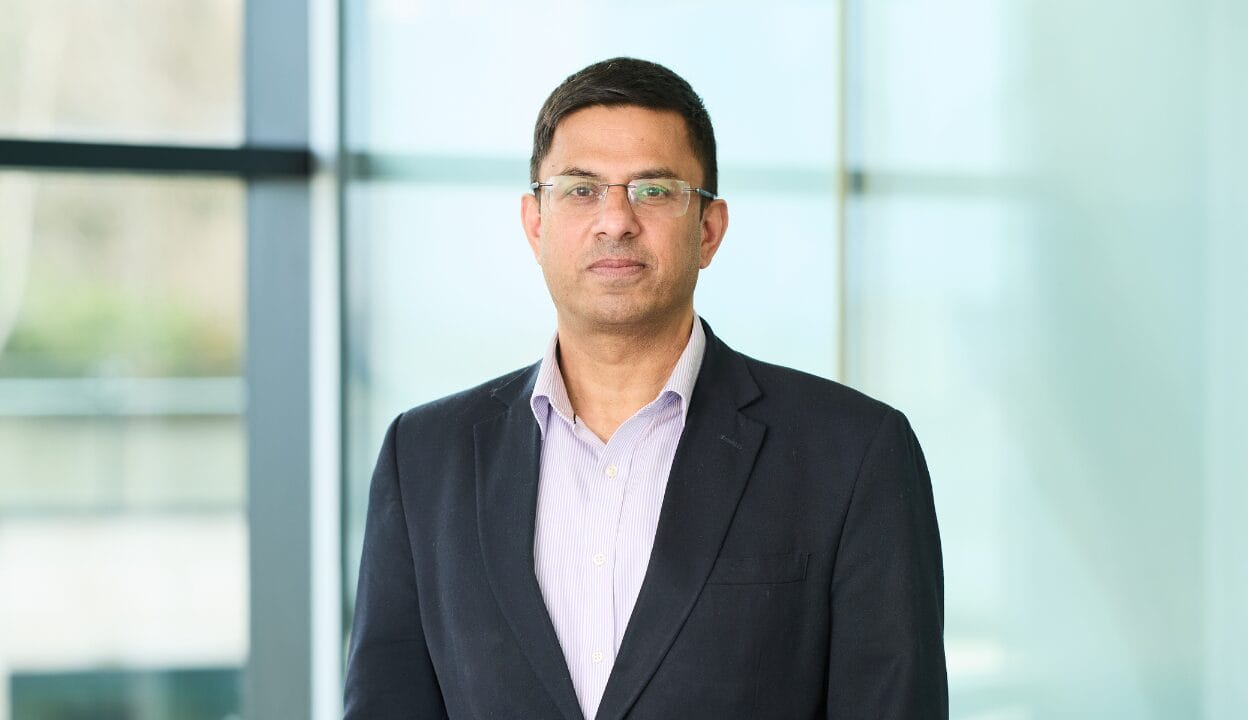
Brad Dunstan

A view that the US stock market is overvalued and equity risk premia will be lower over the long term has driven New Zealand Super to lower the return expectations for its reference portfolio following its recent five-yearly review of the benchmark.

Brad Dunstan, co-chief investment officer of the NZ$90 billion ($50 billion) sovereign wealth fund says the expected return of its reference portfolio is determined by two elements: the weightings in the asset class mix and their return assumptions, and it was the latter that has seen a notable shift.

“We did lower [our] equity risk premia assumption by a reasonable amount,” Dunstan tells Top1000funds.com in an interview.

“When we think about the reference portfolio and capital market assumptions [before], we do it on a 20-to-30-year construct, so it’s very stable through time and doesn’t change that much.

“Largely this time around, we did a slight variation in our methodology, which was to bring more ‘market-aware’ assumptions into it.”

This means the new reference portfolio incorporates current market valuations of assets more heavily, rather than relying on a long-term “equilibrium” of price, Dunstan says. With NZ Super assuming US equities to be overvalued on that basis, the fund’s view on US markets weighed more directly on its equity risk premia assumption.

Sponsored Content

NZ Super uses the reference portfolio as a risk and return guideline in its total portfolio approach and a benchmark to active strategies. It comprises 75 per cent global equities, 5 per cent NZ equities and 20 per cent fixed income according to its website, though the asset class mix following its latest review hasn’t been disclosed.

The biggest impact of this change will be how the New Zealand government contributes to the fund and when it can draw down, Dunstan says. NZ Super receives funding from the nation’s Treasury based on a contribution rate model, which is reviewed twice a year and determined by demographics and tax forecast, national GDP, the fund’s size and, of course, its expected return.

“If we lower our forward-looking returns, obviously that means that the government will have to put money into the fund for longer than was previously modelled,” he says.

Communicating that change to government stakeholders has been a big concern, especially as New Zealand gears up for an election year, Dunstan says. But the fund needed to recalibrate stakeholders’ expectations.

“Over the last 10 or 15 years, equities have returned way above what we would expect over the long run, which most people would say should be around 7 per cent,” he says.

“Therefore going forward, we should expect that it would be unrealistic to expect the same sort of return, and that we would expect some mean reversion back to normal.”

NZ Super’s reference portfolio returned 8.65 per cent per annum since its inception in 2010. Its actual portfolio returned 10.09 per cent per annum over the same time period, representing a cumulative value-add of NZ$19 billion ($10 billion), according to its annual report.

Commodities’ time to shine

Dunstan also has his eye on inflation and sees scope to increase NZ Super’s underweight exposures to commodities compared to the benchmark in a bid to build resilience and diversification in a high-inflation environment.

“It is basically whatever commodity exposure we get through our passive exposure in the MSCI benchmark – I’m talking metal, fuel – but we don’t have any active commodity exposure [in public markets]. Oil is a difficult one for us because we have various carbon targets, so I would say we are short oil versus benchmark,” he says.

“We’ll do some work on… what do we need to do to think about how we at least get market exposure, and do we think we want to lean into it.”

In private markets though, the fund has a 5 per cent exposure to farmland and timberland.

NZ Super historically has not allocated as much as its peers to private markets, a view anchored in a scepticism around whether there’s truly illiquidity premia to be harvested, Dunstan says.

“It’s incredibly hard to observe the illiquidity premia, and it looks as though it’s actually quite hard to monetise in some respects,” he says.

“We believe there’s more idiosyncratic risk, and you probably get [returns] more through a control premia than a liquidity premia, it’s just hard to observe, hard to know even, if you’ve ever captured it.”

But he says the fund recognises the argument for owning more private markets for protection against drawdowns as well as diversification benefits.

“Public markets are becoming very concentrated both at a geographic level and a sector level, if you think about the US.

“We used to rely on public markets to offer a huge amount of diversification and as that disappears or dissipates, we need to think about other sources.”

With that said, Dunstan says the fund has a high growth focus and is very liquid so equity and equity-like investments will still be the engine that powers its returns in the next decade, and he doesn’t see that changing.

“We are always going to be at the higher end of the risk spectrum in anything we do, even if it was real estate, we are probably going to be at more of the develop-and-build end of real estate than just buying an office block and collecting the yield.

“If you think you are no longer compensated for taking equity risk over a long period of time, you’re into the realms of capital markets just no longer function… something disastrous would have happened.

“I’m not worried about my job at that point, I’m probably worried about something more fundamental like how do I buy food,” he quips.

Leave a Comment

Silver is the new gold: France’s UMR targets opportunities in ageing economy

Silver is the new gold: France’s UMR targets opportunities in ageing economy

French pension organisation UMR has launched a multi-asset thematic program that will target opportunities in Europe’s ageing economy. It’s part of a broader strategy to increase diversification in private markets where it sees secondary markets as an increasingly important tool.

Sort content by

Korean fund faces unique challenge

The KRW14.3 trillion ($12 billion) Korea Public Officials Benefit Association is sitting on more than 10 per cent cash, but in a unique challenge due to the coronavirus crisis, it is having trouble deploying capital. Amanda White spoke to CIO, Dong Hun Jang, about the options including listed alternatives and distressed opportunities.

Liquidity, rebalancing reign at PSERS

Cash is king right now, according to CIO of the Pennsylvania School Employees’ Retirement System, Jim Grossman, and he’s got plenty of it. The fund has a very diversified asset allocation, with about half the portfolio invested in liquid assets and Grossman and his team are working hard to make sure that the strategic allocations are maintained.

France’s FRR prepares to ramp up equity

The French SWF, FRR, is preparing to invest more in equities and illiquid assets as important reforms extend its time horizon. With the coronavirus crisis delaying the asset allocation decisions the fund is operating in an "intermediate context", slowly shifting out of bonds and into equities.

PFA navigates corona storm

In the six months Kasper Lorenzen has been CIO of the Danish fund, PFA, he has made moves in investment and decision-making that have resulted in the fund weathering the short-term coronavirus storm. He is however, wary of the long-term structural changes particularly to patterns of globalisation.

Oregon PE revamp shakes off GFC legacy

Oregon Investment Council has committed to investing $3 billion a year in private equity, with the smooth pacing strategy part a response to the fund’s overweight position to poor performing vintages as a result of its allocations before and after the GFC. The investor is also focusing on manager relationships with a focus on accessing new relationships and upsizing the best existing ones; and a new strategy that sees no provider in charge of more than 5 per cent of the portfolio.

Minnesota to expand private markets

A strategic and long-term focus sees the Minnesota State Board of Investment CIO, Mansco Perry, adopt a patient and encouraging approach when it comes to climate change and diversity. The $104 billion fund is also looking to expand its allocation to private markets, and double its internal team.

Previous