
NOW: Pensions crosses borders

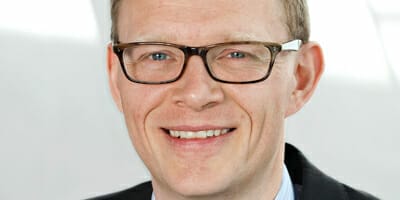
In the city of Hillerød outside Copenhagen in Denmark, a small group of Danes want to teach the United Kingdom’s pensions industry a thing or two. Where UK trustees tend to see fund choice as a blessing, Denmark’s DKK579-billion ($101.6-billion) public pension plan ATP has always viewed picking and choosing between different managers as more of a curse. It has applied the ethos to its UK subsidiary, defined-contribution workplace pension-scheme provider, NOW: Pensions, which sells itself to UK companies looking to automatically enrol staff on the strength of one single investment strategy. Having set up a year ago, it’s still early days but NOW: Pensions Investments A/S chief investment officer, Mads Gosvig, is convinced he’s on the right track.

“Many schemes in the UK have been set up for people with higher incomes used to taking investment decisions, but you don’t want the same tool for everyone,” he says from Denmark where the NOW investment team sits alongside ATP’s. “With auto-enrolment, more people will be taking out pensions and our research shows it’s best to keep the number of decisions small because pensions are a specialist area.” NOW won’t ever pool assets with ATP but the two funds already share ideas and processes and, as NOW’s assets accumulate, the funds will implement the same strategies and buy into the same third party investment vehicles.

What’s NOW?

NOW offers members access to three funds catering first to a savings phase via a Diversified Growth Fund. A decade before retirement, members’ assets pass into a Retirement Protection Fund, in which returns from the growth phase are safeguarded through long-term gilt allocations and interest rate swaps in a hedged portfolio. Finally, assets pass to the Cash Protection Fund. The Growth Fund, split 60/40 between equities and bonds, targets a return of 3 per cent above cash, a target Gosvig believes is easily achievable given trial results from a $15.3-billion synthetic portfolio have returned 10 per cent. NOW only began accruing assets midway through 2012; Gosvig won’t be drawn on current assets under management just yet.

Like ATP, the Growth Fund is built around risk allocations rather than conventional asset allocations. It’s an approach that better manages risk since most asset classes have “an inherent exposure to equity risk,” explains Gosvig. The fund favours five classes comprising interest rate risk, credit risk, equity risk and inflation risk with allocations to government bonds, high yield bonds mostly in emerging markets, global listed equities, commodities and inflation-linked bonds. It’s a strategy eschewing any exposure to illiquid assets and although this could change, Gosvig isn’t convinced returns from the likes of private equity, infrastructure or property are worth the risk for NOW just yet. Liquidity, he says, is not only key to his scheme’s success, giving it an edge over other UK providers like NEST which don’t allow members to transfer assets in or out, but is also crucial in encouraging people to keep saving under auto-enrolment. “The average person in the UK changes jobs twelve times in their working life. You need liquid assets so they can take their pension with them.”

How NOW manages

In the same way other multi-asset funds rebalance a portfolio between asset classes as they see fit and aren’t locked into static allocations, the Growth Fund’s balanced allocation will make managing volatility easier. “Any losses in equities will be cancelled out by gains in bonds,” he says. NOW will actively manage volatility in “risk-on” and “risk-off” strategies. In what Gosvig calls a first line of defence, NOW will first alert trustees of the need to reduce allocations to riskier assets in the fund. A second “risk-on” tool kicks in automatically if the value of the fund falls 25 per cent over a twelve months period. “In this scenario risk is automatically taken off the portfolio with all risk classes reduced by 10 per cent,” he says, using a driving metaphor to illustrate his point. “From time to time we will need to take speed out of the portfolio and this way we can.”

Equity exposure will come via investing in indices. Gosvig believes this is the best way to buy into equity risk, but it’s a strategy that has still presented challenges since many indices include exposures NOW would rather not hold. Emerging markets equity indices, often characterised by clusters of big companies, bring a concentration of risk. How to buy into European equities without exposure to banking stocks is another challenge. “We’ve discussed creating own indices with ATP, but you need somebody to trade the index with and there’s a cost to that,” he says. Rather than buy bond indices, NOW will buy bond futures, primarily in the UK, US and Germany, but will access commodities via commodity future indices.

Sponsored Content

NOW’s UK subsidiary has no external managers, bar a handful of allocations to exchange traded funds, and its own investment team comprises just three people. Of course NOW isn’t the only fund built around a simple investment strategy; variations of the no-frills approach are apparent in a raft of much bigger and proven schemes. But it’s a low-cost model that APT could take beyond the UK to nations such as India, which is currently opening its pension sector to foreign investment. The concept that choice isn’t necessarily a good thing could be about to take off.

Asset Owner:ATP

Leave a Comment

Why NYC pensions CIO hasn’t drunk the ‘TPA Kool-Aid’

Why NYC pensions CIO hasn’t drunk the ‘TPA Kool-Aid’

Three decades of investing have given Monte Tarbox sharp eyes for recognising risk and opportunities, and he’s putting it to use as the new permanent chief investment officer of the $306 billion NYC Bureau of Asset Management. In an interview with Top1000funds.com, Tarbox outlines his vision for the fund, why he’s bullish on infrastructure but “nervous” on PE, and why he hasn’t drunk the TPA “Kool-Aid”.

Sort content by

New York fund manages in-house environmental funds

The $109 billion New York State Common Retirement Fund will internally manage $200 million allocated to companies in the FTSE Environmental Technology 50 and the HSBC Global Climate Change Index under the fund’s green strategic investment program. mrec4inarticleinline Sponsored Content scnative1 scnative2 scnative3

The “CalPERS effect” on targeted company share prices

CalPERS’ approach to improving portfolio returns by engaging management of poorly performing companies to rethink governance and strategy has had a substantial endorsement, with analysis by Wilshire Associates demonstrating that the fund has had a dramatic effect on the performance of the companies placed on its Focus List. mrec4inarticleinline Sponsored Content scnative1 scnative2 scnative3

Viewing the world differently: Alaska Permanent Fund’s new asset allocation

The $32 billion Alaska Permanent Fund has taken a unique  approach to asset allocation, re-organising the fund according to how investments respond to economic conditions and their purpose in the portfolio. Chief executive, Mike Burns spoke to Amanda White about the new approach, which also includes a search for four ‘external CIO’ mandates. Alaska Permanent

BT Pension Scheme digs deep to plug deficit

The £31.3 billion ($51 billion) BT Pension Scheme will make additional deficit contributions of $862 million per year over the next three years after suffering an $13.6 billion loss on its investments in 2008. Kristen Paech reports on the scheme’s performance in 2008 and its new strategic asset allocation, which includes a 20 per cent

PGGM wins more pension fund clients

PGGM Investments, whose main client is the €75 billion ($107 billion) Pensioenfonds Zorg en Welzijn (PFZW) in the Netherlands, is well on its way to achieving its goal of becoming a commercial manager of pension fund assets, with more funds due to come on board soon. Else Bos, chief executive officer investments, spoke to Kristen

Back to basics as CalSTRS rethinks active/passive mix

The board of CalSTRS, the second biggest fund in the US, has three broad research initiatives for the investment team this year: rethinking active versus passive and the mix of internal and external management; commodities; and liability – driven investments. Chief investment officer, Chris Ailman, spoke to Amanda White. mrec4inarticleinline Sponsored Content scnative1 scnative2 scnative3

Previous



