
Norway’s Folketrygdfondet seeks to spread its wings

Being a large player in a small pond comes with many challenges and advantages.

Folketrygdfondet, the asset manager of Norway’s Government Pension Fund Norway’s NOK330 billion ($31.4 billion) allocation to domestic and Nordic fixed income and equities, is restricted by the requirement of an 85 per cent allocation to domestic assets.

Consequently the fund has about 10 per cent of the free float on the Oslo Stock exchange which means it has the advantage of knowing its investee companies very well and through active ownership has an ability to influence them. But it also creates challenges for rebalancing and when changes to the benchmark occur.

The fund is looking to shift the domestic restriction and increase its ability to invest in other jurisdictions and is currently waiting on two possible changes in strategy.

Folketrygdfondet, distinct from its high-profile sibling Norges Bank Investment Management, investment manager of the giant sovereign wealth fund’s global allocation, invests 85 per cent of its assets in Norway and 15 per cent in the Nordics. It is waiting to hear back on an application made to the Ministry of Finance back in 2019 on whether it can increase its equity and credit allocations to investments in Finland, Sweden and Denmark.

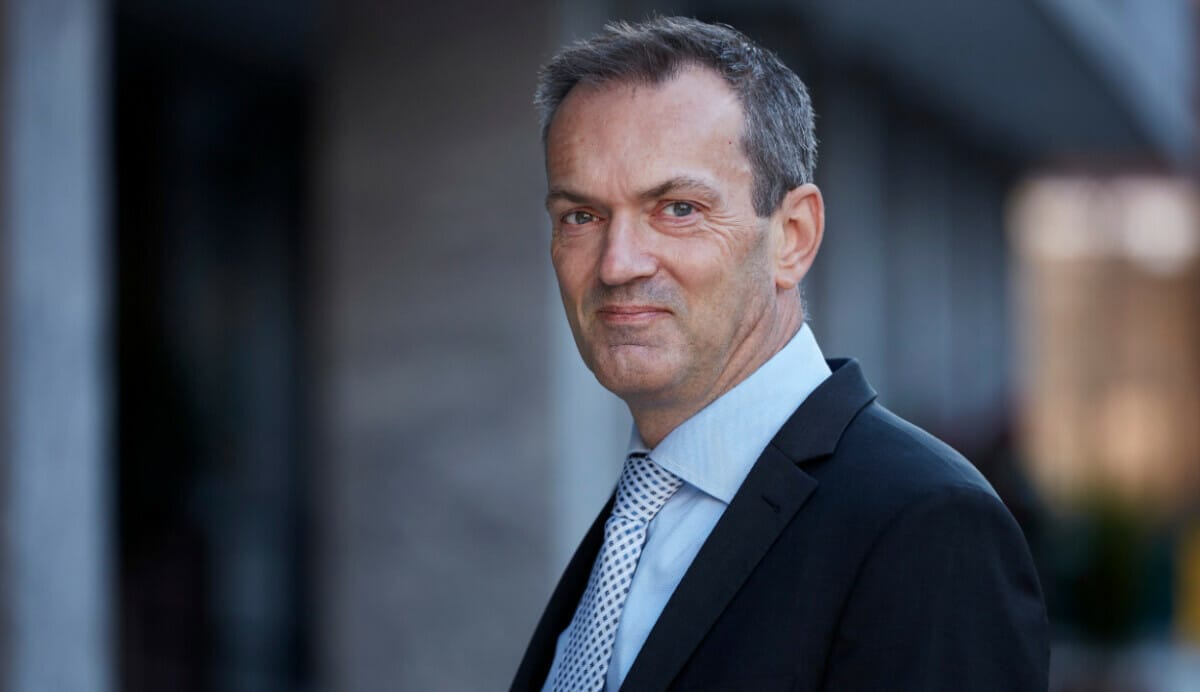
“We’d like to have an enhanced universe,” says Kjetil Houg, CEO of Folketrygfondet in an interview with Top1000funds.com. “Our share in Norway has grown overtime and we have reached our limits,” he says. “We are still waiting for a final response from the Ministry.”

Sponsored Content

At the moment, Folketrygdfondet’s expertise is primarily in listed markets, although the manager can invest in unlisted shares if a company’s board has expressed an intention to apply for a listing on the stock exchange.

“We have an edge in listed markets, but we are also asked to look for opportunities in private equity,” says Houg who describes a close relationship between the investment unit and the Ministry of Finance shaped around daily contact focused on practical and fundamental discussions.

“Politicians acknowledge the work we do is important to Norway,” he says. “Our investments have a stabilizing effect on the market, and we are counter cyclical, buying when others are selling.”

Liquidity issues

Only managing the fund’s large active allocations to the Norwegian market is increasingly challenging.

“We have almost 10 per cent of the free float on the Oslo Stock exchange,” continues Houg. “That means we will typically have a 10 per cent stake in a free float company.”

The challenge manifests particularly when Folketrygdfondet rebalances back to its classic 60:40 (equity/fixed income) portfolio boundaries.

“We bump into liquidity issues quite often,” explains Houg. This becomes more of an issue if the market moves against the portfolio whilst the rebalancing is in process, increasing the difference.

“In 2021 we had a particular difficult time, selling a lot of equities to bring the portfolio back into balance,” he says. “The Ministry of Finance expects 60:40 over time and we have to bring the allocation back to basics.”

Having such a large domestic allocation is also challenging during changes in the benchmark index. Index revisions happen twice year, and oftentimes cause the same liquidity headache by triggering overweight and underweight positions and the need to adjust the portfolio.

Folketrygdfondet’s diversified, bespoke, benchmark comprises around 150-200 names in both equity and credit. Some of the positions are held for years and holdings in blue chip stocks will be large. The active strategy aims to beat the benchmark, but one way the fund navigates the risk of being such a large investor is via its strict adherence to the benchmark with a maximum tracking error of 3 per cent.

“Relative to other investors we are always looking at our benchmark. In contrast to more actively managed funds that have more idiosyncratic risk, we have more market risk in a diversified benchmark. This is very important in terms of how we manage our risk.”

The fixed income allocation taps a variety of listed and liquid sources spanning different segments of the universe from investment grade to high yield; a special liquid allocation and stock lending. “It is not risk free. We have quite a lot of risk embedded here,” he says.

Credit and equity strategy is wholly shaped around a team approach and ethos.

“We don’t have any strong egos; everyone is making the same product. The managing director has ultimate responsibility, but decision-making is also bottom up and calibrated at team level.” In equity, nine portfolio managers specialise across specific sectors and all managers sit in the same room and discuss ideas across departments.

Alongside liquidity risk, most other key risks fall under an all-encompassing ESG umbrella that spans everything from money laundering issues with banks in the region to taxation in the fish farming industry.

“All our ESG issues are considered financial items,” he says.

The team seeks to underweight companies with ESG issues, he continues. “Typically, when we have experienced a loss, it is because we are on the wrong foot in terms of being under or overweight. We always try and close that gap and have introduced stop losses in some of these positions.”

Ownership

Ownership responsibility is another consequence of being the largest player in a small market.

“We get to know companies much better than other investors. It also gives them a chance to see into our decision-making processes so that they understand how we operate as an investor.”

Members of Folketrygdfondet’s investment team currently sit on 16 corporate nomination committees, nominating members to investee companies’ boards in a process that involves meeting different board candidates and bringing names to the committee.

“The aim is to ensure the best possible board of directors for a company,” he says.

Folketrygdfondet is a smaller player in Sweden but is just as vocal when it comes to board makeup. The asset manager is  using its ownership stake in Swedish corporates to boost board independence from corporate management.

“Swedish rules allow CEOs to also be board members, but we are voting according to the Norwegian code of conduct where the CEO and chairperson should be independent from the management of the company,” he says.

Folketrygdfondet may also end up running a new asset management unit and Houg and the team are currently carrying out analysis, coming up with suggestions on how a new and expanded mandate may look, and are due to report to politicians in mid-September.

“It’s very exciting. If it ends up being our responsibility, we would like to build something that lasts with purpose and the possibility to establish a modern investment unit with digital solutions,” says Houg.

Leave a Comment

The Austin advantage: Texas Teachers talks optimism, innovation and growth

The Austin advantage: Texas Teachers talks optimism, innovation and growth

Jase Auby, TRS's celebrated CIO, explains why TPA doesn't fit with its culture; why community push back on data centres could turn out to be an investor advantage, and argues the case for continuing to invest in fossil fuels. Top1000funds.com sat down with the CIO in his Austin office for an all-encompassing conversation.

Sort content by

Good for Harvard, good for the world: Why HMC embraced ESG with a passion

Harvard Management Corporation (HMC) signed up to the UN-supported Principles for Responsible Investment (PRI) less than a year ago, but the company that manages the $36 billion Harvard University endowment is already moving rapidly to build environmental, social and governance (ESG) factors into every investment decision it makes. Jane Mendillo, president and chief executive of

Behind the long-horizon equities mandate at The Pensions Trust

How to implement long-term ideology is one of the enduring questions for investors. Unilever UK Pension Fund, The Pensions Trust and the Environment Agency Pension Fund have collectively allocated $750 million to the start-up, Ownership Capital, for its long-horizon engagement-focused strategy. For The Pensions Trust chief investment officer, the decision to allocate to a specialist

The challenges of a low-carbon mandate

AP4 already has US and emerging markets low-carbon mandates and plans to invest up to $1 billion across various regions. Mikael Johansson, senior portfolio manager global equities, AP4 explains how the concept of responsible investment can be integrated into the investment process of a large pension fund and the challenges in implementing low carbon mandates.

NEST’s defined contribution lessons

At the end of last year, 47 per cent of global pension assets were in defined contribution structures. As the trend towards defined contribution continues, one of the newest DC funds, the UK’s NEST, has some clear messages on what makes a defined contribution fund work. Chief executive, Tim Jones speaks with Amanda White.  

UniSuper’s domestic equities bias

John Pearce recently notched up five years in the role of chief investment officer at the $37 billion Australian fund, Unisuper. Here he explains his fund’s bias to domestic equities and explains the parameters of the fund’s in house management program. David Rowley reports. John Pearce has a side bet with a member of his

Why Sunsuper likes hedge funds

One of Australia’s largest superannuation funds, the $27 billion Sunsuper, is adamant that it gets value out of its large hedge fund program. This is against the grain in Australia, where many large funds (with the exception of the Future Fund) choosing not to invest in hedge funds. So why does Sunsuper favour hedge funds?

Previous



