
Norges’ 1-stop shop for risk data

Norges Bank Investment Management has developed a proprietary database allowing it to assess non-financial risks across the 9000 portfolio companies in which it invests. The database gives its risk team and portfolio managers the ability to make more in-depth decisions around the sustainability of a company’s business.

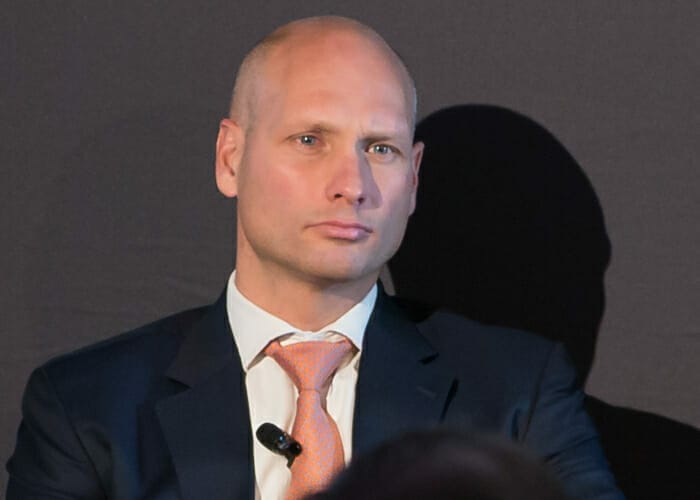
Speaking at the Fiduciary Investors Symposium at INSEAD, Patrick du Plessis, global head of risk monitoring at Norway’s NOK7.93 trillion ($940 billion) NBIM, explained the large investor’s approach to environmental, social and governance (ESG) risk and integration.

“Most investors are familiar with traditional investment risks and use these as the starting point for analysis, but we think to get a holistic picture of a company’s risk profile you need to take into account other risks, those that are below the surface and harder to identify,” du Plessis said. “We believe that what gets measured gets managed, and non-traditional financial data has been slower to become available.”

To counter this, the fund built its own database, which incorporates non-financial data alongside financial information.

“We don’t just look at financial data for opportunities; we think you need to look at ESG considerations as well, and that works for risk mitigation and investment opportunities,” du Plessis explained. “We need to consider all externalities and understand what they mean, because we are running a global fund.”

The database includes non-financial information on issues such as carbon, climate change, waste, water, child labour, corruption, and health and safety, at the country, sector and company level. The NBIM risk team incorporates the data into relevant systems, analyses and processes to facilitate a more comprehensive assessment of risk exposure. The data relies on company-reported ESG information, which is supplemented by other service providers, such as Trucost, MSCI and CDP.

Sponsored Content

This all allows for a deep dive on certain ESG themes. For example, all countries could be assessed on greenhouse gas risks. Risks can be viewed across countries and sectors, so a matrix could assess a risk threshold between countries and sectors, du Plessis said.

“The intention is to create a one-stop shop,” he said. “In one place we have traditional valuation metrics, benchmark-relative positions and a standalone ESG tab that looks at company ratings, fossil fuel compositions and inherent country and sector risk. The risk team and portfolio managers can use the tool and find much of what they need. The intention is to create a good dialogue between the risk team and portfolio managers.”

NBIM can look at specific ESG risk related to a certain theme, such as conventional electricity in the US. The database will spit out those companies with an inherent risk related to that theme that could affect the sustainability of business models. The risk team can then focus on 60 or 70 companies specific to that threat.

“This is not a discussion about ethics, it’s about the sustainability of business,” du Plessis said. “We are not just looking at income statements but other things below the surface of the iceberg. This is the quantifying and formalisation of ESG in the business analysis process.”

Risk and portfolio managers get a more holistic company profile, including traditional and non-traditional factors, on which to assess companies.

NBIM has three pillars to its responsible investing approach:

  1. Standard setting: It collaborates on global standards and expectations. Because of the sheer size of the portfolio (9000 companies) the fund can’t engage with all of them. Standard setting, and expectations documents, create an opportunity to affect them all.
  2. Active ownership: NBIM engages on specific ownership issues with the most material holdings.
  3. Risk: the entire portfolio of 9000 companies is examined on a risk basis. The database is a key tool for this.

Separate from this ESG risk analysis, NBIM is mandated by the Norwegian Ministry of Finance to implement certain exclusions, including coal, on ethical grounds.

Leave a Comment

How CPP is evolving risk management for a faster, more interconnected world

How CPP is evolving risk management for a faster, more interconnected world

In an environment where multiple risks are emerging and their effects are compounding on the portfolio, CPP Investments' chief risk officer Priti Singh says the $572 billion fund is rethinking risk management from the ground up, shifting from reaction to preparation and embedding risk thinking earlier in investment decisions. She speaks to Amanda White about the fund's risk approach.

Sort content by

Danish PFA mutes Euro pessimism

Danish pension investor PFA is continuing a switch out of European government bonds in favor of global equities, but has begun reinvesting in Europe’s southern periphery. DKK-350-billion ($63-billion) PFA announced a $900 million purchase of equities in April, commenting at the time that the crisis in Cyprus had increased the risk to its European bond

UK local authority funds question “bigger is best”

UK local authority schemes are under pressure to merge. It’s their turn to suggest ways in which pooling investments, or adminstriation, could achieve the economies of scale necessary for survival, but many are resisting the notion that “bigger is better” when it comes to investments.   The United Kingdom’s local government pension schemes have begun

Longevity storm in Nedlloyd’s cruise to safety

Setting a strategy to keep an ageing pension fund in fine health is “a lot more challenging than selecting where to invest premiums flowing into a young fund,” reflects Frans Dooren, chief investment officer of the Nedlloyd Pension Fund. Dooren began to skipper investment strategy at the €1.2-billion ($1.6-billion) fund in 2011, taking over after

Penny Green: London’s lady of the long term

When Penny Green joined the Superannuation Arrangements of the University of London (SAUL) as chief executive in 1998, the multi-employer defined benefit scheme had £790 million ($1.27 billion) assets under management and two asset managers. Sixteen years later the pooled fund now manages assets for 49 employers in higher education institutions including the University of

The Finnish line: Varma tackles low interest

The scourge of low interest rates looks likely to be confronting investors for at least a little longer after Washington’s budgetary shenanigans delayed the Federal Reserve’s plans to taper quantitative easing. Over in the more sedate surroundings of Helsinki, this is keeping the pressure on the investment policy of Varma, a €36-billion ($49-billion) Finnish pension

Finding wriggle room in North Dakota

The monthly income pouring into the $1.3-billion North Dakota Legacy Fund arrives as thick and fast as fracking technology and new pipeline networks can draw the state’s oil and gas reserves to the surface. But investment strategy at the fund, set up in 2008 when it was portioned 30 per cent of the tax dollars

Previous




