
Norges’ 1-stop shop for risk data

Norges Bank Investment Management has developed a proprietary database allowing it to assess non-financial risks across the 9000 portfolio companies in which it invests. The database gives its risk team and portfolio managers the ability to make more in-depth decisions around the sustainability of a company’s business.

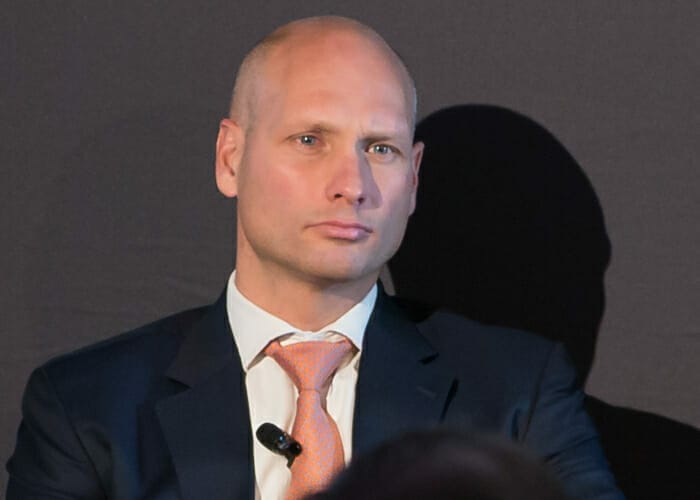
Speaking at the Fiduciary Investors Symposium at INSEAD, Patrick du Plessis, global head of risk monitoring at Norway’s NOK7.93 trillion ($940 billion) NBIM, explained the large investor’s approach to environmental, social and governance (ESG) risk and integration.

“Most investors are familiar with traditional investment risks and use these as the starting point for analysis, but we think to get a holistic picture of a company’s risk profile you need to take into account other risks, those that are below the surface and harder to identify,” du Plessis said. “We believe that what gets measured gets managed, and non-traditional financial data has been slower to become available.”

To counter this, the fund built its own database, which incorporates non-financial data alongside financial information.

“We don’t just look at financial data for opportunities; we think you need to look at ESG considerations as well, and that works for risk mitigation and investment opportunities,” du Plessis explained. “We need to consider all externalities and understand what they mean, because we are running a global fund.”

The database includes non-financial information on issues such as carbon, climate change, waste, water, child labour, corruption, and health and safety, at the country, sector and company level. The NBIM risk team incorporates the data into relevant systems, analyses and processes to facilitate a more comprehensive assessment of risk exposure. The data relies on company-reported ESG information, which is supplemented by other service providers, such as Trucost, MSCI and CDP.

Sponsored Content

This all allows for a deep dive on certain ESG themes. For example, all countries could be assessed on greenhouse gas risks. Risks can be viewed across countries and sectors, so a matrix could assess a risk threshold between countries and sectors, du Plessis said.

“The intention is to create a one-stop shop,” he said. “In one place we have traditional valuation metrics, benchmark-relative positions and a standalone ESG tab that looks at company ratings, fossil fuel compositions and inherent country and sector risk. The risk team and portfolio managers can use the tool and find much of what they need. The intention is to create a good dialogue between the risk team and portfolio managers.”

NBIM can look at specific ESG risk related to a certain theme, such as conventional electricity in the US. The database will spit out those companies with an inherent risk related to that theme that could affect the sustainability of business models. The risk team can then focus on 60 or 70 companies specific to that threat.

“This is not a discussion about ethics, it’s about the sustainability of business,” du Plessis said. “We are not just looking at income statements but other things below the surface of the iceberg. This is the quantifying and formalisation of ESG in the business analysis process.”

Risk and portfolio managers get a more holistic company profile, including traditional and non-traditional factors, on which to assess companies.

NBIM has three pillars to its responsible investing approach:

  1. Standard setting: It collaborates on global standards and expectations. Because of the sheer size of the portfolio (9000 companies) the fund can’t engage with all of them. Standard setting, and expectations documents, create an opportunity to affect them all.
  2. Active ownership: NBIM engages on specific ownership issues with the most material holdings.
  3. Risk: the entire portfolio of 9000 companies is examined on a risk basis. The database is a key tool for this.

Separate from this ESG risk analysis, NBIM is mandated by the Norwegian Ministry of Finance to implement certain exclusions, including coal, on ethical grounds.

Leave a Comment

Why NYC pensions CIO hasn’t drunk the ‘TPA Kool-Aid’

Why NYC pensions CIO hasn’t drunk the ‘TPA Kool-Aid’

Three decades of investing have given Monte Tarbox sharp eyes for recognising risk and opportunities, and he’s putting it to use as the new permanent chief investment officer of the $306 billion NYC Bureau of Asset Management. In an interview with Top1000funds.com, Tarbox outlines his vision for the fund, why he’s bullish on infrastructure but “nervous” on PE, and why he hasn’t drunk the TPA “Kool-Aid”.

Sort content by

Behind the long-horizon equities mandate at The Pensions Trust

How to implement long-term ideology is one of the enduring questions for investors. Unilever UK Pension Fund, The Pensions Trust and the Environment Agency Pension Fund have collectively allocated $750 million to the start-up, Ownership Capital, for its long-horizon engagement-focused strategy. For The Pensions Trust chief investment officer, the decision to allocate to a specialist

The challenges of a low-carbon mandate

AP4 already has US and emerging markets low-carbon mandates and plans to invest up to $1 billion across various regions. Mikael Johansson, senior portfolio manager global equities, AP4 explains how the concept of responsible investment can be integrated into the investment process of a large pension fund and the challenges in implementing low carbon mandates.

NEST’s defined contribution lessons

At the end of last year, 47 per cent of global pension assets were in defined contribution structures. As the trend towards defined contribution continues, one of the newest DC funds, the UK’s NEST, has some clear messages on what makes a defined contribution fund work. Chief executive, Tim Jones speaks with Amanda White.  

UniSuper’s domestic equities bias

John Pearce recently notched up five years in the role of chief investment officer at the $37 billion Australian fund, Unisuper. Here he explains his fund’s bias to domestic equities and explains the parameters of the fund’s in house management program. David Rowley reports. John Pearce has a side bet with a member of his

Why Sunsuper likes hedge funds

One of Australia’s largest superannuation funds, the $27 billion Sunsuper, is adamant that it gets value out of its large hedge fund program. This is against the grain in Australia, where many large funds (with the exception of the Future Fund) choosing not to invest in hedge funds. So why does Sunsuper favour hedge funds?

Behind the strategy of the French pension reserve fund

The French pension reforms in 2010 had a profound impact on the asset allocation of the Fonds de reserve pour les Retraites, the €35.8 billion French pension reserves fund. Instead of making payouts between 2020 and 2040, after the reform, the FRR has to pay €2.1 billon to Caisse d’Amortissement de la Dette Sociale (CADES)

Previous




