
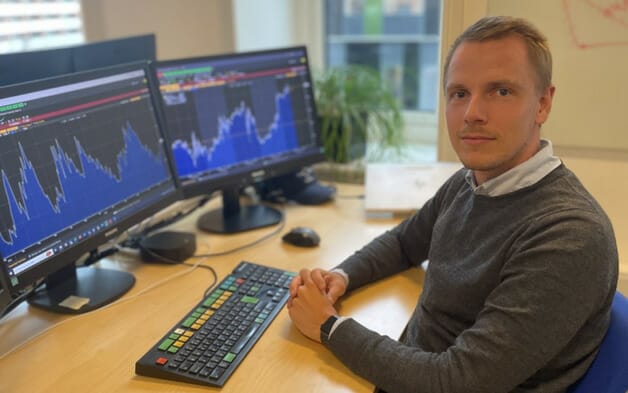

Lægernes Pension, Denmark’s DKK100 billion ($14 billion) pension fund founded in 1946 for medical doctors has just completed a series of tech investments to further sharpen its investment processes.
As the complexity of its investment process grows in its active, strategic, and tactical strategy so has its technology spend in a trajectory that is increasingly viewed as pioneering for the little-known pension fund with a small internal headcount.
Lægernes Pension’s latest tech investment is focused on boosting data management in its systematic strategies to improve due diligence, portfolio modelling and reporting. The systemic allocation is part of a liquid overlay designed to improve the risk-adjusted return of the overall portfolio.
The new technology streamlines data coming into the investment team from the fund’s asset managers and banking counterparties, explains Michael Daniel Andersen, head of portfolio construction who has overseen the introduction of the technology with service provider Premialab. All Lægernes Pension’s strategic and tactical asset allocation is managed in-house, apart from security selection which is managed externally bar an allocation to Danish bonds and inflation linked paper.
Granular data is channelled into one, standardized format comprising everything from performance and risk metrics to exposure levels across every position in the fund’s systematic strategies. Everyone in the investment team can see the results of the data and check their risk exposures describes Andersen, who joined Lægernes Pension as an analyst in 2017.
“We have a large exposure to systematic strategies relative to other European pension funds and are quite pioneering in how we view the allocation,” he says, predicting that one of the most important new data sets about to come down the pipe will be natural language processing revealing what people are reading and researching to offer valuable new investment signals. “It could provide a new way to invest. It’s early days, but I think it will be one of the most exciting developments.”
Risk
Lægernes Pension’s systematic strategies comprise more than 1000 different underlying positions that are too extensive for the internal team to oversee. Risk modelling is based not only on asset classes but also risk factors like liquidity, growth, inflation and interest rates. The new technology has allowed the fund to reduce volatility in the overall portfolio and has helped avoid some of the most severe drawdowns of 2022.
It allows the investment team to see into exposures, offering granular detail on which allocations are doing well and which are doing badly, he says. It also flags the risk of overlapping exposures in a strategy that aims to have exposure to every factor – but avoid the duplication that typically spike during large market moves.
“Risk exposures in complex strategies change all the time, and during large market movements some of the systematic strategies could end up with the same positions,” he says. “This technology helps us identify what the risk exposures are and reduces the amount of time we spend monitoring the process providing us with the broadest amount of data to make decisions.”
The technology is also supporting Lægernes Pension’s portfolio construction which is also set according to risk exposures and factors. “We use the technology to outline what the main risk exposures are and this helps us perform quicker analysis when we need to change things. We are now able to implement at a much faster pace, despite being a small firm. We would have a hard time taking on the risk if we didn’t have this – we would have difficulties handling it internally on the ground.”
Tactical
Away from the overlay portfolio, a tactical asset allocation is also a key driver of returns and shaped according to the business cycle and monetary policy taking a 6 – 12-month view. The investment team also run an equity sector selection model in house which goes long or short some equities as part of the strategic process – also driven by the business cycle. The strategic asset allocation includes bonds, listed and private equity and real assets with around 28 per cent of the portfolio in illiquid assets. An infrastructure allocation comprises mostly renewables and digital infrastructure.
Andersen’s key advice to others is to ensure robust governance so the investment team always know where they are invested and have access to the best tools to make the most informed decision. “Work with counterparties to help,” he says, concluding that technology will increasingly shape the investment process. “You will still need people to point the technology in the right direction. But investment teams will change how they operate and how people use their time,” he predicts.








Leave a Comment
You must be logged in to post a comment.
Login