

Having completed its first year with a fully invested portfolio, the ¥11 trillion ($77 billion) Japan University Fund (JUF) is now ramping up active strategies and carving out country-specific passive allocations.
The fund is a young endowment only established in 2022 to support research and development at Japanese universities, whose output and quality have declined compared to international counterparts over the past two decades, according to annual indicators published by the Ministry of Education, Culture, Sports, Science and Technology (MEXT).
It sits within the Japan Science and Technology Agency and was seeded with ¥10 trillion by the Japanese government – 11 per cent as an investment, 89 per cent as a fiscal loan. Unlike traditional Japanese pension funds focused on meeting minimum return targets, JUF has a mandate to maximise returns within its risk limits.
As part of a new strategy focusing more on active management and closer manager collaboration, the fund has several RFPs in market including for active managers in US and emerging markets equity, as well as European credit. It is also preparing some country-specific passive equity allocations to reduce the current large, index-driven US exposure.
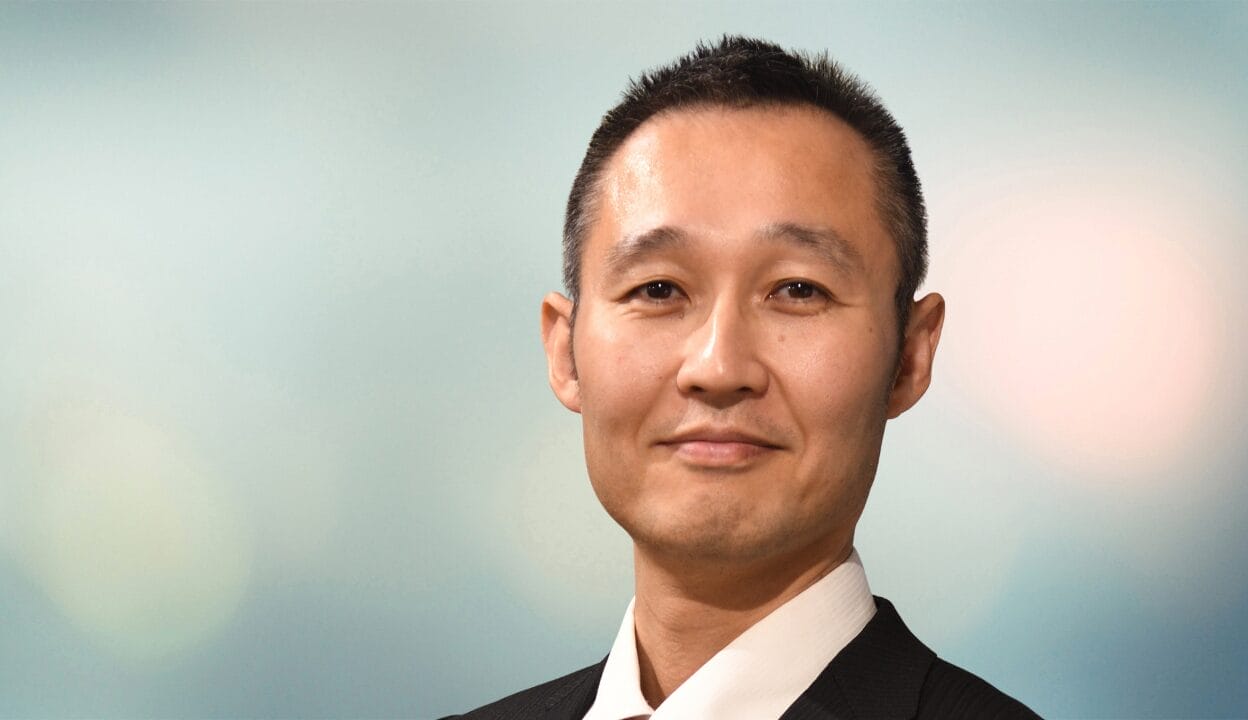
JUF prides itself on being a new breed of Japanese public allocators that are more adaptive to high volatility and structural changes in the markets, and new external managers who want to join the fund’s expanding roster should champion the same qualities, says co-chief investment officer and head of global investment Naoya Sugimoto.
“Typically, the public investors try to be more conservative, but we are not the case. We try to adapt the new world, and we ask managers to be more flexible as well,” he tells Top1000funds.com.
“And if they feel there are restrictions of [mandate] guidelines, then we can talk about the relaxation of the guidelines to reflect the new world of the investments or a new market.”
Sugimoto’s own career reflects the new age of finance professionals as the industry moves towards more quantitative and technology-based skills. Starting as an artificial intelligence researcher, he moved on to work in cryptography with a focus on microchip encryption, such as how personal information like fingerprints can be stored on passports.
He entered the finance industry as a quant researcher managing mortgage repayment models and valuations of rates derivatives at Credit Suisse in 2007. “I was not familiar with the market at all,” Sugimoto admits. “I was good at, you know, mathematics, programming and computer science.”
His background as an engineer and scientist gives Sugimoto a special affinity to initiatives at JUF and in 2022 he was headhunted from his then position at Goldman Sachs.
Hit the ground running
JUF had a 25.7 per cent allocation in global equities as at the end of March 2025, out of which 2.1 per cent is active investments, according to its annual report released last Friday. During FY2024, the fund added active strategies including in Japanese equity, Sugimoto says.
“We’re gradually implementing active management. At the beginning, we had to invest from day one, and we did not have time to select the [active equity] managers, so we started from passive ETFs and passive managers,” he says.
Global fixed income still represents the majority of the portfolio with a 65 per cent allocation – 50.2 per cent of that allocation is managed in-house, 6.9 per cent is external passive and 7.9 per cent is external active.
Managing a large portion of fixed income in-house allows the fund to more easily manage liquidity and risk, Sugimoto says, and is not just focused on returns
“We manage the forward balancing, the total portfolio risk level, and the total portfolio factor balancing like currencies or durations [through the in-house team]. So from that point of view, what the fixed income team is managing towards is not to beat the benchmark,” he says.
Alternatives, including private equity, private debt, real estate and infrastructure, account for 8.2 per cent of the portfolio and short-term assets like deposits make up 1.2 per cent.
The fund’s total annual return was 1.7 per cent but alternatives outshone all other asset classes with an 8.6 per cent return, due to valuation increases centred around secondary strategies, the annual report said. Global fixed income and equity, which also include domestic Japanese assets, delivered 0.2 per cent and 4.5 per cent respectively.
JUF’s mandate is to maximise returns within the risk tolerance of a 65:35 reference portfolio set by the government, and it uses a factor-based approach to control risk.
“For example, the US equity from Japanese investment point of view, they have the US equity local factors, and also US dollar currency factors. We are distinguishing that difference,” Sugimoto says.
“When we invest in the US corporates, there are interest rate duration factors, and also the corporate spread factors.”
The sweet spot
JUF’s current portfolio is intentionally more conservative than the reference portfolio because it is building a stable financial “cushion” for the eventual repayment of the government fiscal loan, set to begin in 20 years.
“We are overweight fixed income, but that is not reflecting our market view – this is reflecting the equity cushion accumulation,” Sugimoto says.
“Also we have a meaningful portion of private assets… It takes time for actual asset investment from commitment, and we see the vintage diversification [benefits] for the private assets.”
Sugimoto says for JUF, it’s more about finding the sweet spot between strategic asset allocation and a total portfolio approach.
“For controlling risks, the factor is important, rather than asset classes. From that aspect, we are part of total portfolio approach,” he says.
“But from the organisational point of view, they [TPA funds] are managing investments in a generalist style… they are managing whether the investment is above the target return of the total portfolio or below.
“Our approach is more like an asset class-based organisation, because we would like to accumulate the knowledge or experience in each team.”
With that said, JUF still actively encourages asset class teams to communicate and break down silos. For example, when the asset allocation team is forming macro views on matters like wage growth, the public and private equity teams may have on-the-ground input from their portfolio companies.
“That’s live activities or live sentiments that can be reflected to the asset allocation or vice versa,” Sugimoto says.
JUF’s next long-term objective is to achieve an annual investment profit of ¥300 billion and no later than FY2026 – an estimate of how much it takes to support the universities in the long term.
It will remain in the so-called “ramp-up period” of the portfolio until the policy portfolio allocation is achieved, which should be no later than FY2031.
Tohoku University was the recipient of the first government research grant funded via JUF in 2024, which will be distributed yearly for up to 25 years. Eight other universities are in the race this year, including the University of Osaka, Kyoto University, Waseda University, the University of Tokyo, Kyushu University, the Institute of Science Tokyo, the University of Tsukuba and Nagoya University.








Leave a Comment
You must be logged in to post a comment.
Login