


The ¥12 trillion ($75 billion) Japan University Fund is furthering its push to direct fund selection in alternatives alongside the fund-of-funds approach it has favoured so far, as the young endowment looks to take further control of the manager selection process.
It comes amid a rapid expansion of the fund’s alternatives program, where the market value of portfolios across private equity, private debt, infrastructure and real estate almost doubled in the year to March 31, now representing 14 per cent of the total fund or ¥1.7 trillion ($10 billion).
The biggest component is the ¥1 trillion ($6.1 billion) private equity/private debt portfolio, where JUF recently began direct private equity fund investments in global mid/small-cap buyout and growth strategies.
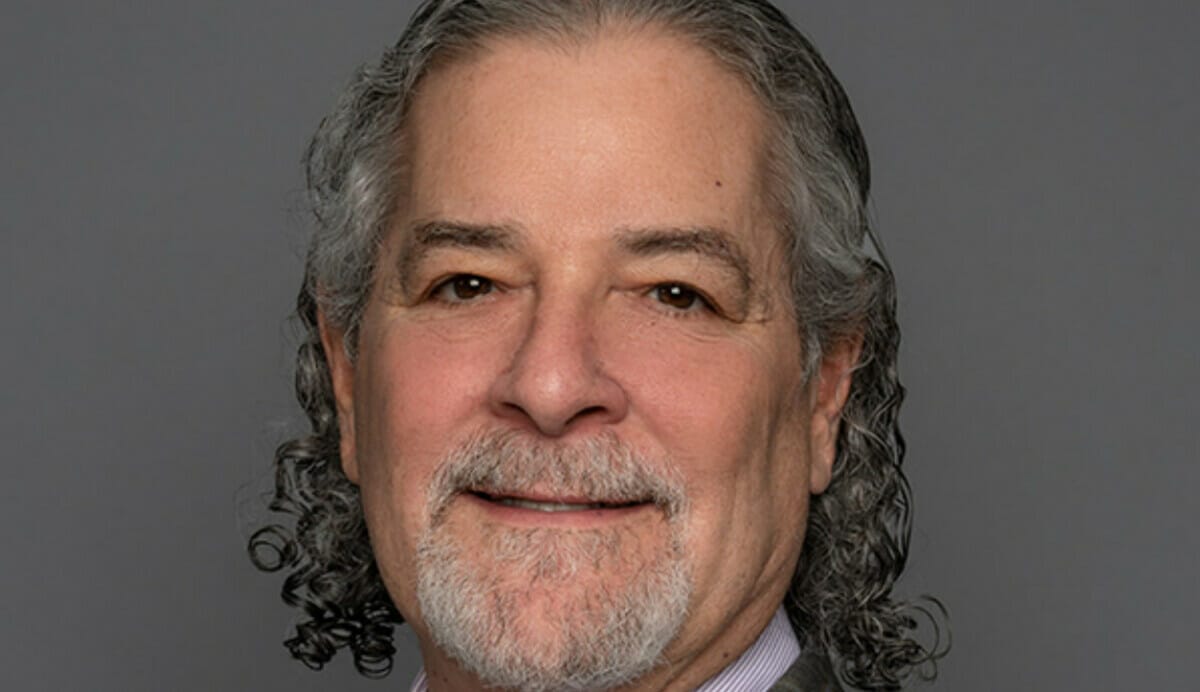
“A couple of years ago we started our direct [fund] investing, but of course not with everything, so we started one-by-one from the large buyout space,” Naoya Sugimoto, co-chief investment officer and head of global investment, tells Top1000funds.com. “It’s a natural direction [for our program].”
“We started in the mega/large buyout space because there are not so many players, so we can capture the universe. But [the areas] where there are many smaller players were later priorities for us.”
One advantage of the change to direct fund investment is it will enhance JUF team’s internal knowledge and facilitate deeper communications as internal staff will be more in tune with the fund’s investment objectives, Sugimoto says.
Last year, JUF also made direct investments into two infrastructure funds. Sugimoto says the focus for now is on “basic” and low-risk assets including core and super core infrastructure.
Secondaries – which JUF invests through private equity and, to a lesser extent, infrastructure and real estate – play a big role in the portfolio for vintage and sector diversification purposes. Mitigating the J-curve drag is a part of the consideration but the fund’s payout target of inflation plus 3 per cent won’t kick in until the end of FY2031 – the deadline for its so-called “ramp-up period” to achieve policy portfolio allocation – which means the return pressure is lower for the fund in earlier years.
The fund was established in 2022 by the Japan Science and Technology Agency, the national body for promoting critical research and development. The fund carries the purpose of boosting the capital reserve with annual distributions to fund R&D at Japanese universities, which pales by comparison with those of international counterparts.
It was seeded with ¥10 trillion by the Japanese government – 11 per cent as an investment, 89 per cent as a fiscal loan, which the fund will have to repay.
JUF returned 10.7 per cent on a fund level in the year to March 31, with global equities the biggest driver of performance, returning 27.2 per cent; and alternatives, which returned 17.1 per cent. Global fixed income (including Japan) represents more than half of the portfolio (56.8 per cent), followed by global equities (28.8 per cent).
Grappling with currency risks
JUF’s hedging ratio to major currencies dipped to 41.7 per cent at the end of March compared to 46.4 per cent of the previous corresponding period, which is still high by public investor standards compared to Japanese public and pensions that usually run their portfolios unhedged.
Part of the reason is a difference in fund objectives, Sugimoto says.
“For a typical Japanese public pension, it’s their mandate to reach target returns with minimum risk, and their policy portfolio is given by the higher level of governance to the investment teams,” he says. “The policy benchmark itself in Japan in the public pensions space tend to be unhedged-based, so there’s no investment consideration.
“Our mandate is maximising returns within the risk tolerance, and then in that constraint, we can set policy portfolios by ourselves. It’s true that that should be approved by the advisory committees, but at least we have more flexibilities to… set policy allocations.”
The fund’s reference portfolio is made up of 65 per cent MSCI ACWI global equities index and 35 per cent global fixed income index, which means non-Japanese yen currency is roughly 93 per cent, Sugimoto says.
He acknowledges the trend of de-dollarisation but said while the fund will look for more regional and currency diversification, it doesn’t necessarily mean a reduction in US asset exposures especially given that it’s a major market in private investments.
“There is no 100 per cent hedged or 100 per cent unhedged [rules], it’s very much an open discussion as we are controlling our currency risks,” he says.







Leave a Comment
You must be logged in to post a comment.
Login