
How the tech surge has hit active management at Denmark’s AP Pension

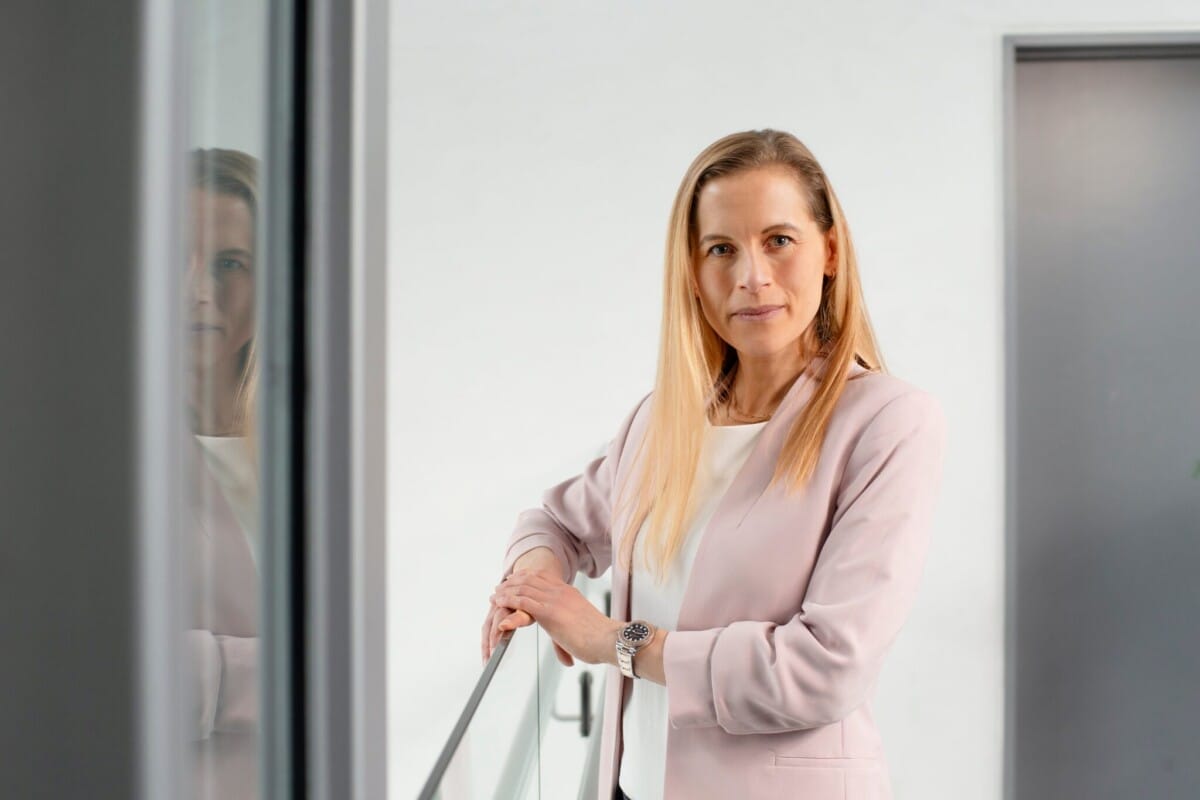
The active equity strategy of Denmark’s €23 billion AP Pension – which focuses on a narrow exposure to a small set of high conviction, quality companies – has been hit by the surge in tech stocks, none more so than Nvidia. Investment director Pernille Jessen explains the problem.

Active equity investors convinced they can outperform the market over the long term have found the dominance of tech stocks has made their job harder.

Like Denmark’s €23 billion AP Pension, the 100 year old Danish fund for employees at large and medium sized companies. The latest returns came in lower than the benchmark because the investor doesn’t hold a market weight in the likes of top performing chipmaker Nvidia, and the other high-flying tech shares. The pension fund’s so called AP Active allocation has a five year return of 5.5 per cent and a ten year return of 6.8 per cent but in the first half of this year delivered a lower return than the market.

Apple, Microsoft, Nvidia, Amazon, Meta, Alphabet (A and C class shares), Broadcom, Tesla and Lilly make up the top 10 constituents in the MSCI World Index at the end of July. AP Pension’s largest allocation lies in Microsoft, Alphabet and Novo Nordisk, respectively. Although it also has sizeable allocations to Apple, Meta and chip maker TSMC, it has a much smaller allocation to Nvidia.

Although the investor’s limited exposure to the latest investment boom has dented returns, investment director Pernille Jessen, who joined AP Pension from AkademikerPension where she was co-CIO, has no plans to change her approach.

“It is to be expected that our active investment strategy from time to time will underperform the market over shorter timeframes, and we are still convinced that this is the right strategy for the long run,” she tells Top1000funds.com.

Sponsored Content

AP Pension’s active equity approach focuses on a narrow exposure to a small set of high conviction, quality companies. She says the strategy has worked historically and is the reason why the fund has delivered a good performance over time. Still, she says it also means it’s possible to miss the “high jumpers.”

Like Nvidia’s surging stock price, responsible for the outsized share of returns in global equities this year thanks to the boom in demand for chips that can train and run powerful generative AI models such as OpenAI’s ChatGPT.

Nvidia’s gains alone have been responsible for roughly a third of the S&P 500’s increase in 2024. In June, the chipmaker passed the $3 trillion market cap and briefly overtook Apple and Microsoft to become the most valuable U.S company.

The take off in AI means equity returns have been concentrated on a small number of companies and an even smaller number of industries, she continues. This has led to dominance of “only one major investment style” that means active investors like AP Pension have lost out.

“Such an unusual environment is a challenge to our active investment strategy,” she says.

The fund is exposed to AI as a theme in its equity portfolio but has chosen other companies in the tech space which it judges have a “more reasonable pricing and better diversified business models than Nvidia.”

“When sourcing companies for our equity portfolio our main focus is on quality, and this is also the reason we’ve been underinvested in Nvidia,” she continues.

Pernille is not surprised that AI related companies have become market darlings, especially Nvidia, which she describes as at the forefront of “developing AI infrastructure and doing so very profitably.”

She compares today’s AI boom to the tech boom in the late 1990’s when the internet took off and believes that AI holds the potential to boost productivity in the service sector, which would be a major gain for economies and (equity) markets.

Asset allocation

AP Pension’s portfolio consists of five asset classes – fixed income, credit, equities, low volatile credit and real assets – and the composition of the portfolio is governed by the desired risk level and diversification.

The portfolio is divided between government bonds (33.14 per cent) investment grade bonds (3.12 per cent) high yield bonds (5.13 per cent) emerging market bonds (4.40 per cent) global shares (33.26 per cent) emerging market shares (2.27 per cent) private equity (2.27 per cent) infrastructure (3.10 per cent) and property (12.6 per cent)

Limits apply to the share of illiquid assets to cap the overall illiquidity of the portfolio. Currency risk is also hedged, she explains. “We view currency risk as undesired and [hedging] allows us to carry more risk in the asset classes.”

The fund doesn’t use leverage in the strategic asset allocation but leverage is embedded in real estate investments and is applied in the tactical asset allocation. The strategic asset allocation is reviewed and decided on a yearly basis by the board.

Geopolitical risk is also increasingly front of mind. She says the fund tries to mitigate geopolitical risks through portfolio construction where the focus is on constructing a well-diversified and robust portfolio. Part of this is to ensure an adequate level of liquidity in the portfolio.

She says that in terms of decision-making the fund is very agile and able to adapt fast if need be. It enables the fund to focus on the issues that drive economies and markets not being distracted by what is most of the time (geo)political noise.

Apart from active equities, recent returns were also dented by the struggling performance in real estate, challenged by the increase in yields on the back of monetary policy tightening.

“The increase in yields negatively impacts real estate with a lag especially fund of funds, and it is in particular our UK focused real estate funds that have had a challenging start to the year.”

The UK real estate market has furthermore been negatively impacted by idiosyncratic factors related to the UK economy and politics. “The UK still suffers from the Brexit decision,” she says.

Asset Owner:AP Pension

Leave a Comment

How CPP is evolving risk management for a faster, more interconnected world

How CPP is evolving risk management for a faster, more interconnected world

In an environment where multiple risks are emerging and their effects are compounding on the portfolio, CPP Investments' chief risk officer Priti Singh says the $572 billion fund is rethinking risk management from the ground up, shifting from reaction to preparation and embedding risk thinking earlier in investment decisions. She speaks to Amanda White about the fund's risk approach.

Sort content by

Passive tilt for Massachusetts state fund

The $42 billion Massachusetts Pension Reserves Investment Management (PRIM) will move half of its developed non-US equity portfolio and 25 per cent of its emerging market equity portfolio into passive strategies and has begun a search for a single manager for each asset class with a commencement date of May. mrec4inarticleinline Sponsored Content scnative1 scnative2

World’s largest DC plan to tender investments

The $244 billion Thrift Savings Plan, the largest defined contribution plan in the world, faces an enormous operational challenge this year as it moves from an opt-in to an opt-out default for US federal employees. Amanda White spoke with executive director Greg Long about the fund’s plans for 2010, which include a substantial investment tender.

Global views spur LPFA’s bets on growth, diversification

With the ability to make investments of up to £50 million ($80.4 million) without board oversight, the London Pensions Fund Authority (LPFA) has boosted its exposure to emerging markets while also buying global infrastructure, commodities and solar energy. Chief executive Mike Taylor told Simon Mumme about some further opportunities, such as Brazilian agriculture, the fund

Strong internal team powers New Jersey fund

The $68 billion New Jersey Division of Investment (NJDI) has made claims to be the best performing public pension fund in the US in fiscal year 2009. This is made all the more impressive considering the internal investment team, which manages a large majority of assets, numbers only 16. Amanda White looks behind the scenes

Wisconsin remains confident in disciplined approach to active management

The Wisconsin Investment Board is not tweaking its asset allocation or adding inflation-linked assets to its line-up in reaction to the market turmoil, rather, it’s continuing to focus on generating alpha from active management. Chief investment officer, David Villa, spoke with Amanda White about the fund’s disciplined approach to hiring and firing. mrec4inarticleinline Sponsored Content

ATP tells polticians at Copenhagen ‘we’re ready’

The giant Danish fund ATP has earmarked €1 billion to a climate change action fund, deliberately timing the launch of the commitment to coincide with the UN conference in its capital, Copenhagen. Amanda White spoke with chief investment officer of ATP, Bjarne Graven Larsen, about how the fund is using its sizeable capital to incite

Previous



