
How NBIM spots portfolio managers’ biases using AI

Norges Bank Investment Management (NBIM) is using an internally developed engine powered by AI to monitor and measure its portfolio managers’ skills, aiming to identify behavioural biases, improve decision making, efficiency of trades and save costs.

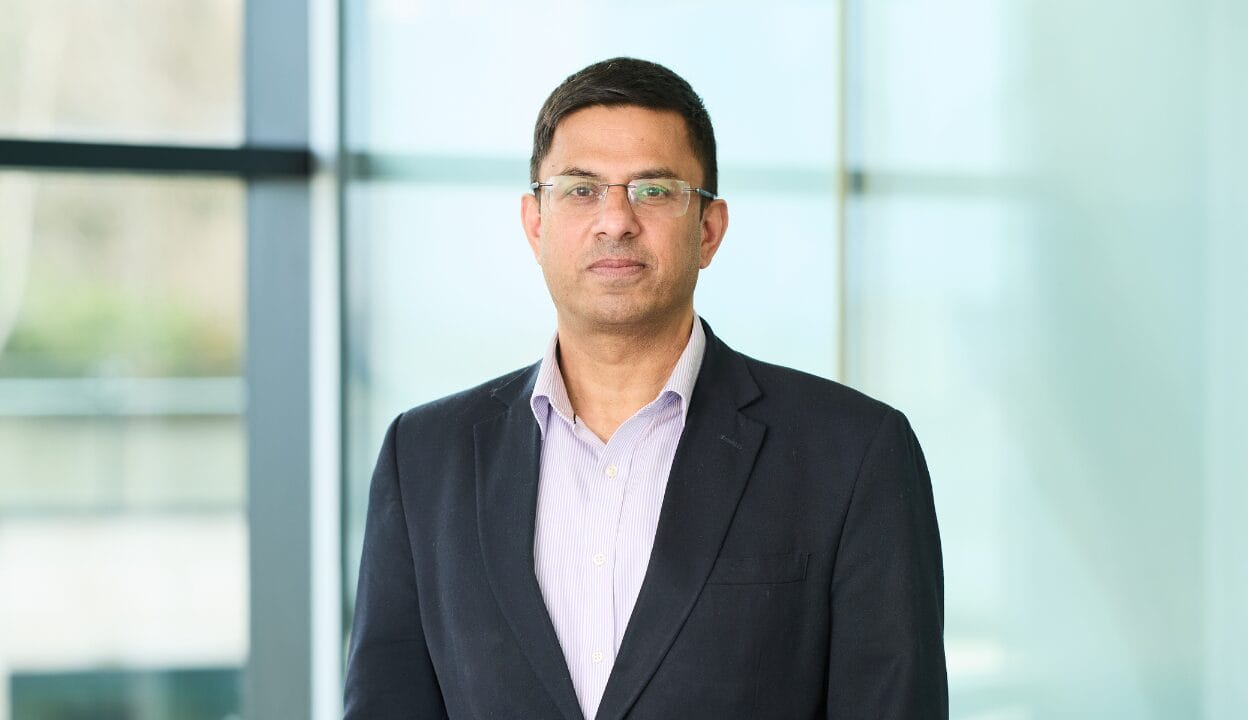
The system, called the Investment Simulator, currently covers all internal active portfolio managers in NBIM’s sector strategies as well as external fund managers of the $1.8 trillion investor. The result is information that helps them reflect on their trading patterns and identify strengths and weaknesses, according to NBIM head of Singapore and co-head of equity trading Sumer Dewan.

As the world’s largest investor, the fund makes around 49 million transactions per year, trading around the clock with its Singapore, Oslo, London, and New York offices’ coverage.

NBIM started expanding the tool’s usage in equity trading as a part of its three-year company plan which began in 2023. It stated at the time that the goal is to “promote psychological safety so that our portfolio managers dare to be contrarian and avoid herd behaviour”.

The tool provides a behavioural score of stock pickers based on historical order records. While Dewan declined to identify specific factors the scorecard tracks, one basic example is whether a portfolio manager holds onto their losing companies for too long, or their winners for too short.

Eventually, the fund wants the tool to become “agentic”, giving more real-time feedback and suggestions, instead of just after-the-fact.

Sponsored Content

“[The Investment Simulator] will be there soon… the speed at which this can be made [happen] is just incredible,” Dewan tells Top1000funds in an interview.

“Even where I sit, when a new trade comes in, I see who has sent it – let’s get a behavioural analysis of them.

“[It can also] tell me everything I need to know about this company very quickly, discuss current market conditions, and make recommendations of the best way to transact.”

There is also another version of the scorecard for NBIM’s traders and index portfolio managers, who have shorter trading time horizons compared to portfolio managers in sector strategies.

“But both scorecards are multidimensional in nature – timing, sizing, positioning, trading around and responding to events,” Dewan said.

“Traders also have tremendous discretion about how they trade so there are lots of variables we can look into.”

AI integration fund-wide

NBIM is well-advanced in its integration of AI in investment processes. The fund’s chief executive, ex-hedge fund manager Nicolai Tangen, is leading from the top with a clear message that using AI is not an option, but a must.

The fund has “AI ambassadors” scattered in different offices who Dewan says are volunteers spreading knowledge about the technology and helping people “unlock the door”. Departments and investment units in the firm are also encouraged to conduct their own AI projects with the ambassadors’ help.

Claude, a family of AI models and assistant developed by US firm Anthropic, is the main AI tool at NBIM, with the chatbot integrated across all devices in the organisation.

Dewan says that through the help of the internal ambassadors, he has transformed how he uses the tools and the information they provide, with tailored reporting and enhanced project management including recommendations.

There is the obvious cost-saving benefit of AI, too. For example, the technology can reduce unnecessarily trades by predicting future orders and opportunities to transact internally.

As the world’s largest sovereign wealth fund with 71.4 per cent of its AUM invested in equities, NBIM has a significant passive exposure and hence the need for constant rebalancing.

Tangen previously touted that the AI tool is already shaving $100 million off the fund’s trading costs every year and the ultimate target is to save $400 million, but Dewan says he “wouldn’t be surprised if we went beyond that number”.

“[With] the size of the fund and the holdings, there is a significant amount of internal crossing… that can be done – that itself is cost free,” he says.

“So right then and there, you are able to – by bringing your left and right hand talking together – fully analyse, anticipate and predict how your inventory looks and how it will look.”

These tools are still a “work-in-progress” but being able to test their effectiveness in a risk-controlled environment helps.

“We don’t just think our way forward, we build our way forward. We prototype, and that is very much in the DNA of the firm,” Dewan said.

Leave a Comment

Sampension: Why there are many reasons to be optimistic

Sampension: Why there are many reasons to be optimistic

Now is not the time to reduce risk, argues Henrik Olejasz Larsen, chief investment officer of Sampension, Denmark’s $50 billion pension fund for public and private sector employees. In an interview with Top1000funds.com, he says corporate profits have not deteriorated, and although the market has been tested from multiple directions, the underlying optimism driving equities is strong enough to overrule the negative impact of geopolitical risk.

Sort content by

CPPIB dynamically reviews its total portfolio

The CPPIB is considering the next phase in its total portfolio approach to managing assets, allowing for a more dynamic funding of investments from the policy portfolio, as the nature of the assets in the real portfolio change. mrec4inarticleinline Sponsored Content scnative1 scnative2 scnative3

Alaska fund moves external CIOs into risk culture

Half way through a five-year plan, the Alaska Permanent Fund, has a new risk culture, which affords the investment team freedom, and is just about to embark on a new strategic asset allocation, which includes expansion of its external CIO program, as part of a drive for further diversification.mrec4inarticleinline Sponsored Content scnative1 scnative2 scnative3

OMERS aims for total in-house

By 2015, OMERS expects to be managing all its investments in-house, with each business unit doubling in size in the process. Amanda White spoke to chief investment officer Michael Latimer (pictured), about the plans to make the pension fund an investment house of choice for investors, investment targets and investment professionals.mrec4inarticleinline Sponsored Content scnative1 scnative2

CalSTRS overlays its fuzzy buckets

After deciding at the last investment committee meeting to employ a new way of evaluating portfolio risk which overlays risk across asset classes, rather than replacing asset classes with risk categories, CalSTRS now just has to work out how to do it. Amanda White spoke with chief investment officer Chris Ailman about the fund’s journey

Boon for managers as Korean NPS to outsource billions

The National Pension Service of Korea will outsource 26 trillion Korean won – the equivalent of $23 billion – to external funds managers this year as it moves towards its 2015 strategic asset allocation which will see a dramatic increase in equities and alternatives.mrec4inarticleinline Sponsored Content scnative1 scnative2 scnative3

CPPIB privately eyes its 75-year horizon

The $140 billion Canadian Pension Plan Investment Board participated in the largest private equity transaction globally in 2010 with its acquisition of Tomkins plc alongside Onex Corporation. Amanda White looks at the fund’s private investments. mrec4inarticleinline Sponsored Content scnative1 scnative2 scnative3

Previous