
HESTA maps investments against SDGs

The A$50 billion superannuation fund for health care professionals, HESTA, has embarked on a journey of aligning its assets with the SDGs. Measuring its current investments against chosen sustainable development goals revealed a need for standardised measurement tools.


The A$50 billion superannuation fund for health care professionals, HESTA, has been on a responsible investment journey for nearly two decades, launching its first eco pooled fund, one of the first in the country, back in 2000.

In that time the fund has evolved its ESG stance, including a strong engagement program and the newly launched HESTA Impact headed by Mary Delahunty.

HESTA Impact brings together the work the fund does on advocacy, responsible investment and its own actions and behaviours to give consistency to its sustainability approach across those three areas.

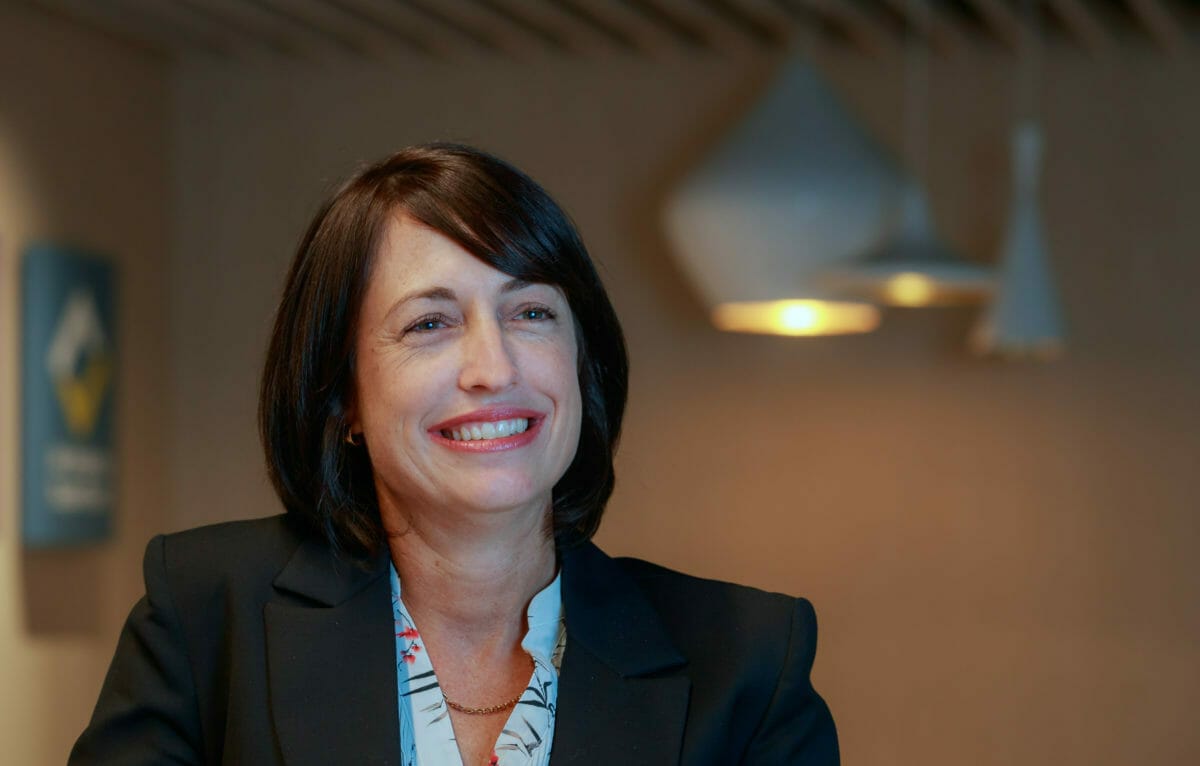
In bringing that to life, the responsible investment team has been integrated into the investment team and now reports directly to chief investment officer, Sonya Sawtell Rickson; as does Delahunty.

Sponsored Content

“We have repositioned that team as a centre of excellence and shifted the accountability of responsible investment to the investment team,” Sawtell-Rickson says. “This has been a big transition over 12 months. We now use the RI team as a knowledge centre to help educate the investment team.”

At the same time a new governance structure has been set up over the impact area, with the formation of a new Impact Committee consisting of six representatives: two from the investment committee who are also on the board, three board members who are not on the investment committee and an independent, Angela Emslie, who was formerly 12 years as chair of HESTA and now sits on the PRI board.

Within the responsible investment expansion, the next phase for the fund was reorienting the portfolio in line with the United Nations’ Sustainable Development Goals (SDGs).

The fund has chosen seven SDGS to align its portfolio with: good health and wellbeing, gender equality, clean water and sanitation, affordable and clean energy, climate action, sustainable cities and communities, and decent work and economic growth.

Around 80 per cent of the fund’s membership are women and the fund has been very vocal in advocating for equality – being namedEmployer of Choice for Gender Equality by the Workplace Gender Equality Agency for the third year in a row testament to that.In addition its members are health care workers, so SDGs around good health and gender equality made sense.

In order to direct investments in line with these SDGs the highest priority was to measure where the fund’s holdings already sit with regard to these measures.

“As a first step, we wanted to get a basic baseline assessment across the portfolio. It was important for us to measure whether investments would materially contribute to addressing SDG targets, rather than an investment simply being aligned with any of the SDG themes. So, we set a high bar,” Sawtell-Rickson said.

For example, taking the gender equality lens, there were a number of holdings in its private equity portfolio that were lending to poorer customers in developing markets traditionally underserved by the banking industry – and this practice was found to have had a direct positive impact on a woman’s ability to access finance.

“Our initial work to establish an SDG baseline drew on the work undertaken by APG and PGGM, and made sure to reflect each SDG target rather than being a thematic overlay. We ended up arriving at approximately $1.5 billion in investments materially contributing to addressing the seven SDGs we are focusing on,” she says.

It’s a common story that funds that are progressive on responsible investment and are looking to align their investments with the SDGs, come up short when they actually measure the impact their current investments are having.

The 220 billion euro Dutch fund, PGGM, widely considered to be one of the global leaders in implementing a framework that aligns its investments to the UN Sustainable Development Goals, mapped its portfolio according to the SDGs last year.

Partnering with Impact Management Project and using a specific methodology it found that 4.5 per cent of its portfolio is allocated to investments that are benefiting people and the planet and 2.5 per cent is allocated to investments contributing to positive outcomes.

PGGM is far ahead of other investors on this matter, but when they scrutinised their data, they realised they didn’t set impact goals, so they couldn’t measure that. (See PGGM maps portfolio impact.)

For HESTA phase two of the project is looking at how to develop a more granular approach with the aim of monitoring how its portfolio is supporting specific outcomes that contribute towards SDG targets.

Sawtell-Rickson says to truly measure and, more importantly, amplify the impact the fund can have for members it needs to look beyond portfolio exposures.

“As an active owner, how we’re engaging with companies on SDG themes we know to be material to our members is also an important consideration,” she says. “As is how we increase the effectiveness of our engagement by coordinating this with our share voting, as we have a long standing commitment to vote all the shares we own, wherever possible.”

The fund is also committed to contribute to the ambitions of a number of the SDGs through its own operations. For instance, through how it interrogates its supply chain and the way it acts as an organisation.

For example, the fund recently surveyed its external fund managers and discovered on average they had 16 per cent women in positions of leadership. This was seen by HESTA staff as an opportunity to focus on improvements. Its internal investment team is made up of 42 per cent women.


What’s next?

The next challenge for HESTA is how to measure its impact going forward, and figure out what the right measurement is, and this will be a focus for the next 12 months.

“We are focused on real outcomes rather than measuring how much investments could be bucketed under various themes,” Sawtell-Rickson says. “The way forward in terms of measurement from our perspective is to focus on tangible real world outcomes, to look beyond the dollars and to look at how we can have a positive impact on people or the environment. We’ve learnt a great deal from our impact investment program and our work with partners like Leap Frog internationally and Social Ventures Australia domestically. The respective measurable social return that’s embedded in the objectives of these investments is helping us develop our understanding of outcome reporting.”

But she does acknowledge that comprehensively measuring impact is pioneering work and it will be overseen by the fund’s new governance arrangements.

“Impact measurement in Australia and broadly throughout the world is relatively new and we are assessing the emerging theories to understand what avenues to pursue. We are looking for opportunities to partner with others to further this area of work,” she says.

“We know that for this outcome assessment to be meaningful it must be across the entire portfolio – every decision we make has impact and is made as a responsible universal owner, so it should be measured.”

The fund regularly surveys its members to gauge their views, and responsible investment has been one of the drivers of members’ satisfaction. It’s a true alignment of interest for the fund.

In communicating with investors, Sawtell-Rickson says storytelling is important.

The biggest commitment of Hesta’s social impact investment trust, which is managed by Social Ventures Australia is $19 million to help finance the development of Australia’s first dementia village in Glenorchy Tasmania. The development is a partnership between HESTA, SVA, Glenview – a not-for-profit aged care provider, and the Commonwealth Government.

In communicating with members the fund talks about this investment in terms of helping to fund best practice dementia care that community has never seen before, and in doing so is creating jobs in Tasmania (as well as delivering financial returns).

“Our members overwhelmingly want us to invest in improving public health and helping to further sustainable development and stronger communities. They also want us to use our influence to advocate for public policy outcomes that are fairer for women,” she says.

“The next frontier for us is how we can amplify the positive impact we can have for members and invest in opportunities through the lens of the SDGs.”


Asset Owner:HESTA Super Fund

Leave a Comment

Silver is the new gold: France’s UMR targets opportunities in ageing economy

Silver is the new gold: France’s UMR targets opportunities in ageing economy

French pension organisation UMR has launched a multi-asset thematic program that will target opportunities in Europe’s ageing economy. It’s part of a broader strategy to increase diversification in private markets where it sees secondary markets as an increasingly important tool.

Sort content by

Mid-life crisis at West Midlands Pension Fund

The area surrounding the British city of Wolverhampton, near Birmingham, is still called the Black Country although the polluting coal mines and steel mills that sprung up during England’s nineteenth-century explosion of wealth have long gone. Today there is little evidence that Wolverhampton was the cradle of an industrial revolution and the 300-odd public sector

Inhouse target: zero to
$40 billion in 4 years

If everything continues on schedule, the $60-billion AustralianSuper will begin testing its new internal investment-management systems this month, with a view to managing its first money in house in the third quarter of 2013. Within four years the fund expects to manage as much as $40 billion in house, funded primarily from cash flow, and

Belgium’s KBC fund
thrives on LDI

Edwin Meysmans, chief executive of the KBC Pension Fund, sounds extremely relaxed for a man who rises early to avoid Brussels’ clogged roads on the way to the office. Then again, that Meysmans shies away from the madness of commuting crowds should perhaps be no real surprise given that his fund focuses on avoiding being

PKA seeks to satisfy its infrastructure hunger

The DKK200-billion ($35-billion) Danish medical professionals pension fund grouping, PKA, wants its government to help satisfy its appetite for investing in major infrastructure projects. Frank Jensen, an analyst on its asset strategy team, says PKA “is eager to get started” on sealing public-private partnerships with the Danish government, but its plans “have not come as

Norway opens a window on its global investment strategy

On March 8 when Yngve Slyngstad announced the annual results of Norway’s sovereign wealth fund, he did more than unveil a routine set of numbers. The chief executive of The Norges Bank Investment Management (NBIM), which manages the Government Pension Fund Global (GPFG), was also revealing the first results following what he called a “substantial” change

Outward bound from the Finnish

Finnish pension investor Ilmarinen is exploring whether to send a representative to South America as it intensifies its emerging market operations. Timo Ritakallio, who heads investment at the €29-billion ($39-billion) fund, says it is looking to access “more and more emerging market opportunities”. In January Ilmarinen sent a senior portfolio manager to run a “one-man

Previous



