Hermes’ message: don’t be investment banker ‘wannabes’

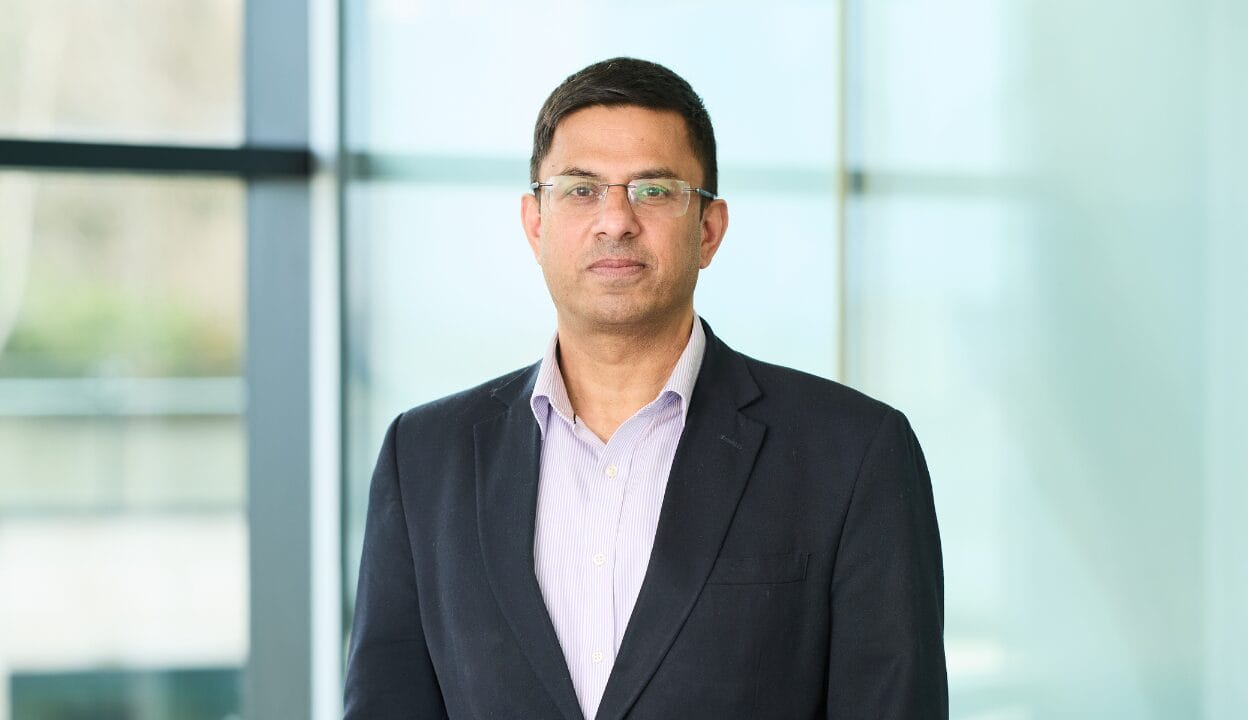
Funds managers should get back to their roots, says Saker Nusseibeh (pictured), the investments chief of the £32 billion ($50.3 billion) BT Pensions Scheme’s funds management arm, and renew their long-term aim of delivering risk-adjusted alpha and stop being “investment banker wannabes”.

Nusseibeh, who oversees the investment strategies run by Hermes Fund Managers, which is fully owned by BT Pensions, says the pensions industry should focus on the more realistic aim of generating sustainable risk-adjusted returns, rather than aiming to shoot the lights out, time after time.

He says the ability to generate risk-adjusted returns is not rare and usually available to discerning investors, and that investors should demand their active managers show more conviction.

The average information ratio across the industry was 0.5, he says, and “if you’re taking active fees, you need between 0.5 and one, and I’d like it to be near one”.

With the exception of its quantitative-plus team, Hermes aims to be a house of active managers consistently delivering risk-adjusted, “sustainable” alpha across its equities, alternatives, unlisted assets and engagement services.

In doing so, the manager is working to bring back an older style of institutional asset manager and client relationships.

Sponsored Content

Nusseibeh says: “20 years ago, when I started in the business, (managers) said they looked after people’s pensions. If you talk to funds managers today, they talk about highly specialised products.

“If you look at the crisis of 2008, sub-prime and easy credit were not the reasons why [it happened]: the crisis happened because funds managers abrogated their fiduciary responsibility to clients.

“Funds managers knew that credit default swaps were reinsurance. Any funds manager worth their salt knows reinsurance needs an asset base. Even when investment banks were selling this rubbish, why didn’t (managers) speak out?”

Over the years, managers’ sense of responsibility has been lost, so that “if you sell a client a product, then it is ‘buyer beware’.”

He says the “crusading” nature of these comments is justified: “Funds management is an honourable profession – you’re looking after people’s retirement money. Not rich, but hard-working people,” he said, adding the payout to many of the BT Pension Scheme’s defined benefit members is about £8,000 each year.

“Somehow the industry got sucked into becoming investment banker wannabes.”

When institutional appetite for high returns overpower the aim to deliver risk-adjusted return, it often originates within clients and is then encouraged by managers, he says.

“But if clients forget what long-term returns mean, it is our job to remind them.

“If I believe that an asset class is over-valued, and you want to invest in it, I should say: ‘This is the wrong time – you should take money out’.”

It’s not difficult for Hermes to operate this way. It has to. Its owner, which supplies £18 billion of its £25 billion in funds under management, demands this feedback and long-term view.

With a stable pension fund owner and little pressure to raise assets or deliver big returns quarter-in, quarter-out, Hermes is able to replicate this relationship with other investors.

Nusseibeh also believes the role of the funds management CIO should change from a manager of investment staff or asset allocator to an internal consultant to clients.

“That is the future – running an investment office that is there to understand risk and to help managers produce repeatable alpha. This is what CIOs should become.”

To this end, Hermes has built an internal risk system to quantitatively dissect portfolios, and understand returns on a fundamental basis. Its risk management staff monitor portfolios to judge whether expected returns will stray outside forecasts as the market environment evolves.

Their aim is to look for “unintended consequences” of changes in markets, such as interest rate rises, across portfolios, Nusseibeh says. They aim to go further than mean-variance optimisation models, which Nusseibeh views as flawed because the historical data they draw on is too limited.

“In the last 12 years – which is where the data takes you – you get big overweights to hedge funds, which provided a correlation of 0.85 in the crisis, he says, in addition to private equity and increasingly popular emerging markets.

“It’s common sense – you go where there is the least crowded trade.”

Mean-variance models also favoured bonds as “risk-free assets, and you don’t want to put money into bonds (now) because yields are going down”.

Recently, the manager has been approached by some investors to develop tailored strategies that draw on the expertise in its boutiques to counter specific problems.

For example, in Europe, governments are asking institutional investors to de-risk – “which means buy bonds”, he says. But if quantitative easing results in inflation and interest rates rising to 3 per cent to the detriment of bondholders, what could they do to preserve capital?

Interestingly, Nusseibeh added that Hermes is in discussions to sign a frontier markets manager, and is mulling a search for an Asia-region manager – “not for this cycle, but because it’s a region, and it’s large and interesting”.

2 responses to “Hermes’ message: don’t be investment banker ‘wannabes’”

Leave a Comment

The Austin advantage: Texas Teachers talks optimism, innovation and growth

The Austin advantage: Texas Teachers talks optimism, innovation and growth

Jase Auby, TRS's celebrated CIO, explains why TPA doesn't fit with its culture; why community push back on data centres could turn out to be an investor advantage, and argues the case for continuing to invest in fossil fuels. Top1000funds.com sat down with the CIO in his Austin office for an all-encompassing conversation.

Sort content by

MetallRente builds risk return culture

A new fund in Germany combining liquidity, dynamic equity exposure and strong ESG focus is against the mould of the country’s more conservative, insurance-led investment style, and Heribert Karch, managing director of MetallRente which offers the fund, is determined to bring a return-seeking investment culture to Germany.

Pioneering Dutch fund builds SDG index

The €21 billion Dutch pension fund, Detailhandel, is the first pension fund to incorporate SDGs into a simple developed market index.

Oregon makes fees work

The $77. 3 billion Oregon Public Employee Retirement Fund has continued to achieve top decile returns at the same time as de-risking and reconstituting half its giant portfolio.

Future Fund appoints third deputy CIO

The Future Fund has appointed Sue Brake to the role of deputy CIO, portfolio strategy as part of the revamp of the $145 billion sovereign wealth fund’s investment team. She joins Wendy Norris deputy CIO for private markets and David George who is deputy CIO for public markets.

Oregon’s real estate revamp

Oregon State Treasury has de-risked its $12 billion real estate allocation, moving away from closed end, private equity-style investment and its associated inherent cyclical risk and total return focus. Building in more liquidity and transparency, reduced volatility and lowered fees via evergreen manager partnerships in separate account and open-end fund structures.

Portable alpha slashes pension deficit

The $15 billion International Paper corporate pension fund may be on a de-risking glide path, but vice president of investments Robert Hunkeler proves there is still plenty of room for innovation, including portable alpha. All investments are outsourced.

Previous