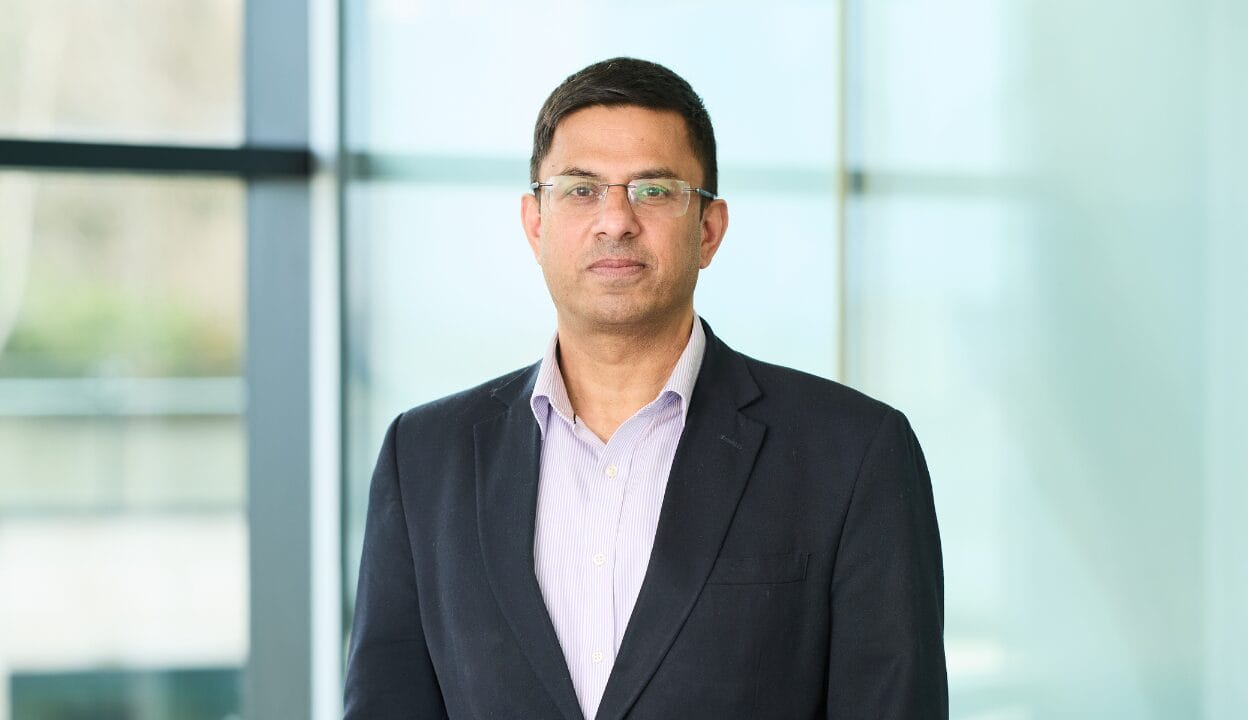
France’s Banque des Territoires looks for data centre opportunities

Elise Stoffaes

France’s Banque des Territoires, a subsidiary of Caisse des Dépôts, the country’s €323 billion state-owned financial institution, plans to invest more in data centres in France.

The push is in line with government policy to build out AI infrastructure off the back of the country’s access to cheap, green, nuclear energy that uniquely positions France to provide power to the AI industry while maintaining net zero credentials. It also mirrors overseas investor enthusiasm for the sector.

Japan’s SoftBank recently announced plans to invest €45 billion over the next five years in data centres in France. Banque des Territoires is currently only invested in one data centre, and the push into the sector marks a departure from previous years.

“Base loaded access to energy is very important when considering investment in data centres,” says Elise Stoffaes, deputy head of infrastructure investment at the eight-year old organisation where she oversees a portfolio of around €3.5 billion, run by a 25-person team that targets investing around €600-800 million in long-term, value investments annually.

“Opportunities in data centres and AI more broadly are compelling because France has access to a low carbon electricity mix at competitive costs.”

Sponsored Content

The investment case also aligns with an emerging theme at Banque des Territorires’ around sovereignty. Central to the thesis is the idea that European countries host their own data within the continent, continues Stoffaes who explains that sovereign investments sit under the ‘S’ of sustainability in the investor’s all encompassing ESG policy.

“We are really eager to support and invest in projects that integrate sovereignty and can help France, and more broadly Europe, to have independent digital infrastructure.”

Every investment has a different IRR expectation – there is no portfolio wide targets. But she insists returns are important and the investor is not doling out state aid. Investments are always low risk, and the team avoid development risk apart from offshore wind where it takes a founding role in consortia with industrial groups.

Still, she says the risk profile of digital infrastructure can be more risky than renewables which benefit from a feed-in-tariff or contracts for difference. She also notices a degree of resistance in local communities to host data centres which could potentially stall construction.

Stoffaes describes clear cycles in infrastructure investments like a marked increase in exposure to renewables in 2024. Other recent themes include the organisation’s decision to sell off its fibre assets. ESG is a high bar for all investments, and one reason why it recently decided not to invest new capital in airports – although it still holds two airports in the portfolio.

ESG also prohibits meaningful investment in defence other than military housing and solar parks in military zones.

Stoffaes and her team structure deals around minority stakes of between 30-49 per cent in diversified infrastructure assets rather than companies. This ensures strategy is distinct from BpiFrance, another offshoot of Caisse de Depot, which invests in startups, SMEs, and mid-caps through direct equity, quasi-equity, and funds of funds.

She also reflects on the importance of long-term relationships with the same partners – but also a wide range of partners, given this is one of the few sources of diversification. “Because we have no geographical diversity, we try to ensure we invest in different sizes of assets, and sub sectors.”

Banque des Territoires plays an important role crowding in other long-term investors to sectors like social housing, healthcare and digital inclusion particularly in investments with long pay back periods and located in rural geographies that might struggle to attract investment.

“As a long term investor, we give confidence to local partners. We see ourselves like the blue helmets of investment, in the French territories” she says in reference to the UN peacekeepers.

“We represent something that is linked to stability, the long term and financial rigour,” she concludes.

Leave a Comment

Finland’s Elo: Larger equity allocations promise new media scrutiny

Finland’s Elo: Larger equity allocations promise new media scrutiny

As Finland's pension funds prepare to increase their equity allocations to unprecedented levels compared to global peers, they must also navigate a new and unfamiliar risk. Elo's chief investment officer Jonna Ryhänen explains the fund's investment approach going forward and how it will manage stakeholder and media scrutiny as they react to swinging volatility and returns.

Sort content by

USS gets strategic and explores global

Taking over from Peter Moon, chief investment officer of the £27 billion ($44 billion) Universities Superannuation Scheme, Roger Gray is the first new CIO at the fund in 17 years. He speaks with Amanda White about viewing the fund through fresh eyes and his ideas for staffing and investment developments. mrec4inarticleinline Sponsored Content scnative1 scnative2

Apples with apples: Teachers’ plan emphasises risk as much as return

“You almost don’t need to say the words, ‘risk management’,” says Barbara Zvan, head of risk and asset mix at the $84.9 billion (C$87.4 billion) Ontario Teachers’ Pension Plan (OTPP), when asked about how closely integrated the investment and risk management teams at the big defined benefit fund are. She talks to Simon Mumme about

Governance changes give BP flexibility in investment decision making

The most recent investment review by the £13 billion ($20 billion) BP Pension Fund, completed last month, didn’t focus on altering investment allocations, rather it examined the way investment decisions are made at the fund. Chief executive, Sally Bridgeland spoke to Amanda White about the governance changes and the new flexibility around investments. Defined benefit

PMT evaluates risk tool kit

Theo Jeurissen, chief investment officer of the Netherlands’ third largest pension fund, the €30 billion ($44 billion) PMT, talks to Kristen Paech about how the fund is re-assessing its risk frameworks post-crisis, and why a low tracking error is the cornerstone of the fund’s investment policy. mrec4inarticleinline Sponsored Content scnative1 scnative2 scnative3

HOSTPLUS to hunt for emerging managers, co-investments worldwide

HOSTPLUS, the A$7 billion ($6 billion) Australian superannuation fund, is known in its home market for seeding promising emerging managers. Now, the fund aims to roll out its incubation program globally. CIO Sam Sicilia told Simon Mumme about the fund’s reasons for backing boutiques, and its hunt for co-investment opportunities in frontier markets. mrec4inarticleinline Sponsored

HOOPP survives the crisis through ALM

The experience of the C$26.7 billion ($25 billion) Hospitals of Ontario Pension Plan (HOOPP) is testament to the success of asset-liability driven investing. Amanda White spoke with chief executive, John Crocker, about how matching assets with liabilities led to an underweighting in equities and a subsequent (relative) survival of the global economic crisis. mrec4inarticleinline Sponsored

Previous