
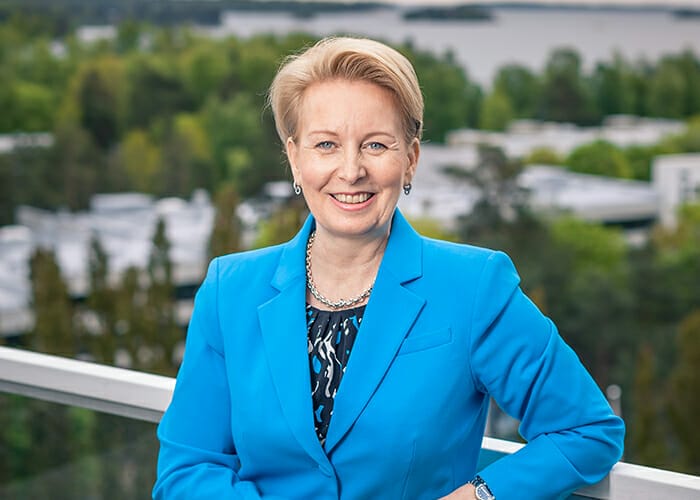

Hanna Hiidenpalo, Finnish fund Elo’s CIO and deputy CEO discusses progress around internal management and the fund’s sustainability program which includes a target of carbon-neutral energy use in direct real estate by 2027. In terms of the portfolio she says Finnish equities have impacted returns but tactical allocation changes are being made around the edges.
How do you see the current investment climate? Where is the opportunity and what are the challenges?
There are many things affecting the current investment climate from monetary policy, inflation and the economic outlook in different geographical areas to the impact of artificial intelligence and geopolitics.
Overall, I would say that our investment market returns this year were better than expected thanks to good economic development in the first half of the year. However, stock market returns differed strongly, especially in late spring, both geographically and by sector. Interest income was positive at the beginning of the year, despite central banks hiking interest rates. Overall short-term interest rates rose along with the policy interest rates, but the longer interest rates stayed the same or even fell slightly.
Despite positive developments in the global equity market, it was different in the Finnish stock market and the return remained slightly negative in the first half of this year. One reason is the fact that the Finnish market is very concentrated and geared to cyclical companies, so the weak performance of the largest companies decreased the return of the entire market.
Also, the uncertain economic outlook and the rise in interest rates affected the real estate market. The number of transactions has been low and construction has decreased, and yield requirements have risen. Despite only slightly positive returns, the occupancy rate of properties owned by Elo has remained at a good level.
There are always opportunities in the market. Currently the rapid and strong rise in short interest rates has clearly weakened the interest-sensitive areas of the economy. The main risk of the investment market is that inflation will not slow down sufficiently, and the interest rate will remain high. But during this summer, the US economy has surprised with its strength, and the outlook for the rest of the year has improved. In Europe, the situation has weakened due to the weak industrial cycle, but the bond market offers opportunities and portfolio diversification.
Our current asset allocation has remained largely unchanged this year: fixed income investments are almost 30 per cent; equity, including private equity, are almost 50 per cent. Real estate is slightly above 10 per cent and other alternative investments, mainly the hedge fund allocation is around 10 per cent. Within different asset classes, we make more tactical allocation changes, for example around active geographical changes.
How have you developed inhouse expertise at ELO in recent years?
Our equities team has developed the investment process using data in decision-making. The team invests mainly with cash equities. Strategies range from enhanced index tracking to multi-factor strategies. The team is process-oriented and uses systematic approaches to investing. The results have been encouraging. It is likely that we will expand this approach to other asset classes as well in the future – for example, applying it to some areas in fixed income and credit might be interesting.
Elo is 10 years old. All operations – including investment operations – are based on the company’s strategy and values: openness, activeness, and commitment. On top of these elements, we have also built a functional investment organization that works actively and professionally in the global market in various asset classes.
During the last decade we have continuously developed our own in-house investment operations and capabilities, especially in the areas of direct investments, equities trading and responsibility. At the same time, we have built an interesting workplace for new talent. Currently the entire investment process employs more than 100 people in different positions.
On the leadership side Elo has also developed its capabilities. The company has created an ongoing program to support the implementation of our strategy where we strengthen and deepen the skills we require.
How have you integrated sustainability in recent years?
We look at sustainability with a wide perspective. At the beginning of this year, we updated our principles of responsible investment and climate policy which have both been approved by our board.
Recently the focus has been more on climate. We have been working on our new climate targets and roadmap. Elo is committed to a Paris-aligned portfolio that we will achieve via setting interim targets, which we have set for 2025 and 2030. The carbon-neutral portfolio will come via decarbonization and reducing the share of fossil fuel investments but also increasing investments in sustainable solutions and engaging with companies and other stakeholders both individually and in collaboration.
We are integrating sustainability into our real estate investments by managing climate risks like decisions on new investments, and the efficient use and development of existing buildings. Elo has a new sustainability program for direct real estate where we are aiming for carbon-neutral energy use by 2027.
Engagement and collaboration are our key ways when it comes to implementing responsible investment. We have increased proxy voting and been more active on collaborative engagement, especially on environmental and human rights topics. Besides climate, we are currently working on biodiversity, and we will publish a roadmap later this year. Human rights are also another focus area for the future.








Leave a Comment
You must be logged in to post a comment.
Login