
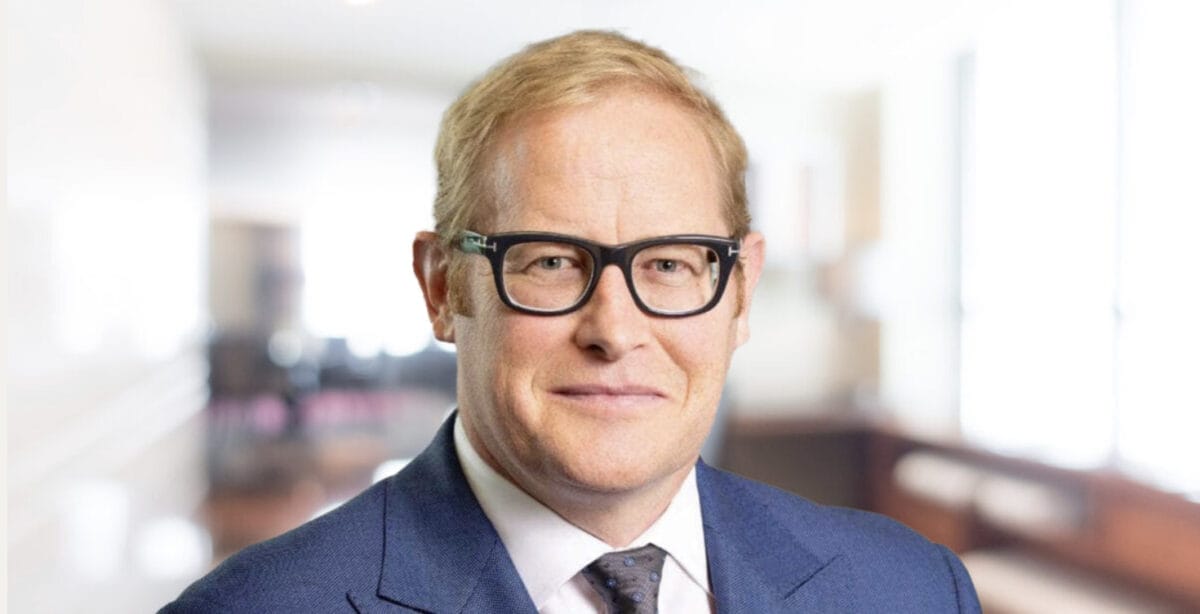

When now CEO of New Zealand Super Matt Whineray joined the fund in 2008 the investment committee consisted of “anyone who wanted to attend”. At that point the fund employed 40 people, had NZ$14.7 billion and entirely outsourced its investment management. When Whineray leaves the organisation on December 8 he’s leaving a very different place.
Matt Whineray joined New Zealand Super in May 2008, after Bear Stearns collapsed but before the chaos of the Lehman Brothers implosion, tasked with managing the private markets portfolio including private equity, timber, infrastructure a little bit of real estate and an “other private assets” allocation. It was a baptism of fire for Whineray, who quickly learned the calibre of his teammates as the fund experienced a material drawdown in equities, and assets fell by more than NZ$3 billion to NZ$11.2 billion.
“Equities markets tanked and we went down with them,” Whineray tells Top1000funds.com in an interview from his Auckland, New Zealand, office.
It was a steep learning curve for Whineray, who joined the fund from an investment banking background focused on transactions, not managing a portfolio. And while his immediate portfolio wasn’t experiencing the same catastrophic outcomes as some, because of lagged valuations, the public markets team were dealing with market-neutral hedge funds that weren’t hedging, and the collapse in public equities.
“It was a very useful time for me to understand portfolio construction and portfolio completion,” Whineray says.
“It was a big lesson for us because we were entirely outsourced and we didn’t really have control over liquidity, we didn’t have a great view of what we needed or what we had.”
At the time even cash was externally managed which Whineray says was a lesson in the potential misalignment when using external agents.
“There were times when overnight cash was paying phenomenal returns because cash was so scarce, but we didn’t get any of that because our manager was not incentivised to do that.”
From that, then-chief executive Adrian Orr pushed the development of an internal function that became the portfolio completion team, with oversight and control of managing that risk. Portfolio completion has become one of the signature characteristics of the fund, and a great contributor since that time.
Whineray credits Orr as a significant influence on his career. They worked together for more than a decade, with Whineray clocking up six years as general manager of investments and then four years as chief investment officer.
“One of the things I really enjoyed was we would talk to peers and ask them about how they tackled a problem or how they did something,” Whineray says. “We are so transparent so we can be free with information. Adrian was very open to bringing in those lessons and thinking about how we could operate here.”
That openness was demonstrated in everything from the fund’s sustainable investing leadership to rewriting policies that were no longer fit for purpose.
“Adrian would say ‘we wrote them in the first place so we can re-write them’. He was very pragmatic and I learnt a lot from that,” Whineray says adding that Neil Williams, then general manager of asset allocation, was another influence.
“He has a massive brain, and because of his capability it pushed me to work. I read a lot of asset allocation research papers so I could hold a conversation with Neil, it was a great driver of me understanding the industry and learning,” he says.
Leadership journey
Orr and Whineray’s more than 10-years of partnership at the top of NZ Super came to an end when Orr left in 2017 to become governor of the Reserve Bank of New Zealand and Whineray then took over the chief executive role at the guardians.
Moving from the CIO to CEO role was another growth opportunity for his leadership, Whineray reflects.
“It made me grow professionally [and] having to deal with stakeholders and the board more intensely was an area of development for me. I’ve enjoyed and grown into the CEO role,” he says.
In order to navigate the potentially tricky domain of a CEO who was previously the CIO (a career progression also seen at the Future Fund by Raphael Arndt and before him David Neal) Whineray stepped off the investment committee when Stephen Gilmore joined as the investments chief.
“I still get all the IC papers so I know what’s going on and understand what is happening in the portfolio,” he explains. “But it was important for me to focus on the rest of the organisation and that is a challenge to do that. On the leadership team if you’re not responsible for it you’re not as attuned to the detail. Getting your head around what happens in tech, operations, data, HR, and corporate affairs is a big bit of learning.”
If he had to mark himself down on any areas of management Whineray says he wishes he’d spent more time, focus and money on technology.
“We are followers on the tech and data front,” he says. “I wish that I had grasped that needle a bit harder and pushed that. One of the things perhaps going from the CIO to CEO role is how to size those functions and push for the investment in them that is really needed. We need to lift ourselves from the data and tech point of view, we are later to it than other funds and I wished I’d pushed that a bit harder.”
Whineray’s legacy is demonstrated in the clarity of thinking and the transparency of reporting with NZ Super a clear leader in the responsible investment space, and a bold “growthy” portfolio accentuated by the strategic tilting strategy.
Now New Zealand Super – which turned 20 years old in November this year – is more than 200 people and manages NZ$64.4 billion ($39.2 billion), with a 20-year return of 9.5 per cent per annum. It was also recently announced as the top-performing sovereign wealth fund over 10 years by the International Forum for Sovereign Wealth Funds, with the top ranking for sustainability, governance and resilience; and all the while moving the investments to a sustainable finance approach.
“I’m proud of what the organisation has done,” Whineray says. “Adrian said you have to be careful to distinguish what happened because of you and [what happened] in spite of you. All of this is achievement, the whole guardians has done,” he says modestly. “We have real clarity about our beliefs and line strategy up with that.”
At the core of the portfolio is creating simplicity in portfolio construction and focusing the team on how to move from the reference portfolio to the actual portfolio.
“Out of that we have been quite clear in delineating who is responsible for a decision and accountable for the outcomes, we are clear in our approach to risk,” Whineray says. “We have taken plenty of risk along the way and are good at articulating that risk is not volatility, that is a certainty because of our portfolio, risk is liquidity or losing the support of stakeholders.”
Building stakeholder support
For Whineray managing the funds’ risks is not just about modelling liquidity and investment outcomes but building stakeholder support through communication and education.
“When I first started as CEO in 2018 our annual report included a case study of what would happen if we had the GFC event again. We showed that in that case we would take a big hit and the numbers would be large, but that we understood that, and we think over the long term we will be paid for the portfolio we have,” he says. “One of the more gratifying things for me was when we went into 2020 and had a big drawdown from COVID, I was on the radio explaining we had gone from NZ$48 to NZ$35 billion because markets had gone off, and they understood it. It was vindication of that work around people understanding what we were doing and why. It was personally a good moment for me.”
Many chief executives find that once they’ve ascended to the top job, every now and then it gets a little bit lonely. There’s not a lot of room at the summit, but Whineray says he has been very focused on building the team and culture of the organisation including one of the fund’s values as “team not hero”.
“All of this has been produced by all of us,” he says. “This is important for us. We all succeed by all succeeding together.”
As Whineray leaves the fund where he’s grown up as a pension fund manager, he’ll take time out over the summer with his kids who are now all finished school and his wife who recently completed a PhD. He’ll be missed around the board table, but also at the “Culture Club” staff events, where the Goldfinger James Bond onesy and a karaoke microphone were never far away.







Leave a Comment
You must be logged in to post a comment.
Login