
Denmark’s ATP creates new overlays to manage future bond equity correlation

One of Denmark’s largest pension funds, the DKK 712 billion ($103 billion) ATP, is introducing two new overlay strategies in its investment portfolio to better manage unwelcome correlations between bonds and equities that have had a disastrous impact on its risk parity strategy in the past.

New overlays, mostly developed since 2022, will be rolled out through 2024.

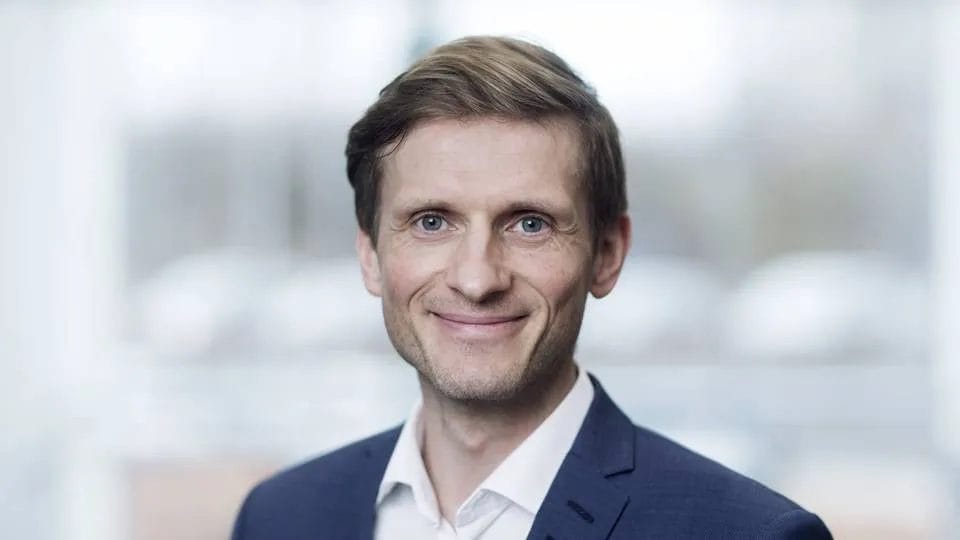
“We have been preparing for the equity bond correlation spikes to happen again. It’s important to prepare for a war during peacetime, and this is what we have done,”  Christian Kjær, senior vice president and ATP’s head of liquid markets, told Top1000funds.com.

Of the two overlays, ATP’s ‘correlation overlay’ draws signals from the market that warn the investment team correlations are changing and ATP risks losing money on both equity and interest rates.

“It sends us a signal to take risk off,” said Kjær. “The overlay flags the beginning of losses in the portfolio, particularly the interest rate portfolio, combined with shifting correlations.” The correlations are measured with intra-day data across different markets so the team can detect correlation shifts as quickly as possible.

The process that combines two key elements, he continues. Firstly, it warns the team about any spike in volatility – which directly increases the risk. Secondly, it highlights any move in the correlations that also changes the risk –aka sending warning bells that any assumption it will get back on equities what it loses in bonds is now in doubt.

Sponsored Content

“In 2022 the volatility came up and the negative equity and bond correlation which is usually our saviour, disappeared. This negative correlation is important for all investors, but for a risk balanced investor like us, it is more important.”

Another, second overlay, will tilt the portfolio when it sees changes in correlations in general. Unlike its sister overlay, which Kjær describes as “a zero-one strategy,”  the second approach is more continuous. It involves constantly trying to manoeuvre and position to adjust for the changes in correlations.

Neither of the new overlays have a large risk budget.

“ATP is humble in its ability to beat the market,” he says.

Kjær acknowledges the new overlays add to the complexity of a portfolio that already relies on pulling multiple levers, and has been criticised for not receiving sufficient compensation for this higher level of risk.

But he argues the small risk budget portioned to the latest strategy tweak doesn’t really change the appearance of the portfolio: the risk level – which is what primarily draws attention to the investment portfolio – is unchanged and the hedge portfolio ensures pensions are safe.

Still, he does stress the overlay strategies require robust digital infrastructure, particularly tools to draw on the right data and the trading ability to handle the orders.

ATP’s complex portfolio comprises the investment portfolio (20 per cent of AUM) and a large hedging programme that guarantees pensions for ATP’s 5 million beneficiaries.

This internal loan from the hedging portfolio gives the investment team more funds to invest while a large part of the interest hedging consists of interest rate swaps which do not tie down liquidity.

Latest performance

The investor has just announced its 2023 numbers, posting a 5.5 per cent return in the investment portfolio, boosted by government and mortgage bonds and listed equities. Returns from inflation related instruments  – namely breakevens and commodities which have fallen or traded sideways since the Covid-fuelled inflation boom – and the illiquid allocation, which didn’t keep pace with liquid markets in 2023, were negative.

The latest numbers were also affected by ATP diversifying equity risk in a global portfolio across geographies and companies. In recent years, any diversification away from market capitalization-weighted U.S. stock indices that have done exceptionally well has punished investors.

Still, ATP’s positive results are a marked change from 2022 when torrid markets – and the correlation between bonds and equities – resulted in the investment portfolio shedding -40.9 per cent, equivalent to 54.5 billion kroner ($7 billion).

The return-seeking fund, run on a risk-parity basis since 2005, introduced four risk factors in 2016 based on equity, interest rates, inflation and other risk factors – namely illiquid risk factors and an allocation to long/short hedge funds or alternative risk premiums. The strategy has always sold itself on an ability to function well in almost any market environment due to its perfect balance between different asset classes.

Kjær says ATP will remain overweight equities in 2024.

Levels published at the end of 2021 marked market equity factor at 47 per cent, interest rate factor at 32 per cent, inflation factor at 14 per cent and other factors at 7 per cent.

Despite the challenges of the risk parity allocation, Kjær says ATP is sticking to the approach which continues to work well. “We still like balancing equity and interest rate risk on average. We are a bit different to others, and the risk balance works well keeping our funding ratio relatively stable.”

Some investors lost faith with risk parity when interest rates started to climb. Arguing that the strategy can open the door to hidden interest rate risk seeping into other allocations and upsetting the balance.

For example, high interest rates can convert into lower equities. Rising inflation is another source of disruption because of its impact on interest rate risk. In short, the different factors may end up throwing off the same cashflows and stack up the same exposures. It can leave risk parity investors struggling to diversify and reduce risk – or running more risk than they thought they had.

Asset Owner:ATP

Leave a Comment

How CPP is evolving risk management for a faster, more interconnected world

How CPP is evolving risk management for a faster, more interconnected world

In an environment where multiple risks are emerging and their effects are compounding on the portfolio, CPP Investments' chief risk officer Priti Singh says the $572 billion fund is rethinking risk management from the ground up, shifting from reaction to preparation and embedding risk thinking earlier in investment decisions. She speaks to Amanda White about the fund's risk approach.

Sort content by

NBIM eyes Asia’s growth as global capital shifts east 

The $1.8 trillion Norges Bank Investment Management marks the 15th anniversary of its Singapore office this year, with the unit now firmly established as its Asia-Pacific stronghold. As regional growth set to continue in the coming decade, NBIM is well-positioned to capitalise on it, says Singapore head Sumer Dewan.

CalPERS finds continuity in climate of uncertainty

Investors are grappling with a multi-regime change that is manifesting in trade and geopolitical upheaval and a rise in real interest rates. But at a recent meeting, the CalPERS board heard that US equities remain top performers and the dollar, though weaker, is still historically strong and wil remain so.

Finland’s Ilmarinen prepares to increase risk ahead of new pension rules

Ilmarinen, Finland’s €63 billion ($73 billion) pension insurer, is laying the ground to significantly increase its equity allocation ahead of new pension rules in the country. CIO Mikko Mursula is preparing for a sharp increase in volatility of annual returns and the enhanced role and importance of diversifying the portfolio.

North Carolina TSERS: Taxpayers deserve better in governance overhaul too

Ditching the sole trustee for a five-person board will help bring North Carolina’s pension funds out of enduringly weak performance by encouraging risk taking, says treasurer Brad Briner, whose experience includes managing Mike Bloomberg’s money. Sarah Rundell spoke to the treasurer about the new governance and investment overhaul.

Japan University Fund expands active allocation guided by risk factors

The $77 billion Japan University Fund is stepping up active strategies and introducing country-specific passive allocations as the young endowment, established only in 2022, builds out the policy portfolio. Co-CIO and the head of global investment department Naoya Sugimoto speaks about JUF's vision and manager expectations.

UPP: Canadian investor looks outside US markets

Canada's University Pension Plan is eyeing new risks and opportunities triggered by policies from the Trump administration, like additional taxes for US investments and a surge of public spending on defence and infrastructure in Germany. It is also fine-tuning its roster of active managers.

Previous



