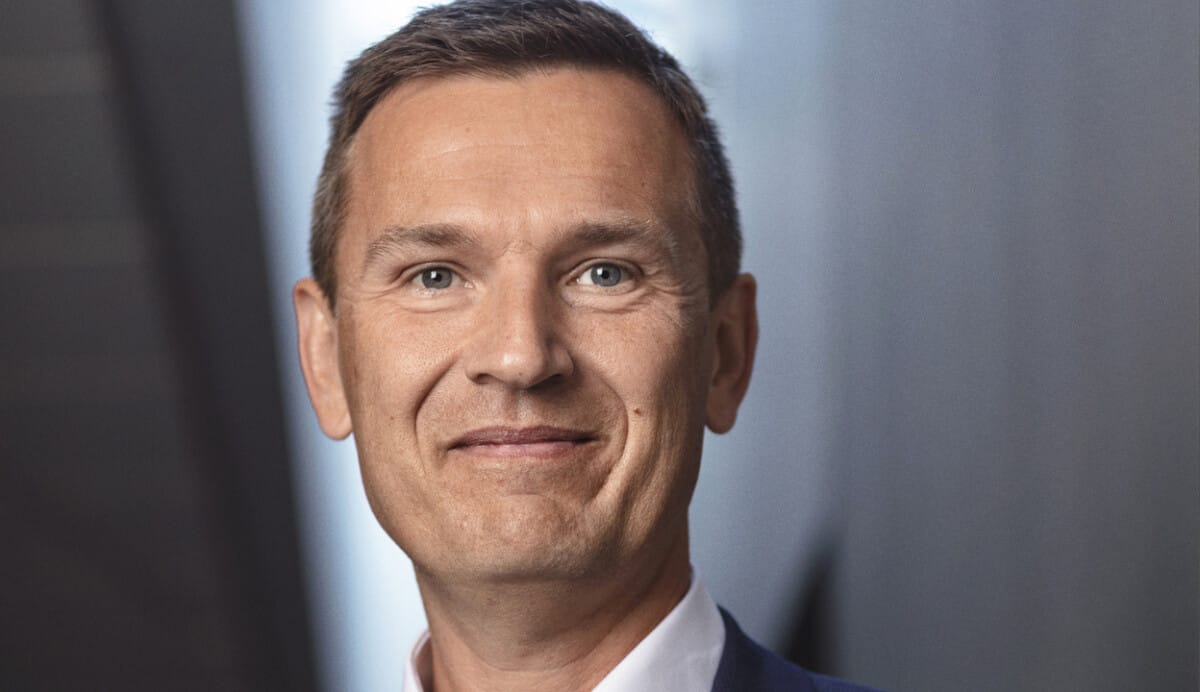

Denmark’s AkademikerPension takes on the banks financing fossil fuels

Denmark’s AkademikerPension, the member-owned pension fund for 150,000 academics, has just notched up another important milestone in its ambitious sustainability strategy. Pressure from the fund’s CIO and chief financial officer Anders Schelde on Denmark’s Danske Bank contributed to the lender announcing plans to end new financing to oil and gas E&P companies that don’t have a credible transition plan in line with the Paris Agreement.

Last year, Schelde stood up and challenged Danske executives at the bank’s AGM, the only institutional investor to ask the bank climate questions. Schelde, who describes his approach as “polite, constructive criticism, focused on the bank’s lending policy,” contributed to Danske drawing up a more comprehensive climate strategy that included axing large parts of its fossil fuel financing programme.

Acting on behalf of AkademikerPension and client fund LD Pensions, he says a close relationships with the Danish companies that make up a large chunk of AkademikerPension’s internally managed equity portfolio is a central seam to strategy.

“Danske Bank is now demonstrating leading practice in some areas with its updated policy. They have committed to stop asset or project finance and corporate finance of new upstream oil and gas exploration and production,” adds Kelly Shields, campaign and project manager at London-based pressure group ShareAction.

Danske Bank’s commitment is important because it restricts corporate finance which accounts for the vast majority of bank lending, and much more than project finance. “The frontier is shifting in the level of ambition of investors and their asks of banks. We are seeing a growing interest from investors to tackle the financing of oil and gas expansion.”

Now she says Danske Bank should go further still by also restricting finance to infrastructure related to new oil and gas like pipelines.

Sponsored Content

New frontier

Like Shields, Schelde is also convinced more banks will stop financing fossil fuels and believes investor pressure on bank lending to the industry is the “next frontier” in engagement and divestment. The reason, he explains, is because despite selling all its upstream, fossil fuel-related investments in oil majors bar an allocation to Italian oil group ENI, the pension fund remained exposed indirectly to the industry via investments in banks’ lending to oil groups.

“Recent shareholder proposals at HSBC and Barclays show we are influential, and that investor pressure is speeding up the process,” he says.

Last year, HSBC announced plans to cut direct financing and advisory ties to new oil and gas fields and metallurgical coal projects after coming under fierce criticism over its climate change policies from shareholders and environmental activists.

And Schelde is convinced investors will successfully influence banks’ lending policies because they are targeting bank behaviour, rather than their core business.

“It’s very difficult to persuade, say, Shell to stop taking oil out of the ground. But it’s easier to get HSBC to stop lending to Shell.”

It’s why Schelde has no plans to divest AkademikerPension’s holdings of banks with oil and gas lending programmes. “If we stay invested we can try and change their behaviour. However, one factor that might make us divest from a bank is if we got no response from the board.”

Divestment at AkademikerPension is based on two key criteria – it must have a positive, or at least neutral, impact on the portfolio’s long term returns and be “the responsible thing” to do.

Schelde says the pension fund would consider investing in oil groups again if they aligned their business with the goals of the Paris Agreement. “They can continue to produce oil and gas,” he explains, continuing. “It’s pretty clear what oil majors need to do. They need to stop exploring for new reserves; pay out that capex spending to investors or invest in renewable energy.”

Yet despite record profits, oil majors don’t seem to be changing strategy. “Some money is going back to investors and they are investing more in renewables, but it’s only a fraction compared to their fossil fuel business where we are seeing money going into exploring and building out reserves.”

ARTICLE 9

Alongside successful engagement, AkademikerPension’s sustainability strategy encompasses a new allocation aligned to Sustainable Finance Disclosure Regulation (SFDR) Article 9 whereby 100 per cent of the assets in the fund must be sustainable. The strategy uses a quant process to select equites, after which the allocation is actively managed.

“We use quantitative methods to narrow down the universe,” says Schelde.

The new allocation builds on a similar portfolio in place for the last three years. However, this allocation was unlikely to hit strict Article 9 criteria because it also had “some tech stocks” in the portfolio.

Leave a Comment

Finland’s Elo: Larger equity allocations promise new media scrutiny

Finland’s Elo: Larger equity allocations promise new media scrutiny

As Finland's pension funds prepare to increase their equity allocations to unprecedented levels compared to global peers, they must also navigate a new and unfamiliar risk. Elo's chief investment officer Jonna Ryhänen explains the fund's investment approach going forward and how it will manage stakeholder and media scrutiny as they react to swinging volatility and returns.

Sort content by

Examining the limits of modern portfolio theory

The definition of what it means to invest is changing, according to Jon Lukomnik and James P. Hawley, which means examining the limitations of the 75-year old legacy of modern portfolio theory.

CIO’s views on risk, cost and external partners revealed in annual survey

The latest annual CIO Sentiment Survey, a collaboration between Top1000funds.com and Casey Quirk, part of Deloitte Consulting, finds asset owners on track to hit return targets as risk on and active strategies reap rewards. Elsewhere, after consecutive years of cutting back on manager and consultant relationships, investors want more partners in 2021.

Future Fund sceptical on correlations

The Future Fund, Australia’s A$226 billion sovereign wealth fund, has embarked on an ambitious project instigated during the crisis which includes re-examining its investment assumptions, risk tolerance and the way it allocates capital. Amanda White talks to the fund’s new CIO, Sue Brake about where the fund will be allocating in the future including alternatives and active management.

Impact takes centre stage at Bridgewater

The appointment of Karen Karniol-Tambour and Carsten Stendevad as co-CIOs of Bridgewater’s new sustainability business marks a major milestone in the hedge fund’s business, applying its deep research-driven systematic approach to a new set of problems. Amanda White speaks exclusively to the two CIOs.

How CalSTRS’ CEO achieved funded status

The legacy of Jack Ehnes, chief executive of CalSTRS for nearly 20 years, is the embedded long-term view in the culture of the organisation which impacts everything from investments to benefit planning strategy. He talks to Amanda White about managing multiple, complex and competing stakeholders for the good of California's teachers.

12 months of innovation at the CFA

In the past 12 months the CFA Institute has innovated to adapt to meet member and industry needs. CEO Marg Franklin talks to Amanda White about the benefits of computer-based testing, the CFA's standards around ESG and diversity and its upcoming project around the future of work in the investment industry.

Previous



