
Church Commissioners: Managing historic real assets for the future

The jewel in the crown of the Church Commissioners’ portfolio, the London-based asset manager for the historic assets of the Church of England, is its allocation to real assets.

Comprising a quarter of the £10.4 billion ($13.7 billion) portfolio, prized property and land investments include the Hyde Park Estate, 90 acres of prime London real estate that includes Westminster’s Connaught Village, alongside heritage properties like Fulham Palace, once the home of the Bishop of London. The Commissioners also own 82,000 acres of productive UK farmland and a similar amount of UK and international forestry.

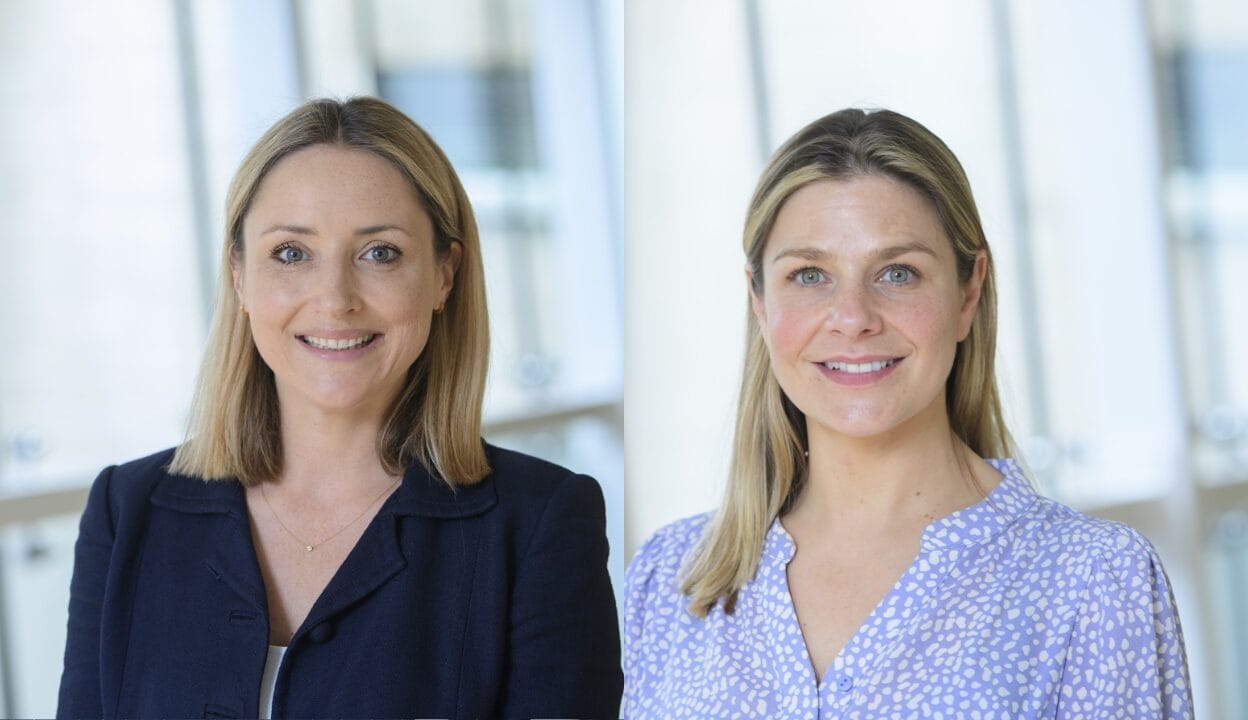
Portfolio returns are used to support the work and specific needs of the church, alongside clergy pensions, and strategy is carefully crafted to balance patient long-term investment alongside the need to prepare for a different future overseen by Charlotte Moss (commercial property) and Joanna Loxton (land), both newly promoted into their roles.

Rather than seeking wholesale changes, Loxton and Moss aim to build a synergy in strategy across the two portfolios to ensure that everyone working in the team knows what they need to deliver.

“Our job is to create an overarching structure to ensure portfolio performance,” says Loxton.

Strong Returns in Strategic Land

Some of the highest returns in real assets have come from an allocation to strategic land (3 per cent of the entire portfolio) comprising housing and employment sites that the Commissioners bring up through the planning system before selling for development.

Sponsored Content

It’s an asset that is attracting growing investor interest since the new Labour government made housebuilding a priority, pledging to increase supply to 1.5 million new homes over five years, a level unseen for more than 50 years.

Loxton says the strategic land portfolio currently accounts for 7500 acres, targeted to deliver around 33,000 new homes (roughly 9000 will be low-cost, affordable homes in-line with the Commissioners’ pledge to address social inequality) and employment spaces.

Bringing strategic land forward through the planning system involves working with local councils, other stakeholders and consultants to demonstrate its suitability, Loxton says. Once planning is approved, in some cases the Commissioners partner with a developer to bring the site to market, while in others they sell the land with planning permission to a housebuilder to bring forward the new homes.

“In many cases we seek to take a ‘patient capital’ approach to delivery and bring sites forward under joint ventures with master developers, housebuilders and commercial developers,” Loxton says.

“We are not developers, so are looking to partner with those with the expertise to bring forward our sites comprehensively and swiftly.”

Although land is sold from the strategic land allocation, the team constantly acquires new sites, actively buying new land with long-term development prospects. Some are small sites for just 10 homes, others much larger, destined for 10,000.

Re-imagining retail

One area of the portfolio that has witnessed lower returns is retail. But Moss says a strategy to re-imagine retail across the Hyde Park Estates focused on filling space with best-in-class independent retailers is starting to reap dividends.

“Retail has been difficult, but we are seeing it come back with our independent retailers who focus on selling the right, quality stock,” she says.

“ESG-certified office and residential also does well.”

Outside London, re-imagining property has included turning old warehouse units into a theatre. Elsewhere, a mall in the north of England has introduced an NHS diagnostic centre to move the space beyond just shopping.

Although the consequences of climate change haven’t yet knocked returns in the land portfolio, Loxton says climate change is now a key risk. But integrating sustainability is far from straightforward given it raises important questions – 90 per cent of the farmland in the portfolio is highly productive, versatile land, vital in terms of UK food production, yet farming in the UK contributes to around 10 per cent of total UK emissions.

The team is grappling with questions like how to use land for food production as well as increasing carbon capture and biodiversity. Questions like the merits of taking land out of food production, or whether this will create further problems elsewhere, and the different likely emissions profile of ‘best practice’ versus ‘standard practice’ and how close they can get to net zero farming, are now front of mind.

Loxton says active stewardship involves looking at the impact of climate change in the short and long term and exploring ways to build resilience. The team work with peers and policy makers to explore innovative practices.

The Commissioners balance their active stewardship and using the power of their voice with an awareness that farmers are custodians of the land and many have farmed for generations.

“We are looking at how [our tenants] integrate sustainability measures into their businesses in a way that supports and enhances their practices – and, consequently, our landholdings,” Loxton says.

Strategy appears more straightforward in the property allocation, for now. For example, the Commissioners have introduced green leases that include clauses around reduced energy consumption in an approach that is enabled by direct ownership.

“We do have direct control over the portfolio which helps us do this,” Moss says.

Natural capital

Natural capital, the new entrant on the sustainability spectrum, is an emerging market where the team is focused on engagement and exploring opportunities and challenges. The fund has completed a natural capital baseline assessment across the portfolio and was the first asset owner to sign the taskforce on nature related frameworks.

“Natural capital is a big discussion and focus area within sustainability and one that we want to be at the forefront of,” Loxton says.

Current projects include working with a bird charity on wetland recovery and another project with the Wildlife Trust. In London, natural capital projects include working with stakeholders like Transport for London and local councillors to develop biodiversity.

Long-term strategic land and timberland have the strongest returns, although Loxton notes timberland has struggled recently because of the downturn in the housing market. This stand in stark contrast to 2020, when timberland returned 41.3 per cent partly due to the sale of a number of forests in Scotland and the US.

Leave a Comment

How CPP is evolving risk management for a faster, more interconnected world

How CPP is evolving risk management for a faster, more interconnected world

In an environment where multiple risks are emerging and their effects are compounding on the portfolio, CPP Investments' chief risk officer Priti Singh says the $572 billion fund is rethinking risk management from the ground up, shifting from reaction to preparation and embedding risk thinking earlier in investment decisions. She speaks to Amanda White about the fund's risk approach.

Sort content by

Dutch fund tackles the cost and time of shifting to DC

The clock is ticking for Dutch fund PWRI to transition to a new DC scheme in line with pension reform. Imke Hollander explains why the pension fund is unlikely to invest more in risk assets and flags mounting costs in the transition, particularly in fees paid to advisors.

LACERA adds downside protection as equity markets look unsustainable

The $77 billion LACERA has positioned for the downside, launching a new asset allocation that pivots towards diversification and downside risk, adding to hedge funds and investment grade bonds. Top1000funds.com talks to CIO, Jonathan Grabel.

Giants APG and GPIF collaborate on infra

Two of the biggest pension funds in the world, the Dutch APG and Japan’s GPIF, have joined forces to invest in large scale infrastructure deals. The move comes as APG Asia head Thijs Aaten says he envisages more than half of the fund’s real assets will be in Asia.

CalSTRS’ sustainability strategy: Net zero and investing in opportunities

CalSTRS’ net zero strategy has provided a new level of focus and anchor for the 220-person investment team. Kirsty Jenkinson, investment director for the sustainable investment and stewardship strategies at the fund, explains its evolution including integrating climate scenarios into its asset liability modelling study.

Denmark’s PenSam introduces new climate index to solve tech tilt

A new climate index at Danish investor PenSam aims to solve the overweight to tech stocks, a common problem for sustainable investors give the sector is low emitting and solving many of the challenges of climate change.

TfL explains why hedge funds provide essential diversification

Padmesh Shukla, chief investment officer of the £14 billion Transport for London Pension Fund explains why he believes hedge funds are a crucial element to a diversified portfolio.

Previous



