
CalSTRS ponders EM coal divestment

The $188.8 billion California State Teachers Retirement System, CalSTRS, will decide next April whether or not to divest from non-US thermal coal. The giant US fund only has a small exposure to emerging market coal, but the decision, which would follow on from the fund divesting from US thermal coal, and investing in a low carbon index strategy earlier this year, isn’t straightforward.

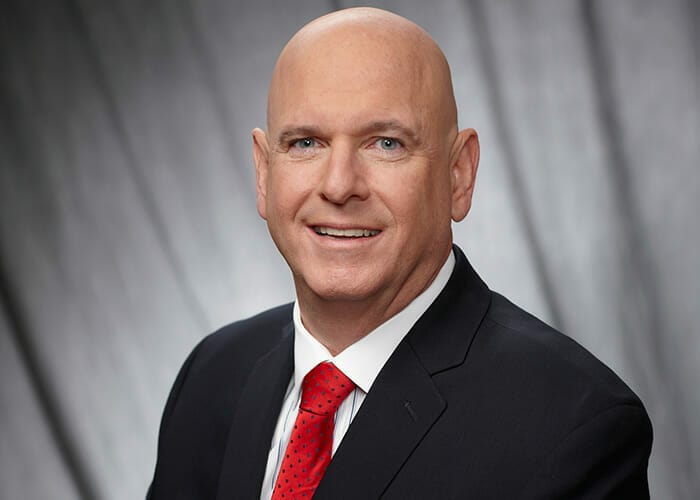
“We are conducting a deep dive into our non-US thermal coal holdings, but you have to consider the human issues as well as the climate issues in emerging market coal. In countries like India, there are so many people without electricity that without coal they will burn wood and dung, which is often worse than coal. There are two sides to the argument,” observes chief investment officer, Christopher Ailman, speaking from the fund’s Sacramento headquarters.

The decision to jettison US coal assets was easier, consistent with both the fund’s fiduciary duty and the changing regulatory landscape in the US.

Divestment in the US was limited to CalSTRS passively-held equity index portfolio and fixed income securities; active managers had mostly chosen not to own US coal in recent years.

CalSTRS further pushed its low carbon strategy this year when it committed up to $2.5 billion to low-carbon strategies in US, non-US developed and emerging equity markets.

The passively managed portfolio will be invested in an index designed to have significantly lower exposure to carbon emissions than the broad market, and a nearly complete reduction in exposure to fossil fuel reserves.

Sponsored Content

The MSCI ACWI low-carbon target passive index portfolio will be internally managed with implementation phased in, beginning with US equity, followed by developed markets and then, eventually, emerging markets.

Hedge funds for risk mitigation

The fund, which invests assets for nearly 896,000 active and retired school employees, is also in the process of introducing more risk mitigation into the portfolio through hedge fund strategies.

A new allocation to ‘risk mitigating strategies’ (RMS), will specifically target “less correlation to global growth,” smoothing volatility as the fund matures.

“We are a mature fund and we pay out more in benefits than what we receive in contributions. It means we care a great deal about the downside. We can’t ignore the low interest rate environment we’re in today, so we have to recognise that fixed income does not serve our purpose,” says Ailman.

The allocation will comprise four different strategies because “there is not one security you can buy to mitigate risk; you need to buy a basket.”

The components include long treasury bonds; trend following strategies; global macro and systemic risk premia.

In all, between 50 to 55 per cent of the allocation will be allocated to hedge funds. The whole strategy will account for 9 per cent of fund assets and the money will come out of fixed income and the global equity allocations, he says.

The bid to reduce risk comes as CalSTRS continues to be battered by volatility in a portfolio characterised by a 56.6 per cent allocation to global equity, as of the end of August 2016. The fund returned 1.4 per cent last year, due particularly to a poor performance in stocks.

The best performances came from real estate and fixed income which returned 11.1 per cent and 5.7 per cent respectively. Private equity, which currently accounts for 8.3 per cent of assets under management, also disappointed, returning 2.9 per cent, 1.7 per cent below CalSTRS custom internal benchmark.

“We think long-term, and the economy ebbs and flows. The US has been so strong for the last five years, it is not surprising there has been a pause,” says Ailman.

He also points to the funds three-year and five-year net returns at 7.8 per cent and 7.7 per cent respectively; CalSTRS has a target average return of 7.5 per cent over time.

Fee crackdown

Enduring investment themes include continuing to strengthen the fund’s internal teams, although Ailman says allocations to emerging markets, some private equity, and real estate will remain with managers.

Around 60 per cent of assets are currently internally managed. He is also keeping a keen eye on fees. CalSTRS says its fees come in at 30.8 basis points, meaning for every $100 it invests, it costs around 31 cents.

“The value-add has to exceed the fees you pay. Outperformance is inconsistent, hard to find and not easily repeatable. I’ve been in this business for 30 years and I thought fees would have come down by now, but Wall Street has just gotten cleverer at introducing new products that have a higher fee. Investors are focused on the net result and are willing to pay the fees if they are achieving a superior return net of fees. The problem is they pay first and wait; it’s not fun.”

Ailman plays down the outcome of the US presidential election on the pension fund, stressing again CalSTRS’s long-term outlook. Although he does ponder on one of the longest election processes in the world.

“Friends in Canada have pointed out that they held their country’s election, and reorganised their government, in less time than what we took to just run the primaries.”

Leave a Comment

Long term lens shields Colorado from private credit jitters

Long term lens shields Colorado from private credit jitters

As concerns in private credit mount, Colorado PERA CIO and COO Amy McGarrity says the pension fund isn’t seeing any strains in its growing allocation to the asset class, arguing that long-term investors are shielded from the risks because they can lock up their capital to weather market cycles.

Sort content by

Reversal of investment themes demands investors change their assumptions

Investors are currently facing the end of uncertainty around assumptions they have made for decades, and need to shore up their portfolios with greater inflation protection, more active management, and by fostering innovation, according to chief strategist at the Investment Management Corporation of Ontario.

Giant sovereign, pension funds re-think portfolios as market shifts

Speaking at Conexus Financial’s Fiduciary Investors’ Symposium held in Singapore, leaders from sovereign wealth funds in Singapore and Malaysia, along with United States pension giant CalSTRS, discussed how investors are viewing global macro risks and opportunities, and strategies they are considering to future-proof their portfolios.

Sweden’s AP Funds emphasise the long-term as returns take a hit

This time last year, Sweden’s four buffer funds reported the best returns in their history. Fast forward 12 months, and the four funds have posted losses thanks to allocations to equities and fixed income dragging their portfolios down.

Switzerland’s Migros profits from unique aspects of Swiss property market

Swiss pension fund MPK has withstood a difficult year in bonds and equities thanks to its large allocation to real estate. More people tend to rent than buy apartments creating steady demand for rental properties, says CEO Christoph Ryter.

Alaska grows wary of private equity

Alaska's CIO Marcus Frampton explains why he's keen to pare back private equity. Writing smaller cheques comes with consequences but he'd rather get the right portfolio exposures ahead. Absolute return and RE become a focus.

CalSTRS positions for the future with new investment team structure

CalSTRS has restructured the investment team with an eye on its future growth and the best people to achieve its mission. This includes examining the complexity of the portfolio and the skills required to manage it effectively in the future. Amanda White spoke to deputy CIO, Scott Chan.

Previous



