
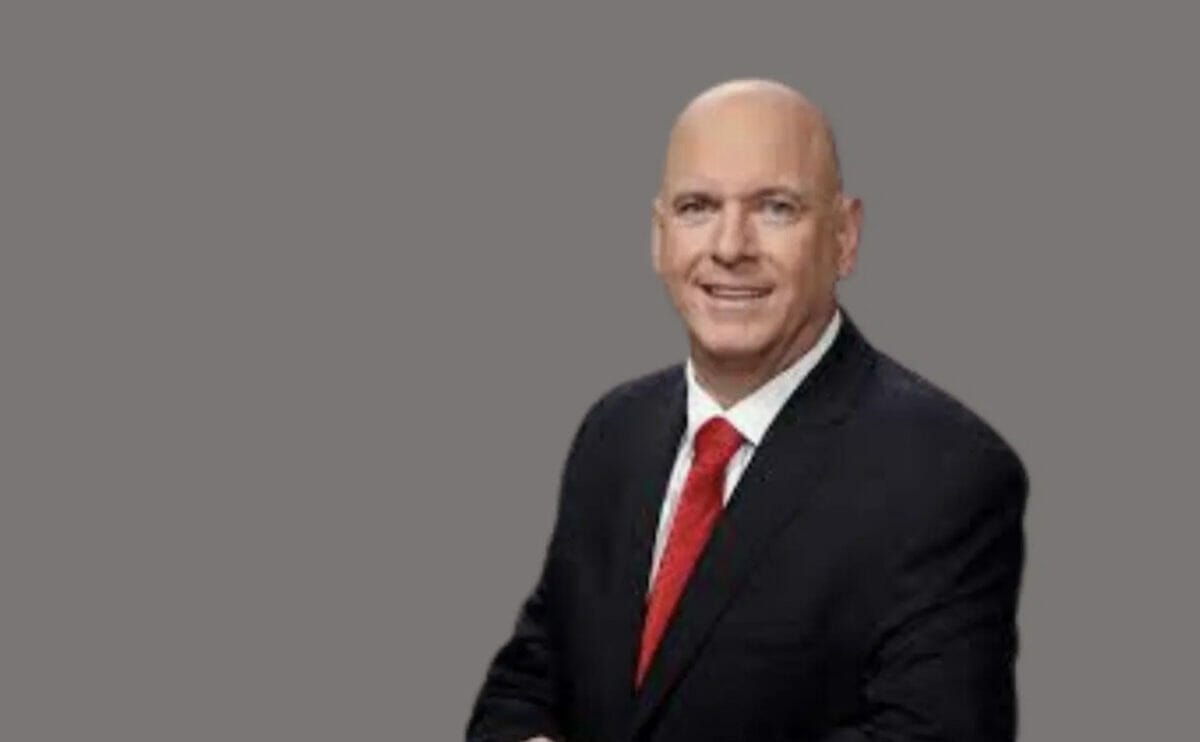

The $298 billion California State Teachers’ Retirement System (CalSTRS) has struggled to find meaningful investment opportunities to protect its portfolio against inflation, highlighting one of the key challenges funds potentially face as they grow, according to the fund’s chief investment officer Chris Ailman.
Speaking via video link at the Investment Magazine Fiduciary Investors Symposium in Melbourne, Australia, earlier this month, Ailman said funds can reach a point where it becomes increasingly difficult, if not impossible, to make significant portfolio allocations to some asset classes.
“Scale and size helps in some cases; in other cases, it’s a deterrent,” Ailman said.
“And I think, like CalPERS figured out, you’ve really got to pick your battles and figure out where it is a meaningful place to invest, that’s going to do something for your portfolio,” he says of his Californian peer across the river in Sacramento.
“We’ve all realised you can’t just throw money at an idea and invest in, you know, a giant portfolio where you end up with an index return; you’ve got to be very strategic and intentional about what you’re doing in your portfolio.”
Ailman said CalSTRS has about 6 per cent of its assets invested in inflation-sensitive investments – mostly in infrastructure, but also including timber and agriculture – which was not enough to protect its total portfolio against rising inflation.
“For these unique periods, where inflation suddenly rises rapidly, at least it buffers part of the portfolio,” he said.
“But, you know, the benchmark for it is inflation. And that’s very difficult to beat in this environment.”
Ailman said the adage of “go big or go home, I think honestly you have to look at that”.
He told the forum that on the flipside, scale gives CalSTRS the luxury of being able to innovate and test new investment ideas. While they do not always uncover investable opportunities, again because of the fund’s scale, at other times they help the fund pinpoint areas to avoid.
“I realised many years ago, prior to ’08, actually, that innovation was part of my duty statement,” Ailman said.
“But we just didn’t have the time. Everybody was so busy managing the portfolio and doing what we’re doing. We’d studied some of the new ideas that Wall Street would be sending our way, but we really didn’t have a research team who could just spend time test driving ideas, because at our size, ideas had to be able to be scaled.”
Ailman said that as a government entity CalSTRS is required to have struct rules around on contracts and structures.
“And so I, I literally joke with the board, I need a team who can test ‘as-shown-on-TV’ [ideas] – does it really work in our life, in our structure, at our size, and does it live up to its claim?” he said.
“They actually presented to the board wearing lab coats and safety goggles. But the point was, they’ve tested everything from global macro to microfinance, and literally everything in between. I think some of their best work has actually been in areas we chose not to invest in and avoided some pitfalls.”
“That’s given us a chance to test drive a number of things, a good example would be risk parity. We test drove that for, goodness, almost six years, longer than we wanted to, thinking it would work but thankfully – knock on wood – just a year ago, in the summer here in the US, we got rid of it, because that’s just done horribly, unfortunately, here as interest rates went up and bonds and stocks both went down.”
Ailman said the benefit of scale is that it allows a fund to develop some capabilities that smaller funds can’t.
“There are some pluses and some minuses of being big,” he said.
“So, certainly take advantage of economies of scale, you can by passive beta, or run it yourself, for next to nothing. You can achieve economies of scale when it comes to the size of accounts and pressure on fees. But then on some other areas, when you’re as big as we are, there are areas where you simply can’t invest, you can’t be nimble. You can invest in areas where they won’t move the needle, and it drives the cost up. And I think diversification, we know it’s the number one benefit to spread risk, but there’s a point of diversification that I really began to wonder if we’ve all gone too far, and just simply owning you know, too many securities.
“When you when you step back, and you look at your US equity portfolio, and you realize you own all 3000 traded stocks, or you look at your non US portfolio and are in 44 countries, very small exposure in some of those when I scratch my head and wonder, is that really worth it, because it brings on ESG risk and all kinds of challenges and costs.”








Leave a Comment
You must be logged in to post a comment.
Login