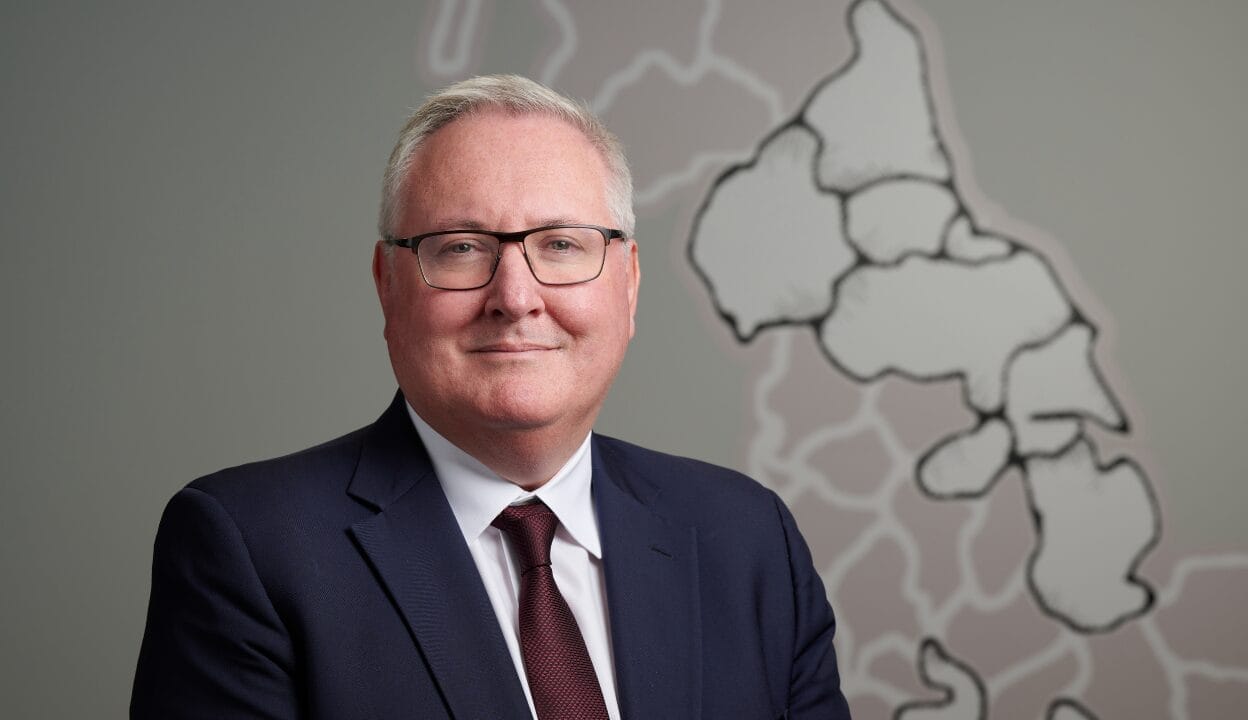

Border to Coast prepares to answer the call for pre-IPO growth capital

Joe McDonnell, CIO of Border to Coast, says the £45 billion  fund can help fill the gap in funding UK private companies wanting to IPO. It’s part of an investment strategy by the new-ish CIO that sees a focus on putting capital to work innovatively and intentionally for its underlying funds.

Small and mid-market companies in the United Kingdom have been starved of capital for years and it is more difficult than ever for private companies that have proved themselves and need £20-£30 million to push through to an IPO to attract investment, says Joe McDonnell, chief investment officer of the £45 billion Border to Coast, touching on one of the hottest topics on the UK investment landscape.

“It has been a tough ride for these smaller companies. The Financial Conduct Authority and others have woken up to it far too late. It should have been red flagged a long time ago,” says McDonnell who joined Border to Coast in 2023 following long stints in asset management and in-house pension management at Shell and IBM.

Under his leadership the asset owner is readying to fill the gap that he says naturally falls to the £400 billion LGPS (86 local authority pension schemes now amalgamated into eight mega pools) as corporate DB pension funds continue to de-risk and DC funds, keenly focused on the lowest cost provision, struggle to move into private markets.

“We’d like to focus on this segment of the market, and we think if a company has proper UK institutional investment on the private side, they’d consider a UK listing as this is where their sponsors are,” he says, in a nod to that other much talked about absence – the lack of IPOs.

The rot is evident in the falling number of companies listing on the FTSE 250, continues McDonnell. Back in 2018, 198 of FTSE 250 constituents were companies and 52 were funds. Today the number of companies has fallen 15 per cent to 168 and the number of funds jumped nearly 60 per cent to 82, resulting in a market cap drop of companies on the FTSE 250 of 32 per cent.

Sponsored Content

“All that money has flowed to the US,” he says. “It’s had a dramatic effect on how the UK is perceived.”

Investment in the space will require a deep expertise that is out of reach for many investors and McDonnell estimates it will take two to three years to deploy money.

Although the premium offered for investors in small and mid-cap companies over large cap has slipped away over the last 20 years in favour of mega large cap like banks and oil giants, he is convinced it still exists and will play into Border to Coast’s small to mid-cap structural bias.

direct real estate

Border to Coast is also doing its part to invest in other areas of the UK too. This October it will begin running an initial £1 billion internally managed direct pooled UK real estate allocation for its 11 partner funds.

It is the final asset class to pool and involves client funds handing over around 70 direct real estate positions each in a much more complex process than building a portfolio from scratch. Like the fact each investment requires fresh environmental and legal due diligence. “We have to get comfortable with each piece of real estate before we accept it into the pool,” he says.

Correctly valuing these existing portfolios in today’s volatile real estate market with valuations moving more than at any point in the last 10 years is another headache. Selling indirect individual fund holdings so clients can assign fresh capital to the new direct allocation is also difficult, he explains.

“The market is not great for selling so it’s been a gradual process. Investors that have invested a significant amount in funds don’t want to hurry along redemptions that put a stress on the market”.

Still, it also makes for an opportune time to build out the portfolio helped by DB funds selling up as they go for buy out. “We don’t time the market, but it’s a great time to launch a real estate strategy with fresh capital because there are lots of sellers in the market.”

McDonnell says Border to Coast will make all the decisions but will be supported in terms of origination and execution by asset manager Aberdeen which has worked with some of the partner funds in the past.

He won’t define the portfolio from an asset allocation perspective and strategy will be shaped around a “go anywhere do anything” multi-asset approach. Pricing is so attractive he wants the freedom to move between segments and diversify the portfolio over time. Moreover, UK real estate is often backward looking.

“Data centres or last-mile logistics didn’t exist 10 years ago. We don’t want to be tied to a single segment of the market.”

He is mindful of the possible conflict of interest within the LGPS where pools seek to invest in infrastructure, social housing, regeneration opportunities and renewables in their own geographies. Warning that all investments must make sense from a risk/return perspective, he suggests a “national multi-asset programme with regional sensitivities.”

A centralised template where every decision on where to deploy is consistent would also help identify the best opportunities, and was the approach Border to Coast used when it launched its UK Opportunities portfolio in Q1 2024.

Future innovation

With 80 per cent of Border to Coast’s partner funds’ assets pooled – the remaining 20 per cent lies in passive equity and bonds and will stay with the individual pension funds who have “terrific pricing” with large passive managers – McDonnells says all future innovation will be around strategy.

For example, in global equity he is planning to launch a multi-factor equity index solution and is also exploring global sustainable bonds.

“You can get the same risk/return yield/duration/credit quality from a global sustainable portfolio as you can from an aggregate bond portfolio and as funding levels are at record highs, we expect to see an increase in the allocation to fixed income in the coming years.”  The portfolio would also meet two objectives – diversification in fixed income and a great opportunity to transition to net-zero climate targets.

He says all strategies and funds are chosen based on communality not proliferation – he won’t launch niche strategies that aren’t scalable across multiple partner funds.

“We are conscious of using the active resources we have including dedicated research teams and internal portfolio management teams as effectively as possible,” he says. “We don’t’ think ‘let’s not do private equity and cut costs’. We make no apologies for having the right resourced team with the right headcount that allow a broad exposure to these strategies.”

Some LGPS pools have adopted a hybrid approach to pooling, or outsourced everything to a consultant but he believes Border to Coast’s model has created a resilience within the organization that sets it up for the future

“Which is the best model? This is the model I like,” he concludes.

Leave a Comment

How CPP is evolving risk management for a faster, more interconnected world

How CPP is evolving risk management for a faster, more interconnected world

In an environment where multiple risks are emerging and their effects are compounding on the portfolio, CPP Investments' chief risk officer Priti Singh says the $572 billion fund is rethinking risk management from the ground up, shifting from reaction to preparation and embedding risk thinking earlier in investment decisions. She speaks to Amanda White about the fund's risk approach.

Sort content by

NBIM: Listed and private real estate is all the same in the long run

The differentiating characteristics of unlisted and listed real estate diminish over time according to new research by Norges Bank Investment Management, supporting the sovereign wealth funds’ unique combined strategy for real estate that sees both private and listed sit in the same team.

CalSTRS looks at big picture with total portfolio function

The $315 billion CalSTRS is looking to build a top-down portfolio function to better incorporate liquidity management alongside portfolio construction and to consider how it can better deal with often lumpy cashflows to maximise returns, while continuing to keep a tight rein on risk.

Future Fund jolts out of ‘set and forget’ mode

Australia’s sovereign wealth fund has handed mandates to external active managers and built a dedicated treasury management function, six years after going all-in on passive index strategies. It is is also on the hunt for early stage venture opportunities as it continues to forecast challenging conditions and higher persistent inflation.

What drives success at CPP Investments’ giant PE portfolio

Size and scale are not always advantages. Against the backdrop of tougher market conditions, CPP Investments' global head of private equity Suyi Kim says successfully managing what could be the world’s largest private equity allocation a program will depend on successfully managing the large team.

Finnish fund Elo’s CIO reveals portfolio plans

Hanna Hiidenpalo, Elo’s CIO discusses progress around internal management, the impact of Finnish equities on the portfolio, and the fund’s sustainability program which includes a target of carbon-neutral energy use in direct real estate by 2027. 

UN pension fund flags climate risk on ALM and performance

In a nod to headwinds including climate change, evolving demographics, and the future economic outlook the $85.5 billion United Nations Joint Staff Pension Fund will use a slightly lower real rate of return to inform its upcoming actuarial valuation with the 2023 ALM scenario planning focusing on climate risk.

Previous



