
Alecta doubles down on governance, risk management and culture

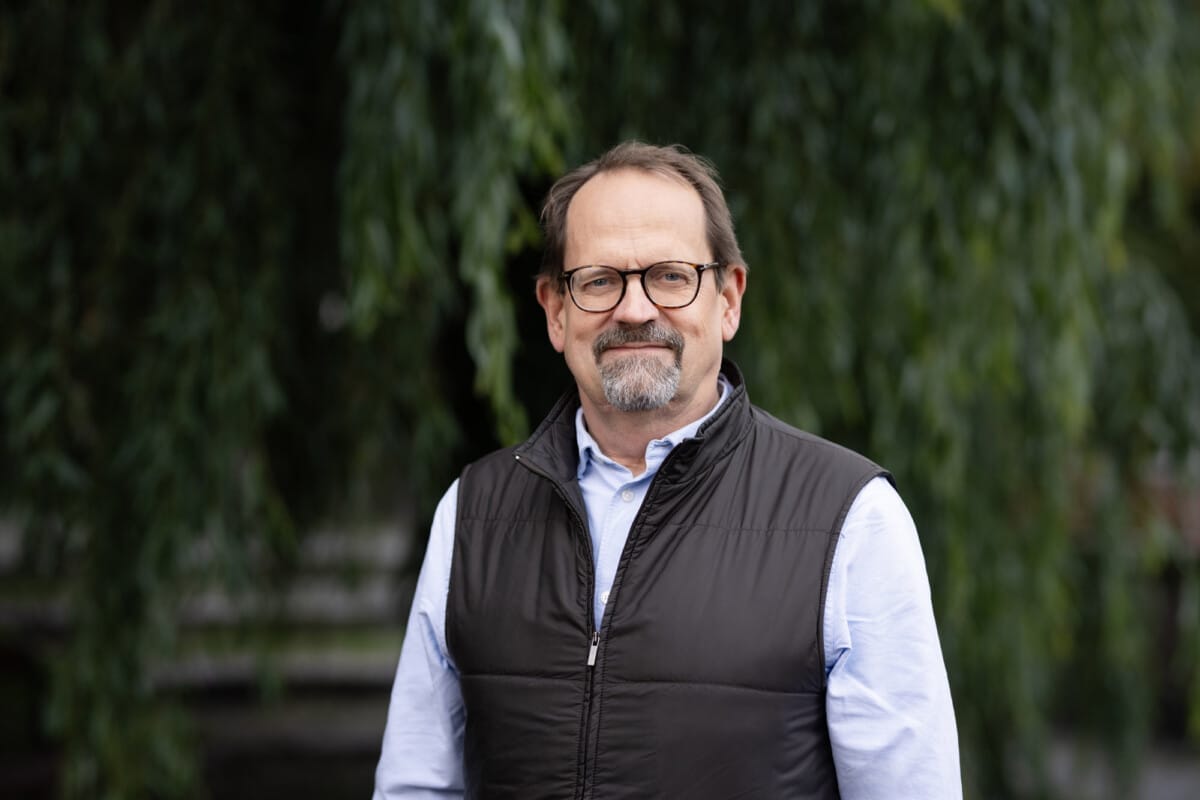
Peder Hasslev, Aletca, pressbild

Sweden’s largest pension fund, Alecta, has spent much of the last year continuing to work on improving governance, risk management, competence and culture in the wake of a $2 billion loss in 2023 attributable to investments in US regional banks, including Silicon Valley Bank, turning sour.

Alecta, Sweden’s biggest pension fund with 1.31 trillion Swedish kronor ($126 billion) of assets under management, has spent much of the last year continuing to work on improving governance, risk management, competence and culture.

It’s been essential, says chief executive Peder Hasslev, to rebuild damaged trust in the wake of the investor losing $2 billion in 2023 when its investment in US regional banks Silicon Valley Bank (SVB), Signature Bank and First Republic Bank turned sour. The fund also experienced losses from its investments in Scandinavian real estate company Heimstaden Bostad.

“We have worked intensively on developing and implementing improvement measures to strengthen Alecta,” said Hasslev who has been in the top job since September 1.

Alecta began investing in SVB in June 2019 and made its last investment in November 2022. The pension fund was the fourth largest shareholder in SVB.

In the immediate aftermath of the losses, Alecta fired its chief executive Magnus Billing and head of equities Liselott Ledin. This year it has continued to tighten governance following an April 2024 board meeting when four new board members were elected of which three are independent from the social partners. Alecta is a mutual fund, owned by the Confederation of Swedish Enterprise, Unionen, PTK, Sveriges Ingenjörer and Ledarna.

Sponsored Content

Alecta has also struggled to fill the position of chair on its board following the resignation of Ingrid Bonde in October 2023.

In January 2024, the committee proposed Lars Rohde but withdrew this due to a conflict of interest. Next up was Carina Åkerström, former CEO of Handelsbanken, but she resigned after just 11 days. Currently, Jan-Olof Jacke is chair of the board.

The Swedish Financial Supervisory Authority (FSA) opened an investigation into the bank losses in May 2023. A remit it then expanded to include the fund’s investments in indebted real estate company, Heimstaden Boden in which Alecta lost SEK 12.7 billion.

Preliminary findings of the FSA investigation released in July found that the company violated regulations. The FSA said it has notified Alecta of its observations from its investigations and the pension fund has been given until the 6 September to respond to the FSA.

“The fund has assisted the Financial Supervisory Authority with material and answers to ensure that the investigations can be carried out as thoroughly and efficiently as possible. At the end of June, we received an opinion letter with the Financial Supervisory Authority’s preliminary assessments. We are now working on going through it and formulating our response, in accordance with the usual process,” said Hasslev.

The pension fund returned 7.7 per cent in the first half of 2024 with the strongest performance from equities which returned 12.9 per cent in the period. Volatility in interest rates  and rising long-term interest rates in Europe and the USA had a negative effected alternative investments.

However, the fund said that the prospect of lower short-term interest rates in the future has improved the outlook for real estate.

The value of Alecta’s holdings in Heimstaden Bostad rose by 3.9 percent during the period and now amounts to SEK 39.2 billion.

Alecta’s operating costs for the interim period amounted to SEK 586 million, higher than the target of SEK 576 million. The higher outcome is mainly attributable to one-off costs related to the extraordinary events in 2023.

Leave a Comment

Finland’s Elo: Larger equity allocations promise new media scrutiny

Finland’s Elo: Larger equity allocations promise new media scrutiny

As Finland's pension funds prepare to increase their equity allocations to unprecedented levels compared to global peers, they must also navigate a new and unfamiliar risk. Elo's chief investment officer Jonna Ryhänen explains the fund's investment approach going forward and how it will manage stakeholder and media scrutiny as they react to swinging volatility and returns.

Sort content by

The “CalPERS effect” on targeted company share prices

CalPERS’ approach to improving portfolio returns by engaging management of poorly performing companies to rethink governance and strategy has had a substantial endorsement, with analysis by Wilshire Associates demonstrating that the fund has had a dramatic effect on the performance of the companies placed on its Focus List. mrec4inarticleinline Sponsored Content scnative1 scnative2 scnative3

Viewing the world differently: Alaska Permanent Fund’s new asset allocation

The $32 billion Alaska Permanent Fund has taken a unique  approach to asset allocation, re-organising the fund according to how investments respond to economic conditions and their purpose in the portfolio. Chief executive, Mike Burns spoke to Amanda White about the new approach, which also includes a search for four ‘external CIO’ mandates. Alaska Permanent

BT Pension Scheme digs deep to plug deficit

The £31.3 billion ($51 billion) BT Pension Scheme will make additional deficit contributions of $862 million per year over the next three years after suffering an $13.6 billion loss on its investments in 2008. Kristen Paech reports on the scheme’s performance in 2008 and its new strategic asset allocation, which includes a 20 per cent

PGGM wins more pension fund clients

PGGM Investments, whose main client is the €75 billion ($107 billion) Pensioenfonds Zorg en Welzijn (PFZW) in the Netherlands, is well on its way to achieving its goal of becoming a commercial manager of pension fund assets, with more funds due to come on board soon. Else Bos, chief executive officer investments, spoke to Kristen

Back to basics as CalSTRS rethinks active/passive mix

The board of CalSTRS, the second biggest fund in the US, has three broad research initiatives for the investment team this year: rethinking active versus passive and the mix of internal and external management; commodities; and liability – driven investments. Chief investment officer, Chris Ailman, spoke to Amanda White. mrec4inarticleinline Sponsored Content scnative1 scnative2 scnative3

Khazanah pulls state-owned firms from jaws of crisis

The financial crisis struck as many of the state-owned portfolio companies held by Khazanah Nasional Berdad, Malaysia’s $23 billion (RM82 billion) sovereign wealth fund (SWF), were learning to operate with new executive leaders and, crucially, less gearing. Simon Mumme charts the progress of the manager’s attempts to strengthen and diversify the Malaysian economy throughout the

Previous



