

When members of the Seventh-day Adventist Church built their first hospital, in Battle Creek, Michigan, in 1866 to offer Christian healing, they couldn’t have envisaged how their pioneering idea would flourish. Of the hundreds of Adventist hospitals that have spread across the US, Florida-headquartered Adventist Health System (AHS) runs the most,47 hospitals, 82,000 employees and, most recently, ambitious expansion plans that will result in the system doubling revenue over the next seven years. It’s a growth trajectory that has been supported by an expanding $6 billion investment portfolio where, true to the system’s core beliefs, a holistic strategy benefits the whole organisation.
The overriding purpose of the portfolio is to support the hospitals and care AHS provides in a philosophy encapsulated in its core mission to “Extend the healing Ministry of Christ”.
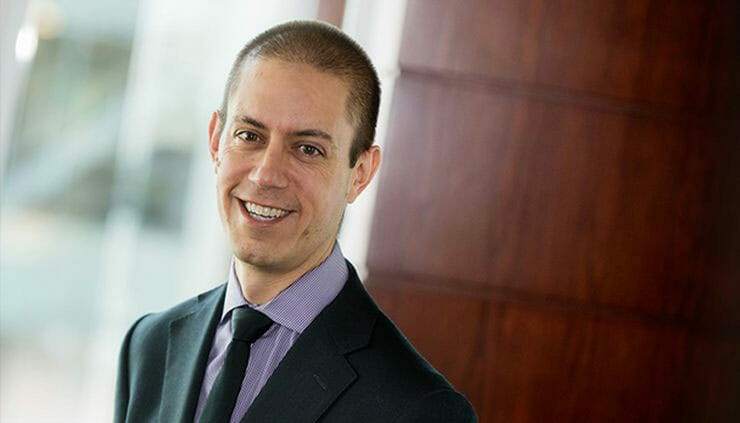
The portfolio has no return hurdle or mandate to beat the market or peers. Instead, success is measured by the contribution the portfolio makes to AHS’s corporate balance sheet and its ensuing support to the financial strength of the organisation. Viewed through this lens, the portfolio performs very well, says chief investment officer Rob Roy who joined AHS 20 years ago, when it had just $600 million in assets under management. He now points to AHS’s high profit margins, frequent acquisition of new hospitals and AA balance sheet to illustrate his point.
“People say, ‘Show me your investment returns’ but this is not our primary objective,” Roy says.
Just under half the portfolio is invested with seven external managers, some of which run active strategies. The names include Bridgewater, BlackRock, Blackstone and Goldman Sachs.Internally, all investments, bar two tiny allocations to private equity and hedge funds, are in index-tracking strategies. The hedge fund portion is beingexamined relative to cheaper alternative risk premia.
There is no long-term strategic asset allocation with fixed percentages. Instead, allocations are based on a dynamic risk appetite that shifts with the fluctuating needs of the business. The current risk allocation to global liquid markets spans sovereign bonds (30 per cent) inflation-linked securities (30 per cent) global equities (20 per cent) commodities (10 per cent), high-yield credit (5 per cent) and dollar-denominated emerging market sovereign bonds (5 per cent).
“We don’t think equities should always be X per cent and bonds should be Y per cent, plus or minus. This is a rigid approach that doesn’t reflect our support of a dynamic business,” says Roy, who adds that an illiquid allocation wouldn’t fit in the portfolio either. Investing in liquid markets ensures the portfolio is ready to support the business whenever necessary.
The portfolio working for the whole is best encapsulated in one of AHS’s smallest allocations – 2 per cent to private equity, amounting to about $100 million, only about $40 million of which has been deployed so far. Rather than seeking high returns as a primary goal, AHS has invested in two specialised healthcare private equity funds, Ascension Partners and Heritage, where the other limited partners are also healthcare systems. The idea is to invest in new technologies or drugs that could ultimately provide real value to AHS, Roy says.
“It is about finding something to use across the whole organisation that is going to be really beneficial; it is not about maximising investment returns,” he explains.
Growing financial strength – and risk
Portfolio risk is anticipated and measured according to factors such as corporate drawdowns or forecast market volatility, historical data, scenario analysis and stress-testing. Armed with this information, Roy’s 10-strong investment team, which works across the entire portfolio rather than in asset class silos, sets the allocation. It must ensure as high an expected return as possible without endangering the portfolio’s ability to support the business – any losses that force cutbacks on healthcare provision contravene AHS’s mission, Roy reminds.
“We look at how much risk we can take, and how much we are prepared to lose,” he says. “We then build a portfolio that has a low probability, say around 5 per cent, of potentially losing that amount of money.”
The fear of being unable to sustain losses has historically engendered a cautious approach, but this could be about to change. AHS is increasingly able to take on risk because of its growing financial strength, says Roy, who draws on recent comments from chief executive Terry Shaw and chief financial officer Paul Rathbun to describe the shift towards a more confidentategy that is starting to take root in the organisation.
“We are changing the way we think and act – from self-preservation poor, to enlightened rich. It takes times and effort,” he says.
This doesn’t mean AHS will change tack, pile into active strategies or up its equity allocation but it may increase risk by adding leverage. As the risk budget grows, the investment team will have two choices with the current allocation. The fund could take more risk by selling safe assets like bonds and reinvesting in riskier markets, but Roy believes this makes the portfolio less efficient. He would rather use leverage embedded in derivative instruments to allow him to increase the allocation to what AHS already holds, in a strategy that boosts risk exposure but also retains efficiency.
“Think of it like this,” he says, drawing on a cooking analogy. “When you have your favourite recipe for chocolate-chip cookies and more people come over to your house, to make more, you don’t just add eggs. You make more using all the ingredients.”
Although the internal allocation tracks indices, Roy doesn’t describe the strategy as passive. The investment team actively sets the risk budget and builds a diverse portfolio to reflect it, in a never-ending stream of decision-making.
“Our research team drives the planning and measurement of risk with internal and third-party systems, and our portfolio implementation team plans and executes any trades necessary to manage the portfolio within these parameters every day.”
Moreover, constant decision-making is required to support a business in flux, evolving global capital markets and the instruments to access them.
“Think about the liquidity in global inflation-linked securities and how that changes the dynamics of our portfolio; think about the rise of ETFs and ensuring the most cost-effective ways to implement strategy here, or how trading technology and execution costs are now massively different to 10 years ago,” he says. “The work never runs out.”
Stewardship alpha
Although some of AHS’s seven asset managers run active strategies, none were selected based on their expected ability to produce traditional alpha, as Roy observes managers’ ability to persistently outperform the market is mixed. Instead, AHS chooses managers on their ability to provide solutions, not just products. It’s the value they bring beyond simply deploying capital, like advising on team structure, technology architecture, governance, and quantitative research. There is little turnover in the mandates and the idea of a large manager roster requiring hiring and firing fills Roy with amazement.
“Some peers have 100-plus managers and I wonder how they can truly be partners,” he says. “I just don’t understand that.”
Unmotivated by beating benchmarks, it’s not surprising AHS sees alpha in a completely different light. Stewardship alpha, as AHS calls it, comes from within and is achieved when the whole investment process comes together in a sensible, efficient and robust process. It involves a thorough understanding of risk, strong governance and a workplace where employees can excel.
“If we can show up every day to execute and improve upon our process, then we are creating a huge value for AHS,” Roy says. “We try to spend our time and resources on developing the major elements of our process, rather than on smaller decisions like manager selection, security selection or macro-guessing.”








Leave a Comment
You must be logged in to post a comment.
Login