
A strict Régime

Stringent regulatory constraints dictate investment strategy at French public service pension scheme Régime de Retraite additionnelle de la Fonction publique, a €26.2 billion ($28.0 billion) mandatory fund for French civil servants and members of the judiciary, established in 2005.

By decree, the scheme’s manager, ERAFP, has to invest at least 50 per cent in bonds; diversifying assets in listed and private equity and infrastructure are capped at 40 per cent. Real-estate investment is limited to only 10 per cent of assets. This leaves the fund with a current strategic asset allocation of 60-62 per cent in bonds, 30-31 per cent in diversified assets (the bulk of which is listed equity) and 9-9.5 per cent real estate – at a time of historic low interest rates.

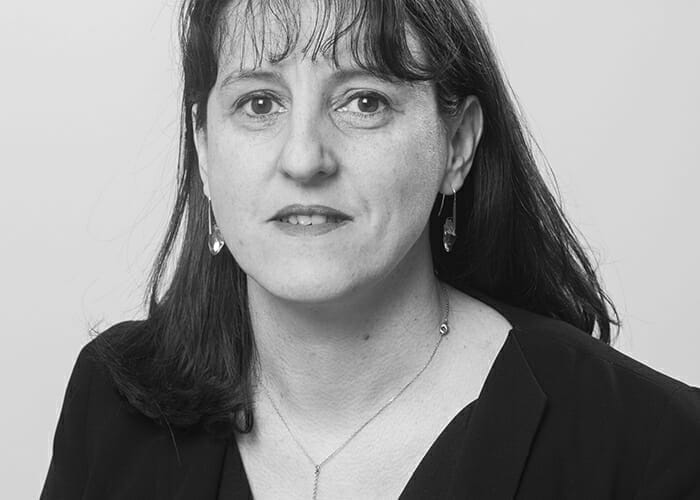
It is the restrictions governing the fund’s allocation to illiquid assets that chief investment officer Catherine Vialonga finds particularly frustrating.

“As a recently created mandatory pension fund, we are in the very uncommon situation of having predictable and sizeable positive net cash flows for several decades,” Vialonga says in an interview from ERAFP’s Paris headquarters. “Thus, we think we should be able to take advantage of our long-term investment horizon and our particularly low need for liquidity to benefit from the illiquidity premium resulting from investments in real assets. This is why we advocate extending the investment threshold in real estate [beyond] current levels of 10 per cent.”

She is heartened by a gradual diversification of fund assets since 2005, when allocations to sovereign bonds dominated strategy. It suggests a trajectory towards increased diversification and flexibility in years to come.

“Let’s keep in mind that ERAFP is a young scheme and that we have already implemented a policy of gradual diversification,” she says. The fund achieved a 4 per cent annualised internal rate of return, by market valuation, in 2015.

Sponsored Content

Two years into new investment rules

A landmark change came when new investment rules were introduced two years ago that increased the equity allocation from 25 per cent and introduced allocations to private equity and infrastructure. Other new assets were also added, including short-term credit instruments in order to manage treasury, and allocations to private debt and loan funds. ERAFP is now allowed to invest on its own in any kind of open-ended fund, and is also permitted to use derivatives, although only for currency hedging purposes.

“These changes are important for asset diversification and with regard to matching the duration of our liabilities,” Vialonga explains. “We also want to provide long-term support to the economy via smaller investments.”

The fund recently awarded a 10-year private equity mandate to Access Capital Partners, targeting $213 million in a range of unlisted small and medium-sized (SME) European companies.

ERAFP invests only in developed equity markets, and there is a heavy euro bias, with 70 per cent of the variable asset allocation (comprising public and private equity and infrastructure) invested in euro assets.

Other allocations include a multi-asset portfolio that Amundi manages. It was an important diversifying allocation before the 2015 rule changes and although it accounts for less than 2 per cent of assets under management, Vialonga still likes the allocation for its “decorrelation and a positive performance”.

ERAFP gives Amundi an annual risk budget and generous fixed asset guidelines within the portfolio.

“Within those wide guidelines, Amundi can change the fund’s allocation quite easily,” Vialonga says, adding that political uncertainty in Europe has, in fact, made for a cautious strategy.

“The fund manager is particularly cautious since the beginning of 2016 because of accrued potential volatility risks of Brexit, Grexit, Italian polls and the US presidential elections,” she says.

As of February 2017, equities represent 55 per cent of the portfolio Amundi manages (mainly Asian equities). Bonds represent 42.5 per cent (mainly investment grade). The remainder is equally split between emerging market debt and high yield.


Manager selection and SRI

ERAFP’s manager selection has to comply with France’s strict public procurement code.

“When we want to invest in a new asset class, or to renew existing mandates, we launch a public RFP [request for proposals] aimed at selecting one or more asset managers. The different steps and corresponding deadlines of the process, as well as the selection criteria, are pre-determined and closely enshrined in law.”

Every shortlisted candidate is invited to submit an offer, which is assessed according to the quality of their investment process, the track record and experience of the management team, risk management and internal control systems and costs, comprising management and brokerage fees.

Socially responsible investing (SRI) integration is also a deciding factor in manager selection. An SRI charter “persistently and permanently” takes account of the pursuit of the public interest and applies to all “financial management transactions”, whether ERAFP performs them directly or agents perform them on its behalf.

Just under 20 per cent of the equity portfolio tracks a replicated low-carbon index based on the Scientific Beta Efficient Maximum Sharpe Ratio method.

“The aim of the index is to maximise the Sharpe ratio of a Euro SRI carbon-efficient universe,” Vialonga says.

Last year, ERAFP extended the calculation of carbon exposure to its government and corporate bond portfolios as well. This means the fund now measures the carbon output of about 87 per cent of its total assets. In another endeavour to measure carbon, ERAFP now compares the energy mix in its equity portfolio with “a current typical portfolio” and to an energy generation breakdown using the International Energy Agency’s 2°C Scenario (2DS) for 2030-50.

“This measurement is the first step in shaping ERAFP’s zero-carbon strategy. We cannot manage what we do not measure,” Vialonga says. “We will continue to use other tools to measure ERAFP’s climate risks and opportunities.

“One of the most important challenges for climate risk management is the development of robust indicators that provide a comprehensive picture of companies’ direct and indirect emissions. Most available methodologies cover only part of [indirect] emissions. Thus, in some sectors, such as the automotive industry or the financial sector, global emissions tend to be underestimated.”

ERAFP’s board of directors comprises 19 members from various trade unions, the public sector and qualified investment professionals. It is a mix that has particularly championed ERAFP’s integrated and award-winning SRI policy, Vialonga says.

“Since its inception in 2005, the board of directors [has believed] that investment based solely on maximum financial profit fails to account for social, economic and environmental consequences,” she says.

Leave a Comment

Long term lens shields Colorado from private credit jitters

Long term lens shields Colorado from private credit jitters

As concerns in private credit mount, Colorado PERA CIO and COO Amy McGarrity says the pension fund isn’t seeing any strains in its growing allocation to the asset class, arguing that long-term investors are shielded from the risks because they can lock up their capital to weather market cycles.

Sort content by

Hawaii expands CRO strategy

The new CIO at the Hawaii state pension fund is looking for additional sources of uncorrelated return, including hedge funds, and will look to add new managers to the lineup. Sarah Rundell talks to Elizabeth Burton.

Ignore diversification: BCI’s Dunatov

Stefan Dunatov, head of investment strategy and risk at Canada’s $170 billion British Columbia Investment Management, says long term investors should forget about diversification at the strategic level and instead focus on buying growth beta assets.

Prince says diversify east and west

Bob Prince, co-chief investment officer of Bridgewater, says that institutional investors should consider diversification in the context of different economic exposures which could manifest in splitting portfolio allocations to the east and west. He advocates looking at diversification through the lens of macroeconomic conditions and cashflows related to the differences in economic regimes around the world.

Future Fund adds risk and liquidity

The Future Fund is adding risk to its portfolio, and focusing on liquidity, as part of a part of an ongoing strategy to free up more capital in the portfolio in the event of a drawdown. It is in the midst of selling off a “large slice” of private equity assets on the secondary market and has bought listed equities in emerging markets in the past year.

Alaska focuses on risk, cautious outlook

A year ago, the Alaska Permanent Fund appointed its first chief risk and compliance officer, Sebastian Vadakumcherry. With current investment conditions, and a move to a more conservative outlook, the relationship between Vadakumcherry and CIO, Marcus Frampton is proving its worth. We look at the fund’s approach to risk, its outlook for capital markets, and how data will give it an edge.

Washington State’s secret sauce

A big contributor to the long-term top decile performance of the Washington State Investment Board has been its high allocation to private markets. But it is not just the high allocation that sets the fund apart from its peers, it’s also the nature of the relationships with its GPs. Amanda White speaks to retiring CIO Gary Bruebaker about the fund's secret sauce.

Previous



