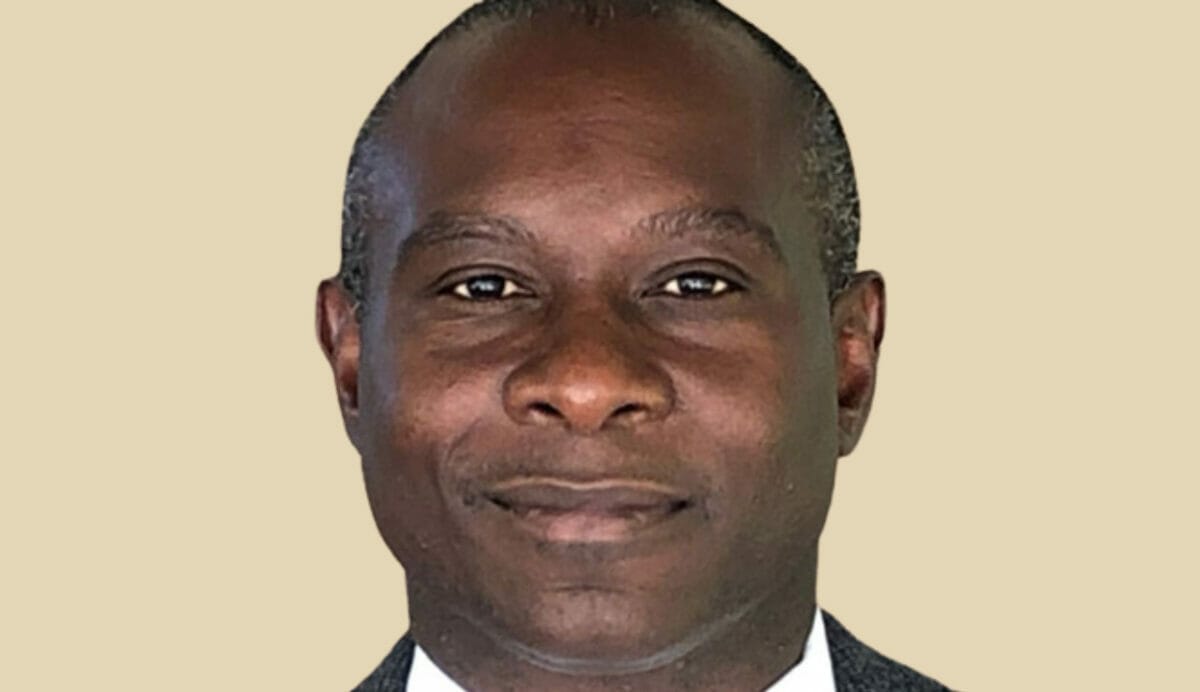

A new SAA at Connecticut allocates more to risk assets in manager shakeup

Since joining the Connecticut Retirement Plans and Trust Funds (CRPTF) as CIO just under two years ago, Ted Wright has developed a new strategic asset allocation that has bumped up the allocation to private assets, particularly private equity (up from a 10 per cent target allocation to 15 per cent) as well as private credit, infrastructure, and natural resources.

“One of the things that really stood out was that we were chronically underweight risk assets and private assets,” Wright says, reflecting on what he’s changed at the $60 billion portfolio since moving there from the Los Angeles County Employees Retirement Association.

“We have a risk budget to spend, and now we are spending it.

Public equity has been pared back a little, to around 38 per cent of total AUM. Wright has also rewritten CRPTF’s investment policy statement, articulating the key priorities of the investment management office in one, holistic document.

In a nod to his first career in the military (a self-confessed late bloomer, he didn’t enter the investment world until his late 20s) Wright hopes his approach brings as much rigour and certainty to uncertain situations as possible.

“The military’s discipline, rigour, and work ethic taught me invaluable life lessons,” he says.

Sponsored Content

“It wasn’t a stretch to go from the military to investment.”

Risk mitigation

In another change, CRPTF’s fixed income portfolio now includes an allocation to risk mitigating strategies that comprises investments that focus on volatility, changes in volatility and different parts of the volatility curve as well as other flight-to-quality strategies to provide downside protection. The allocation – still being built out – is designed to provide stability and to have a negative correlation to markets during equity downturns.

“We want to generate outsize returns when equity markets drawdown, but also design the portfolio in such a way that we can be reactive and proactive depending on market conditions,” says Wright.

“Our risk mitigation portfolio is more complex, but the purpose is to have something that punches above its weight class and doesn’t cost us lots of money while we wait for challenging periods. It is a question of us putting money to work in assets that have greater potential for the upside while reducing the downside during turbulent market periods.”

Manager shakeup

The new strategic asset allocation has led to a shakeup in CRPTF’s 156 (as of June 2022) manager relationships. For example, five to seven managers have gone from the public markets allocation as Wright seeks to consolidate exposures and not double-up.

“It may be difficult to outperform in US public equities ahead,” he says.

“Having six managers carry out one strategy may not be the most efficient use of capital.

“We don’t want to take on more manager risk than we need to, and we don’t want to add managers or have managers in the portfolio just for the sake of having another exposure that is identical to something we already have.”

The decision on which managers to axe was made by looking at tracking errors and managers’ ability to generate returns above the benchmark. Elsewhere, he says investment staff assessed mandates based on the extent returns would increase if CRPTF paid less in fees. Bywords shaping the shakeup were simple, intentional and deliberate, balanced by the need to maintain manager diversity.

Wright has also brought an urgency to the process. Approved last year, most of the do-able shift and downsizing in public markets was completed by the end of 2022.

“I’ve seen situations where a fund completes an SAA and three years later, they still haven’t reached their targets and then they are about to begin another SAA,” he says.

“To be effective, you need to be deliberate with some measure of haste.”

That said, new allocations to private markets are more difficult because they involve pacing up over time. Here Wright is focusing on re-ups in private equity as opposed to looking for new relationships. Bigger allocations to infrastructure and natural resources are nearly wrapped up.

“In private markets, if it’s not a relationship we want to maintain, we don’t re-up and just let the allocation roll off the books,” he says.

“We have a good stable of private equity relationships and hence we are more likely to re-up than add new relationships.”

Diversity

Connecticut runs an emerging and diverse manager program under which it targets placing 5- 10 per cent of total CRPFT assets across public and private markets with diverse managers. Under its so-called Connecticut Inclusive Investment Initiative (Ci3) the investor works with emerging and diverse managers according to a structured, tiered framework which allows promising managers to transition to full sized, direct allocations.

But Wright, one of the few black CIOs heading up a public pension fund, reflects on the enduring challenges in this corner of the portfolio: the idea that investors that allocate to diverse managers sacrifice returns – and the availability of quality, diverse managers.

“Public pension funds’ North Star is a fiduciary duty to pay the promised benefits. My take is, we don’t want diversity for the sake of diversity and investors shouldn’t sacrifice quality in the hunt for diversity. We should have more gender and racial diversity, yes, but this does not mean we have to sacrifice quality.”

“Diversity will only improve if we allocate to the women, black or Hispanic-led investment firms that are as good as the other firms we invest in.”

He concludes that the number of diverse portfolio managers setting up shop on their own is an encouraging sign of more high quality firms emerging.  “Diverse portfolio managers are starting their own firms and new managers are bubbling up. It is getting easier, and it will continue to get easier to find those high-quality firms,” he says.

Leave a Comment

TPA: Built on essentials, shaped by levers

TPA: Built on essentials, shaped by levers

As asset owners grapple with the appropriateness of a total portfolio approach for their fund, new ICPM research has outlined building blocks to be considered in the process including some essential “enablers”, like governance structures, and optional “levers”, like incentive architecture. ICPM managing director Adrian Trollor unpacks the framework.

Sort content by

Bridgewater’s three dimensional approach

In a rare insight into the portfolio construction process at Bridgewater, the head of investment research, Karen Karniol-Tambour discusses how to shift from only looking at risk and return to adopting a three-dimensional model that incorporates impact.

Ford Foundation’s impact strategy

The Ford Foundation outlines its ability to achieve impact and returns and announces plans to invest for impact in public markets in the next 18 months. Elsewhere, renown impact investor Pictet Asset Management explains how impact investment is becoming more mainstream.

Longterm investment: A better capitalism

Stewardship and engagement will become an integral part of investment in the future, and asset owners need to write stewardship and non-financial objectives into their mandates with managers, according to Saker Nusseibeh, chief executive international of Federated Hermes.

Holding managers to account on net zero

Nigel Topping, Champion of COP26, says institutional investors should  put their fund managers on notice to provide more net zero products. He was speaking at the Top1000funds.com Sustainability conference in a session detailing how asset owners can move towards net zero.

Biden win more favourable for markets

A Joe Biden win in the October presidential election in the United States could be more accommodating to financial markets in the longer term despite a likely negative initial reaction, according to Ray Dalio, co-CIO and founder of Bridgewater Associates.

Collaboration needed in ESG movement

A cohort of ESG risks like climate change, lost biodiversity and poor working conditions have pushed sustainability centre stage, a roundtable of industry-wide experts who connected via video conference recently discussed.

Previous



