
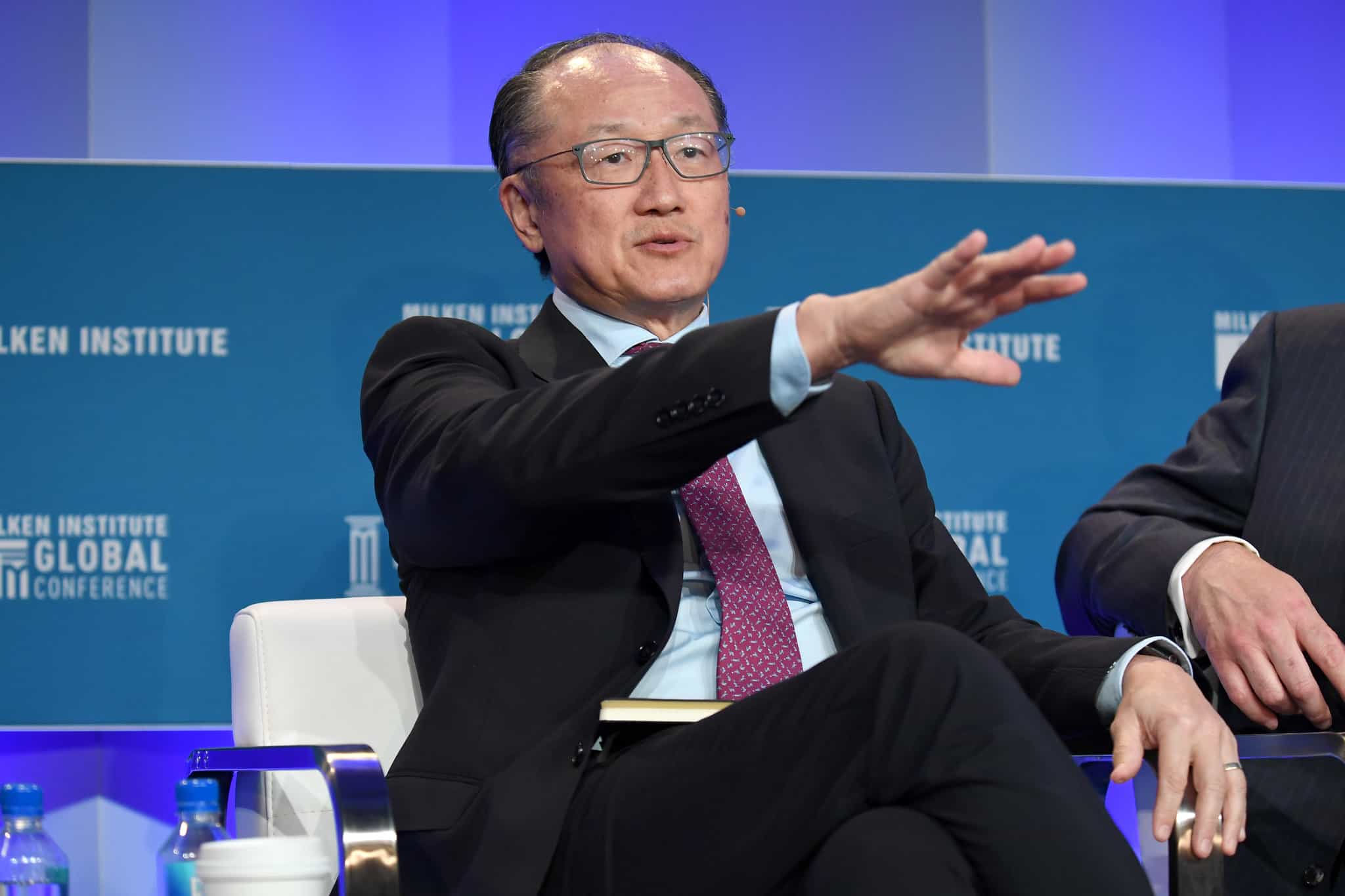

There is an urgent need for infrastructure investment that cannot wait, according to Jim Yong Kim, former president of the World Bank and now partner and vice president of Global Infrastructure Partners.
In emerging markets around $2.7 trillion a year is needed in infrastructure investment, he told the Milken Global Conference in April.
“People say money is not the issue but now I’m in this new role I see it is as I have to convince people they can get the return,” he said. “There is a lot of interest in emerging markets infrastructure but there is a huge mismatch in the understanding of the countries and the way managers and owners are thinking. I think we can fill the gap.”
He said that investors needed to consider the bigger picture, for instance the lack of development in Africa will have a huge impact on European life.
“People in Africa will need jobs and they can see on their iphones how the rest of the world lives. I think pension funds in Europe would be interested in investing in infrastructure in Africa because it is meeting such a critical need for the long term.”
Kim said the problem of instability in Africa and problems of climate change, which are not way into the future but happening now, meant urgency was required for investment in infrastructure.
“We can’t wait, we have to invest now,” he said.
Hiro Mizuno, chief investment officer of the $1.6 trillion Government Pension Investment Fund of Japan, said the sustainable development goals were difficult to invest in, but the risk of not doing so is too high.
“If we fail to meet the SDGs by 2030 then what type of risks will our portfolio be facing?”
Mizuno said infrastructure should be at the top of the list of the finance ministers meeting at the G20, which Japan is hosting in June.
Angela Rodell, chief executive of Alaska Permanent Fund questioned how to get creative and find mechanisms to invest in.
“We need to figure out how to capture the economic value in the return equation and add it into the bottom line of whether to invest in things that are vitally important,” she said pointing by way of example to the third tunnel between New York City and New Jersey.
“It is too expensive, but the cost of not doing it is too high,” she said.
The argument that the risk of not doing something is too high was a compelling argument at the World Bank, Kim said, but for investors it is different.
“One of the reasons I’m doing what I’m doing now is we just have to put the deals together,” he said. “There’s no point saying there’s a need without having the real deals to invest in.”
Different investors have different purposes for investing in infrastructure. For instance for GPIF, which started investing in infrastructure about five years ago, the decision was driven by the need to diversify fixed income given the low interest environment.
“The need came as we were in a low interest rate environment and can’t rely on fixed income. Core infrastructure has a stable cash flow, and we were attracted to it as a good alternative to the fixed income portfolio,” Mizuno said.
“We think infrastructure is very important and we are trying to expand our approach to invest in emerging markets and greenfield projects.”
But the problem of investing in emerging markets according to Mizuno was there was no comparability.
“We don’t know what we expect in returns because all projects are so different,” he said. “Investors can’t get their head around risk/return tradeoff in emerging markets because there is nothing to compare it to. None of our peers have the answer to what return we require to make an infrastructure investment in emerging markets.”
Mizuno said asset allocators always compare investments so lack of comparability is a big challenge








Leave a Comment
You must be logged in to post a comment.
Login