
Canadian pensions look east to Asia

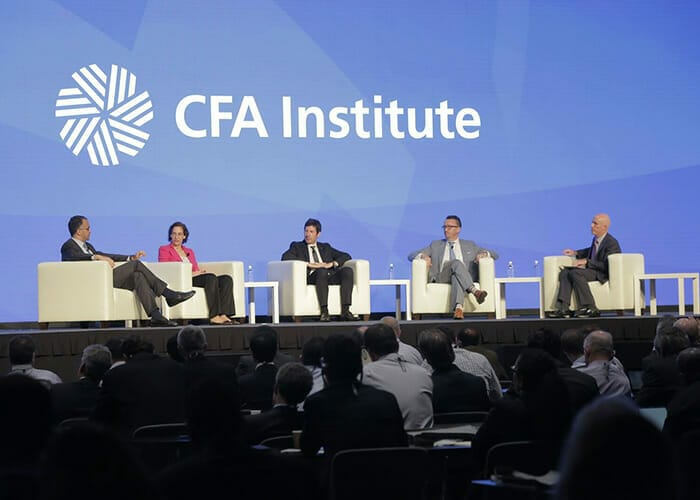
Canada Pension Plan Investment Board and Caisse de dépôt et placement du Québec are both bullish on Asia, allocating investments and people on the ground, delegates at the CFA Institute Annual Conference heard.

The C$350 billion ($272 billion) CPPIB has about $8 billion invested in the region, including $2 billion onshore in China.

“We see China onshore as a deep market with quality stocks and getting better,” CPPIB senior portfolio manager, external portfolio management, Amy Flikerski, said. “There is a lot to like in Chinese equities. We are very long-term constructive on the opportunities for managers, keeping in mind stock selection can have a high dispersion.”

Similarly, the C$300 billion ($233 billion) Caisse, which first invested in Asian hedge funds in 1999, has a growing presence in Asia, with offices in India, China, Singapore, Australia and Hong Kong.

Mario Therrien, senior vice-president, external portfolio management, public markets at Caisse said there were many opportunities in Asia across liquid and illiquid asset classes.

“Alpha is not only to be found at the corner of 52nd and Madison Ave,” Therrien said. “There are many opportunities in this region. More and more, I feel like we will wake up one day and the talk will be more about what the central bank of China says and not the Fed. This is important and can affect how credit is priced and traded. This is an area where we spend a lot of time, thinking about how to trade macro in this region.”

Sponsored Content

Caisse invests in private equity, infrastructure, real estate and equities. Within equities, Therrien said, it has been easier to find managers with stock picking skill on the long-only side.

“We seek managers with more of a neutrality on long/short,” he explained. “The question is how you capture this once-in-a-lifetime opportunity for stockpicking without taking too much risk.”

In choosing managers, Flikerski warned that size can sometimes be an enemy of future returns.

“We are very sensitive to manager growth, especially capacity-constrained strategies,” she said. “We tackle this by having a core portfolio and emerging managers. We invest in large, established managers, where there’s scalability, and then also in emerging managers.”

With a hedge fund, Caisse starts investing with the premise it will allocate $100 million, with the idea that amount can grow to $175 million.

“We can be up to 50 per cent of a manager’s assets,” Therrien said. “We are more comfortable with it being concentrated if it is in a managed account.”

Therrien works in Caisse’s strategic relationship group, a team he is building.

“The idea behind this new little team is to make sure our relationships are optimised,” he said. “We want to make sure we address some of the opportunities, especially those that fall through the cracks. Traditionally, the structure of pension funds is siloed and we miss opportunities. The aim of this group is to get closer to these relationships, which can be with public companies, sovereign wealth funds, family offices or private companies. It’s about collaboration to source opportunities in a more efficient way.”

For investing in hedge funds in the region, both investors emphasised the importance of transparency and using separately managed accounts (SMAs).

“We want our team to be better investors and better understand the strategies we invest in, so transparency is very important to us,” Therrien said.

Caisse successfully re-negotiated fees with two-thirds of its managers last year, including moving to a 1-or-30 model or a variation thereof.

“The alpha share is very important, especially in a low-return environment,” he said. “We want the proportion we keep to be closer to 70 per cent.”

Flikerski said the baseline transparency of hedge funds had improved since the global financial crisis. CPPIB invests via commingled accounts and SMAs.

In addition to its outlook on China, Flikerski said CPPIB was also positive on India and had a Mumbai office. The opportunities in India were mostly in real estate but there was some private credit, she said.

Leave a Comment

SWFs play important role in Arctic

SWFs play important role in Arctic

Sovereign wealth funds can play an important role in investing sustainably in the Arctic region, and warding off the impact of a looming natural disaster, according to the IMF's Udaibir Das.

Sort content by

Winter is coming

Investors are preparing for the future and the inevitability that 'winter is coming' by reducing exposure to risky assets, the delegates at the RFK Human Rights Compass conference heard.

Investors’ role in disability inclusion

Four US state treasurers are among 11 investors to sign a joint investor statement on corporate disability inclusion, and are urging others to get behind the cause. The investors, worth $1 trillion, believe companies must to do more to include people with disabilities in the workforce and are urging their portfolio companies to adopt best practice.

Investors buoyed by ESG frameworks

The evolution of frameworks, and taxonomies, for investing in ESG has given investors confidence in investing in the decades to come, delegates at the Robert F Kennedy Human Rights Compass conference heard.

Impact investing is solving un-met needs

Impact investors need to start with a problem they are trying to solve, not an opportunity set, according to Tim Crockford, head of impact investing at Hermes Investment Management. Speaking at the RFK Human Rights Compass conference, he said impact investing is about finding the companies that are solving an un-met need through the products and services they are selling.

The future of engagement

Ben Caldecott from The Oxford Sustainable Finance Programme at the University of Oxford explains how emerging technologies, changing client preferences, new regulatory landscapes, and evolving economic geographies create new opportunities for more effective engagement and forms of active ownership.

Engagement needs more resources

Resources in the investment value chain have to shift away from financial modelling and trading towards stewardship and engagement according to Luba Nikulina, global head of manager research at Willis Towers Watson, speaking at the 8th Sustainable Finance Forum run by Oxford University.