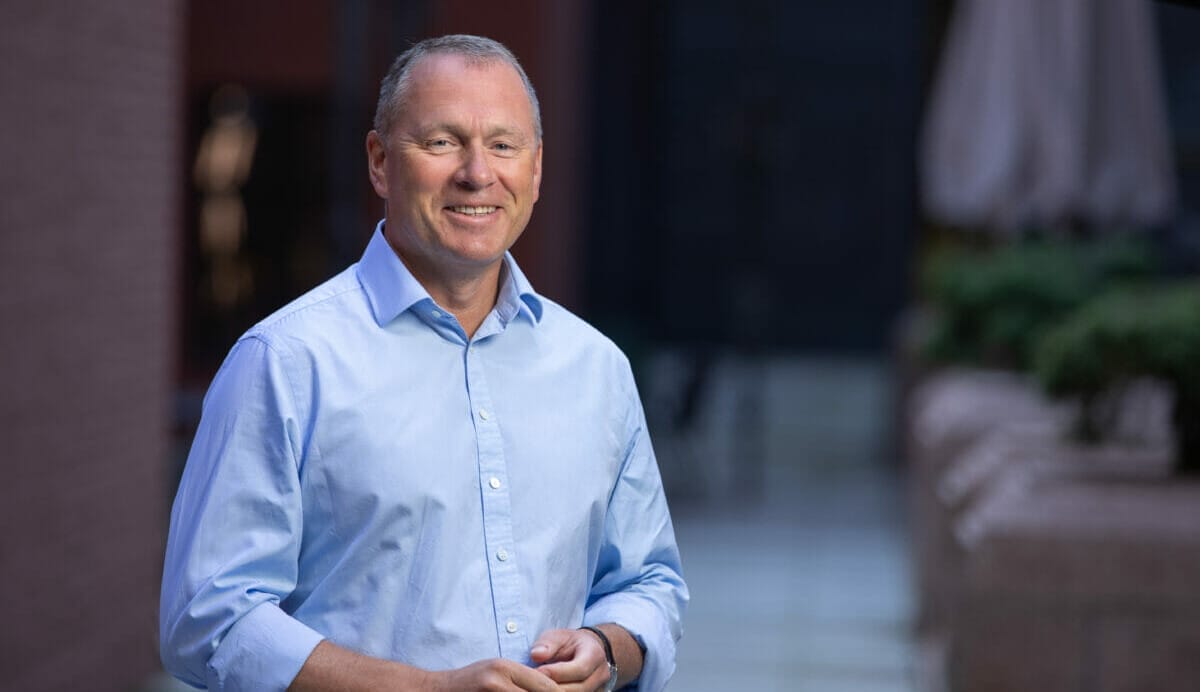

Why Norges Bank leads the world in transparency

Nicolai Tangen

When Top1000funds.com interviewed Nicolai Tangen i
Continue Reading

A Top1000funds.com subscription unlocks the full article

Join the global institutional investment platform read by the world's largest asset owners, fund managers and consultants.

New here

Create an account

Complimentary to register. We'll verify your details and grant access to the archive, our newsletters and the Asset Owner Directory (enhanced features coming soon).
Register now
Already a member

Sign in

Already activated your account? Sign in to continue reading and access your saved articles, preferences and member-only content.

One response to “Why Norges Bank leads the world in transparency”

  1. Mike Clark

    Well yes, they are very transparent. Good.

    But I am afraid they do not always benefit from the advice their transparency permits.

    Please have a look at those very modest return reductions in thier climate scenario work. Climate scientists do not know whether to laugh or cry.

    So far Norges have been deeply resistent to any engagement (even pro bono!) on this issue. Sad.

Leave a Comment

CalPERS’ private markets chief: TPA won’t disrupt PE commitment pacing

CalPERS’ private markets chief: TPA won’t disrupt PE commitment pacing

Anton Orlich, CalPERS' newly minted deputy chief investment officer for private markets, says the fund’s July adoption of the total portfolio approach will not impede the private equity strategy launched in 2022, arguing that short-term relative-value calls made under TPA would be expressed in liquid markets and not by oscillating commitments to private markets. In an interview with Top1000funds.com, Orlich unpacks the asset class’s four-year transformation.

Sort content by

How to build portfolios if the recent ‘new normal’ isn’t normal at all

The key to constructing investment portfolios with resilience to rapid and unexpected changes is to remain humble, interrogate the data, and not be fooled into thinking the future can be predicted perfectly, according to head of multi-asset strategy APAC for Wellington, Nick Samouilhan.

Anchoring to traditional portfolios is the world’s biggest investment risk

Bridgewater has a house view that the world is moving into a period of macro-volatility and global conflict. But despite the myriad geopolitical and environmental risks facing investors investors’ unwillingness to break with the model portfolios of the past presents the greatest threat to institutional portfolios.  

A granular view of emerging markets will serve investors better

A market-weighted index isn’t necessarily the best indicator of where growth in Asia will come from in future. The Monetary Authority of Singapore's Bernard Wee told the Fiduciary Investors Symposium that investors must take a much closer look at the region and understand the nuances of trade and investment.

Investors urged to allocate more and get boots on the ground in Asia

The economic fundamentals of Asia dictate that asset owners should lift their allocations to the region, and a panel at the Fiduciary Investors Symposium - including chief of APG in the region - heard the best way to exploit the emerging opportunities is to have investment professionals on the ground.

China experts split on the nation’s financial policymaking capability 

The strength of China’s national leadership remains a central topic for avid China watchers around the world. As the nation heads into a structural reshuffle of its economy, investors, researchers and political scientists have different views on Chinese policymakers’ ability to work with the financial market from this point on.

Asian investors reveal home bias challenges

For investors based in Asia, a home bias can throw up some challenges that affect investors homed in other regions much less. Three Asia-based investors - Temasek, Brunei Investment Agency and Khazanah - outlined to the Fiduciary Investors Symposium in Singapore last week how they face into those challenges.

Previous



