
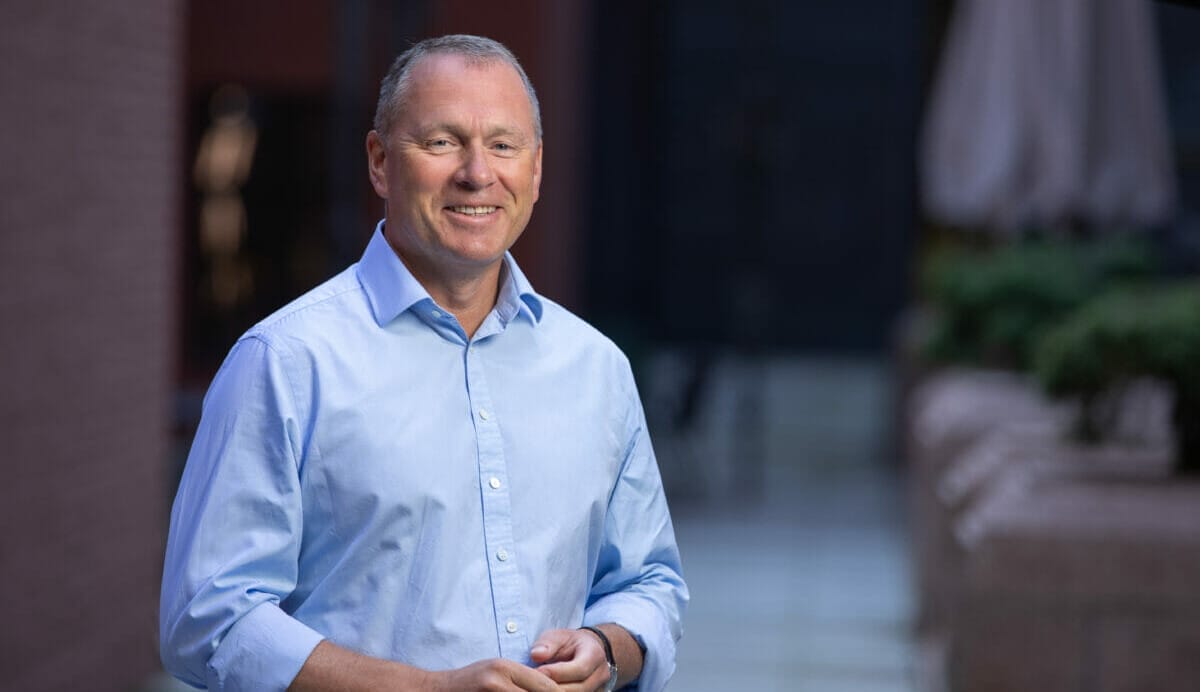

When Top1000funds.com interviewed Nicolai Tangen in 2023 about being awarded the most transparent fund in the Global Pension Transparency Benchmark, it was clearly a priority but not yet a completed project for the Norges Bank CEO. In the year since then, the fund has taken the idea of transparency and run with it, making huge gains through a concerted effort that among other things required advocating the government to make governance changes.
Norges Bank has taken the top spot again in the Global Pension Transparency Benchmark, marking two consecutive years of outshining a cohort of 75 funds globally. But perhaps even more extraordinary than the consistency and continuous improvement, this year the fund was awarded a perfect score of 100, up from 89 in 2023.
And if that wasn’t enough, to create the change needed to reach that summit, the necessary improvements included inviting the Norwegian government to upgrade its governance disclosures.
“We got great cooperation from the government and are taking transparency to a new level,” Tangen said in an interview with Top1000funds.com from New York.
“We looked at where we could improve from last year and saw governance was one key area. It wasn’t possible to improve the score without changing the governance so we put in place systems and reports that didn’t exist before.
“We explained to the government where we needed to improve and what was necessary to make those improvements, and we asked them for help. And they really stepped up and we got all the assistance we needed.”
The change includes new documents such as competence mapping of the board, which had not been a public document in the past. In the process, this raised questions over whether the Ministry of Finance should insist all state entities have the same self-assessment.
“We got great cooperation from the board and ministry,” Tangen says. “It’s difficult to do because there is no black and white answer in that survey when you assess your own competencies.”
Transparency has been a strategic initiative for Norges Bank, which manages the Government Pension Fund Global, since Tangen took the helm in September 2020.
It’s not just because being transparent is the right thing to do, nor that the Norwegian sovereign wealth fund is a ‘fund for the people’ and stakeholder management is crucial in the context of Scandinavian values. It’s because transparency builds trust and a platform to be more impactful in generating change.
“It is important for us to build trust,” Tangen said.
“I think transparency and openness is an important Scandinavian value and we see it in the public sector generally.
“This is a very, very important survey for us because transparency is at the cornerstone of the mandate, and the importance of stakeholders and others having trust in the fund is totally key.”
Transparency in action
Tangen said Norges Bank is in a state of constant evolution when it comes to transparency.
“We try to develop transparency in everything we do,” he said, pointing to an exponential increase in the number of people who can speak on behalf of the fund externally from five, four years ago, to 130 now.
“We are showcasing our great colleagues. One of the ways to increase trust is to let the external world see the specialists we have and the real experts we have. It is comforting for people, and builds trust,” he said.
“In my mind if there isn’t a reason for having a secret then you should share it. There are so many positives to being open and transparent.”
Unlike some sovereign wealth funds that don’t disclosure their AUM, Norges Bank publishes its AUM online, and updates the value 13 times a second. It’s also more open on its views and has expectations documents regarding thematics, as well as a podcast, In Good Company, where Tangen interviews CEOs of portfolio companies.
For Norges Bank there is also a connection between transparency and impact in the way it uses its holdings to influence portfolio companies.
The fund’s giant equity portfolio, which makes up about 69 per cent of assets, makes it the largest single owner of the world’s stocks, representing about 1 per cent of all listed equities globally. It votes in 12,000 annual general meetings across 63 countries every year, and five days before each AGM it reveals how it is going to vote, giving other institutional investors and the companies themselves full transparency on their voting position.
In addition, it lists every investment holding on its website by name, which is updated twice a year, demonstrating full transparency in its investments.
Even so, there is a balancing act between transparency and disclosing market-sensitive information, Tangen said.
“We publish holdings twice a year, no other firm discloses holdings once let alone twice a year. More than that and you will disclose how you trade and act in the market,” he said.
The benefits of transparency
As a leader, Tangen believes transparency is not just important for external stakeholder communication and trust, it has many benefits internally, and the leadership group’s meeting notes are shared across the organisation so everybody in the firm can see what is discussed.
And as investment processes and decision making evolves, being transparent can be additive to the effective use of new tools and new technology such as AI.
“If we can de-classify documents inhouse freely and make them available in house, that is a way to build cooperation. The uses of AI are also easier when you are more open,” Tangen said.
He’s not afraid of the markets’ increasing complexity, with technology, geopolitics and climate complexity moving exponentially.
“The world has never been more complex, it’s fascinating and fun. When I wake up in the morning I can’t wait to get out of bed. It’s so incredibly fascinating,” he said, in a revelation of his enthusiasm for his job.
Transparency is a clear indicator of Tangen’s leadership style and he makes no secret of the fact that Norges has an ambition to be the world’s best fund. It’s rumoured that in year one of the GPTB when CPP Investments ranked as the most transparent fund, Tangen said it was OK to be beaten by Canada in ice hockey but not in transparency.
When Norges reached top spot for the first time last year, Tangen told top1000funds.com that it wanted to be “the world’s leading fund, full stop”.
“That includes everything from performance, reputation, our people and leading on ESG,” said.
To be the best in the world the leadership team is focused and deliberate in how it recruits, educates and retains people (it recently hired sports psychologists); how it embraces technology, especially the use of AI; its operational robustness and how it weathers volatility; communicating in a clear and consistent voice; and performance.
The GPTB, a collaboration between Top1000funds.com and CEM Benchmarking, ranks funds on their transparency of disclosures around cost, governance, performance and responsible investment. Norges landed a perfect score in each category in 2024, up from 91, 89, 95 and 94 respectively in 2023.
“What is interesting about the survey [2024], is how it is have lifted all participants,” Tangen said. “It shows the benchmark is doing a really good job and is really lifting transparency in the whole industry.”







Leave a Comment
You must be logged in to post a comment.
Login