Transition risks of net zero

The transition to net zero is well underway, but it won’t be a smooth path and getting there will pose significant risks for investors. These are the conclusions of a new report by Pictet Asset Management and the Institute of International Finance. It will require higher levels of borrowing by the companies they invest in; the risk of transition-related “greenflation”, along with increases in unemployment; and the possibility of creating asset-price bubbles as a vast amount of capital chases a relatively constrained supply of assets.

To avoid these pitfalls and others, investors must take a measured approach to assessing opportunities as they arise, including assessing the extent to which markets have already priced-in the “greenness” of companies, and what implications that has for alpha generation. And that requires deep research and confidence in available data – which in some cases continues to be patchy.

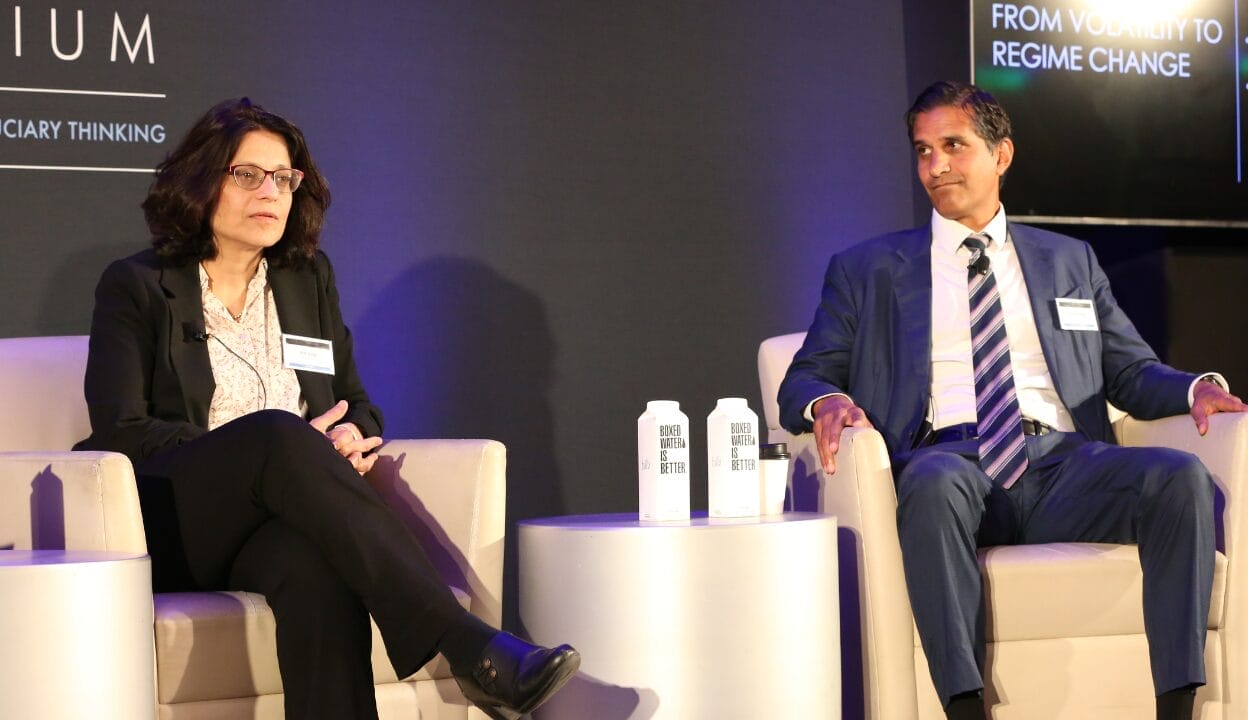
Pictet Asset Management senior investment manager Yuko Takano, managing investment director, sustainable investments at CalPERS Peter Cashion and Institute of International Finance director Emre Tiftik discuss the opportunities and risks investors need to understand to maximise returns as the energy transition progresses.

In conversation with Top1000funds.com editor Amanda White, they discuss how it’s possible to generate outperformance by investing in climate solutions; and how investors should think about the associated risk and alpha opportunities.

Sponsored Content

Leave a Comment

CPP outlines risk playbook for a new world order

CPP outlines risk playbook for a new world order

The $570 billion CPP Investments is strengthening efforts around scenario analysis as volatile fiscal, geopolitical and economic risk factors plunge the macro environment into a state of flux, with the fund naming four scenarios for the future world order within its risk management framework.

Sort content by

University of California: Equity boost, and fossil fuels back on the table

In a wide ranging investment committee meeting, University of California CIO Jagdeep Singh Bachher argues that rationale for increasing the equity allocation and warns that although excluding fossil fuels currently works 'ok' it may come up for review.

Austria’s VBV strives to give young savers more risk exposure

Günther Schiendl, chair of Austria's VBV Pension Fund board explains how he's enabling younger savers to access more equity investment. However, despite long-held plans to develop the allocation to private equity, US tariff and trade policy has halted the strategy for now.

Maryland’s Andrew Palmer reflects on 40 years in investment industry

After a decade in the top investment job at the $69 billion Maryland State Retirement Fund, Andrew Palmer will retire at the end of June. He speaks to Amanda White about his achievements and reflections on an industry where he has worked for 40 years.

UK fixed income investor PIC ponders the long term risk of government debt

Rob Groves, CIO of the UK's Pension Insurance Corporation, describes a cautious, heavily regulated strategy focused on fixed income. PIC is on the look out for undervalued corporate credit opportunities appearing in the current market, but few opportunities have appeared yet.

Arizona navigates spike in capital calls in uncertain private equity market

The recent market volatility has put the brakes on any pickup in private equity distributions LPs had hoped for in 2025. A board meeting of Arizona State Retirement System heard that IPO activity remains muted and the majority of exits are concentrated in sponsor-to-sponsor deals and strategic sales.

GIC, Temasek eye trillions of growth in climate adaptation market

Singapore’s two largest asset owners, GIC and Temasek, see attractive opportunities in climate adaptation solutions – a relatively underfunded area compared to decarbonisation. The former has already made selective adaptation investments and said the opportunity set across public and private debt and equity could increase to $9 trillion by 2050.

Previous



