Transition risks of net zero

The transition to net zero is well underway, but it won’t be a smooth path and getting there will pose significant risks for investors. These are the conclusions of a new report by Pictet Asset Management and the Institute of International Finance. It will require higher levels of borrowing by the companies they invest in; the risk of transition-related “greenflation”, along with increases in unemployment; and the possibility of creating asset-price bubbles as a vast amount of capital chases a relatively constrained supply of assets.

To avoid these pitfalls and others, investors must take a measured approach to assessing opportunities as they arise, including assessing the extent to which markets have already priced-in the “greenness” of companies, and what implications that has for alpha generation. And that requires deep research and confidence in available data – which in some cases continues to be patchy.

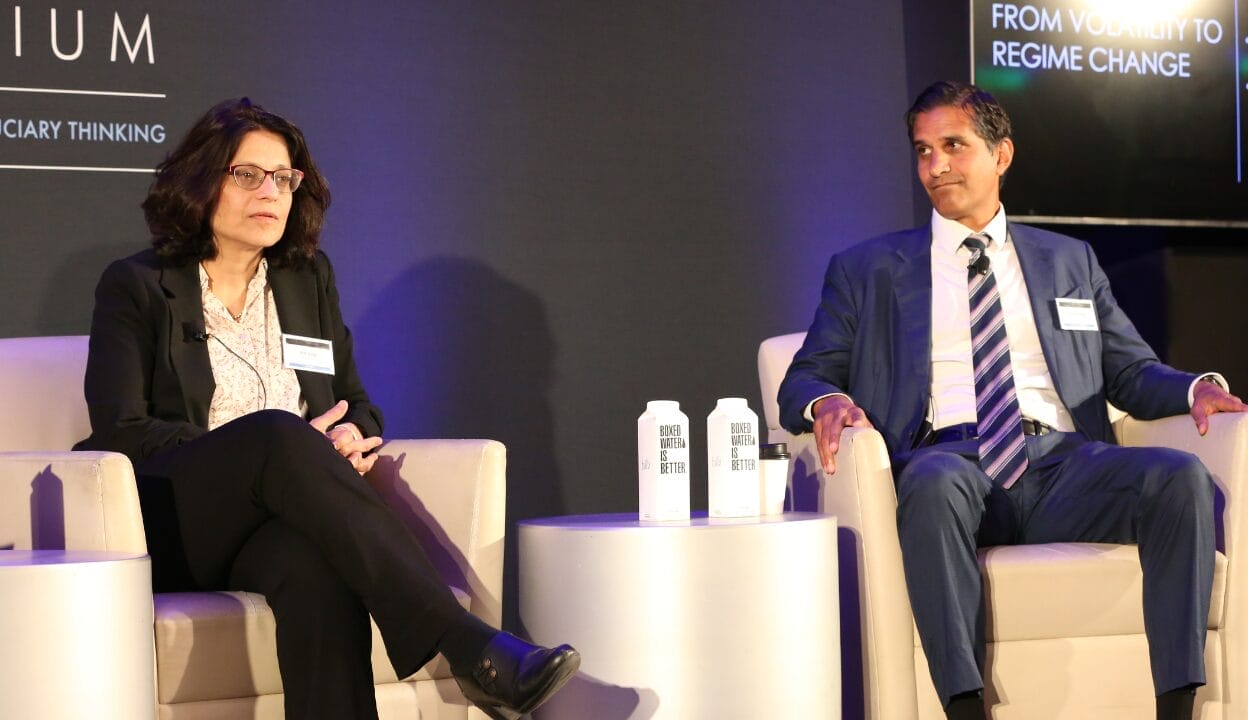
Pictet Asset Management senior investment manager Yuko Takano, managing investment director, sustainable investments at CalPERS Peter Cashion and Institute of International Finance director Emre Tiftik discuss the opportunities and risks investors need to understand to maximise returns as the energy transition progresses.

In conversation with Top1000funds.com editor Amanda White, they discuss how it’s possible to generate outperformance by investing in climate solutions; and how investors should think about the associated risk and alpha opportunities.

Sponsored Content

Leave a Comment

CPP outlines risk playbook for a new world order

CPP outlines risk playbook for a new world order

The $570 billion CPP Investments is strengthening efforts around scenario analysis as volatile fiscal, geopolitical and economic risk factors plunge the macro environment into a state of flux, with the fund naming four scenarios for the future world order within its risk management framework.

Sort content by

Finland’s Ilmarinen prepares to increase risk ahead of new pension rules

Ilmarinen, Finland’s €63 billion ($73 billion) pension insurer, is laying the ground to significantly increase its equity allocation ahead of new pension rules in the country. CIO Mikko Mursula is preparing for a sharp increase in volatility of annual returns and the enhanced role and importance of diversifying the portfolio.

Temasek chases core-plus infra, creates private credit offshoot

The $338 billion Singapore state investor Temasek is contemplating allocating more capital to core-plus infrastructure projects, especially those related to data centres, energy transition and ageing facilities. The fund also spun out a standalone private credit platform called Aranda from its in-house credit team last fiscal year. 

North Carolina TSERS: Taxpayers deserve better in governance overhaul too

Ditching the sole trustee for a five-person board will help bring North Carolina’s pension funds out of enduringly weak performance by encouraging risk taking, says treasurer Brad Briner, whose experience includes managing Mike Bloomberg’s money. Sarah Rundell spoke to the treasurer about the new governance and investment overhaul.

GPIF pins active equity overhaul on ‘scientific’ manager selection

A quest for manager and fund strategy diversification has led the world's largest pension fund, Japan’s Government Pension Investment Fund, to reach a decade-high allocation to active global stocks. Its active equity portfolio now consists of 103 funds, increasing fivefold compared to 2020 when it only invested in 20.

Japan University Fund expands active allocation guided by risk factors

The $77 billion Japan University Fund is stepping up active strategies and introducing country-specific passive allocations as the young endowment, established only in 2022, builds out the policy portfolio. Co-CIO and the head of global investment department Naoya Sugimoto speaks about JUF's vision and manager expectations.

UPP: Canadian investor looks outside US markets

Canada's University Pension Plan is eyeing new risks and opportunities triggered by policies from the Trump administration, like additional taxes for US investments and a surge of public spending on defence and infrastructure in Germany. It is also fine-tuning its roster of active managers.

Previous



