Transition risks of net zero

The transition to net zero is well underway, but it won’t be a smooth path and getting there will pose significant risks for investors. These are the conclusions of a new report by Pictet Asset Management and the Institute of International Finance. It will require higher levels of borrowing by the companies they invest in; the risk of transition-related “greenflation”, along with increases in unemployment; and the possibility of creating asset-price bubbles as a vast amount of capital chases a relatively constrained supply of assets.

To avoid these pitfalls and others, investors must take a measured approach to assessing opportunities as they arise, including assessing the extent to which markets have already priced-in the “greenness” of companies, and what implications that has for alpha generation. And that requires deep research and confidence in available data – which in some cases continues to be patchy.

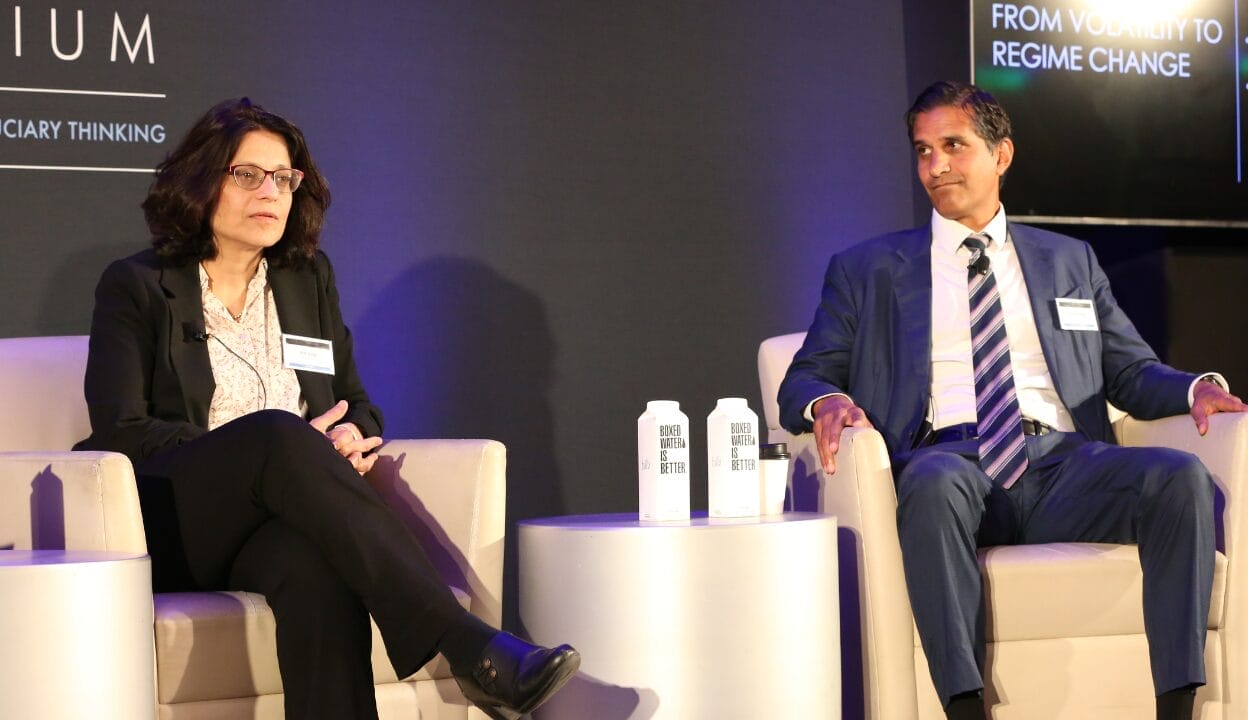
Pictet Asset Management senior investment manager Yuko Takano, managing investment director, sustainable investments at CalPERS Peter Cashion and Institute of International Finance director Emre Tiftik discuss the opportunities and risks investors need to understand to maximise returns as the energy transition progresses.

In conversation with Top1000funds.com editor Amanda White, they discuss how it’s possible to generate outperformance by investing in climate solutions; and how investors should think about the associated risk and alpha opportunities.

Sponsored Content

Leave a Comment

CPP outlines risk playbook for a new world order

CPP outlines risk playbook for a new world order

The $570 billion CPP Investments is strengthening efforts around scenario analysis as volatile fiscal, geopolitical and economic risk factors plunge the macro environment into a state of flux, with the fund naming four scenarios for the future world order within its risk management framework.

Sort content by

APG private markets CIO articulates the value of being based in Asia

Dutch investor APG is showing its deep commitment to Asia by installing its chief investment officer of private markets in the Hong Kong office, a prime location from which to proactively source opportunities. The fund outlines its plan to increase allocation in infrastructure and private equity while integrating impact themes.

Risk depends on your mental model of reality

A lot of words have been written to explore what risk is, but Tim Hodgson of the Thinking Ahead Institute makes the case that risk looks different to different models of reality. This column is the first of a six-part series exploring risk management for investment systems, or ‘risk 2.0’.

Solving for retirement: All paths lead to more private savings

The most significant change to the superannuation and pension system is not the internalisation of asset management, or the shift to passive strategies, or the rise of private markets but the climbing support ratio globally, according to Michael Davis, head of global retirement strategy at T. Rowe Price.

CPP Investments, NBIM reflect on lessons from a 5-year transparency journey

The Global Pension Transparency Benchmark has been a driving force in improved transparency of disclosures and reporting among global asset owners. As the project comes to its close after five years, two leading funds reflect on why transparency has been a clear focus for their organisations. 

Global pension funds lift transparency, but cost reporting still lags

Global asset owners have made significant advancements in the transparency of disclosures with the industry, showing unprecedented alignment with best practices in performance, responsible investing and governance disclosures. However, cost reporting continues to be a pain point.

Norway’s GPFG keeps most transparent pension fund title with perfect score

Norway’s $2 trillion Government Pension Fund Global has retained its title as the world’s most transparent fund, scoring 100 out of 100 for the second year in a row, according to the results of the 2025 Global Pension Transparency Benchmark. It was closely followed by CPP Investments and CDPQ.

Previous



