Transition risks of net zero

The transition to net zero is well underway, but it won’t be a smooth path and getting there will pose significant risks for investors. These are the conclusions of a new report by Pictet Asset Management and the Institute of International Finance. It will require higher levels of borrowing by the companies they invest in; the risk of transition-related “greenflation”, along with increases in unemployment; and the possibility of creating asset-price bubbles as a vast amount of capital chases a relatively constrained supply of assets.

To avoid these pitfalls and others, investors must take a measured approach to assessing opportunities as they arise, including assessing the extent to which markets have already priced-in the “greenness” of companies, and what implications that has for alpha generation. And that requires deep research and confidence in available data – which in some cases continues to be patchy.

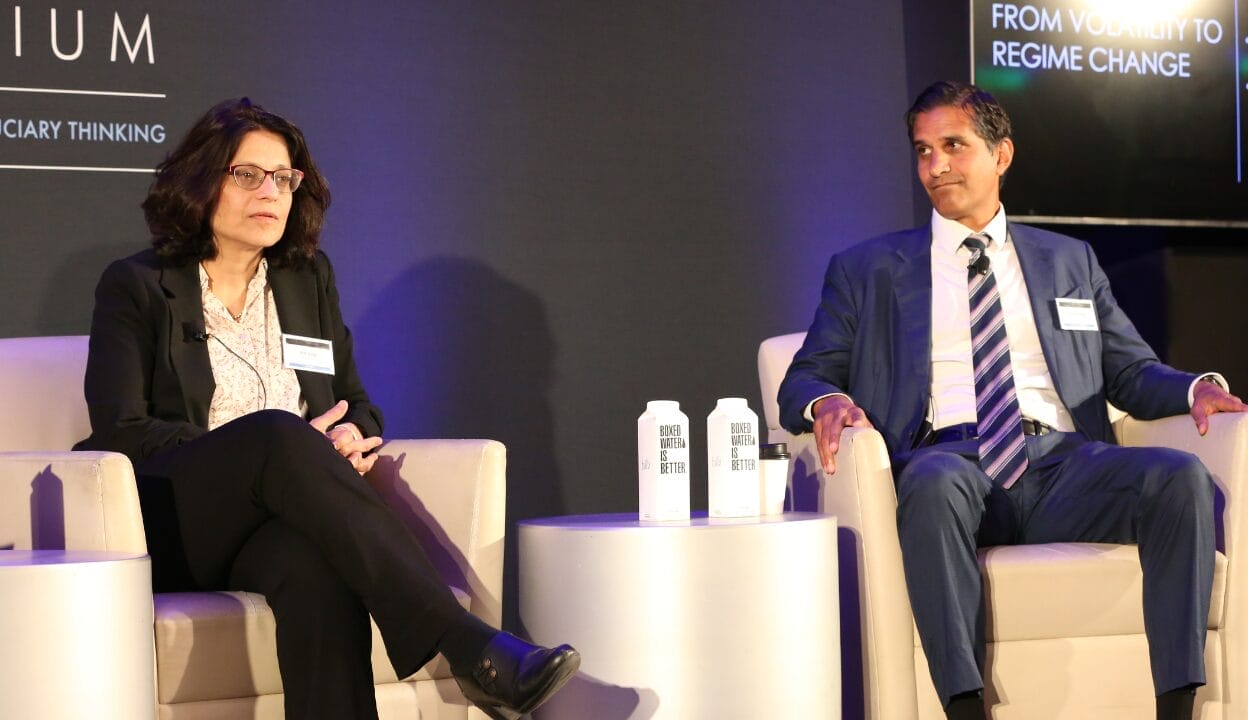
Pictet Asset Management senior investment manager Yuko Takano, managing investment director, sustainable investments at CalPERS Peter Cashion and Institute of International Finance director Emre Tiftik discuss the opportunities and risks investors need to understand to maximise returns as the energy transition progresses.

In conversation with Top1000funds.com editor Amanda White, they discuss how it’s possible to generate outperformance by investing in climate solutions; and how investors should think about the associated risk and alpha opportunities.

Sponsored Content

Leave a Comment

CPP outlines risk playbook for a new world order

CPP outlines risk playbook for a new world order

The $570 billion CPP Investments is strengthening efforts around scenario analysis as volatile fiscal, geopolitical and economic risk factors plunge the macro environment into a state of flux, with the fund naming four scenarios for the future world order within its risk management framework.

Sort content by

Investors face ‘economic paradigm vacuum’ post-neoliberalism 

The global economy is running in a “paradigm vacuum” as the classical theories of marginal change, equilibrium and rational markets are breaking down. Amid the void, University of Oxford professor Eric Beinhocker said investors must seek new economic tools that reflect how the world actually works.  

Opportunities and pitfalls for LPs using AI in private markets

Asset owners have a wide selection of artificial intelligence tools that product providers tout as enhancements to their unlisted investment process, but leading private markets academic Ludovic Phalippou said the reality is not that simple. Not only can AI make mistakes, it can also be tricked.

How investors are balancing the risks of investing in defence

As European countries increase defence spending, allocators are weighing up the risk and opportunity of allocating more to the sector. For some, investing in defence sits relatively comfortably with stakeholders but for others, investing "in things that kill people" remains a highly controversial conversation. 

Timothy Garton Ash: Reflections on the future of Europe

Celebrated academic Timothy Garton Ash reflects on the vital changes that Europe needs to achieve to thrive in its next evolution: success in Ukraine, its own defence industry, implementation of Draghi's recommendations, and a resolution to the cultural and social tensions gripping the continent – to name a few.

IMCO, USS and NBIM mull the risks of non-US dominant portfolios

The US has driven portfolio returns for decades, but investors are increasingly concerned that US-dominant portfolios are jeopardising precious diversification. USS, NBIM and IMCO share strategies to foster diversification including different currency exposures and investing in emerging markets.

The role of insurers helping create sustainable pension systems

Ensuring a sustainable income in retirement is an enduringly knotty problem and one that continues to preoccupy countries' pension systems and their asset manager partners. NEST, Sweden's Fund Selection Agency and US asset manager Apollo reflect on the future of retirement.

Previous



