Transition risks of net zero

The transition to net zero is well underway, but it won’t be a smooth path and getting there will pose significant risks for investors. These are the conclusions of a new report by Pictet Asset Management and the Institute of International Finance. It will require higher levels of borrowing by the companies they invest in; the risk of transition-related “greenflation”, along with increases in unemployment; and the possibility of creating asset-price bubbles as a vast amount of capital chases a relatively constrained supply of assets.

To avoid these pitfalls and others, investors must take a measured approach to assessing opportunities as they arise, including assessing the extent to which markets have already priced-in the “greenness” of companies, and what implications that has for alpha generation. And that requires deep research and confidence in available data – which in some cases continues to be patchy.

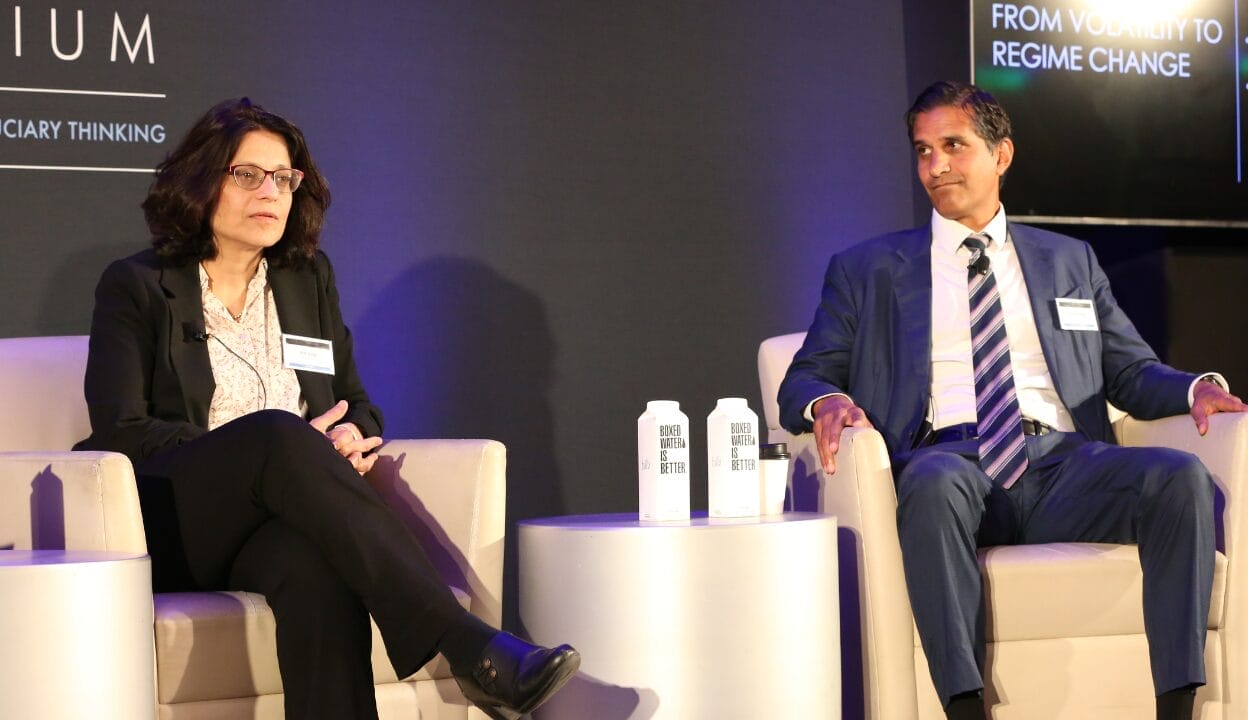
Pictet Asset Management senior investment manager Yuko Takano, managing investment director, sustainable investments at CalPERS Peter Cashion and Institute of International Finance director Emre Tiftik discuss the opportunities and risks investors need to understand to maximise returns as the energy transition progresses.

In conversation with Top1000funds.com editor Amanda White, they discuss how it’s possible to generate outperformance by investing in climate solutions; and how investors should think about the associated risk and alpha opportunities.

Sponsored Content

Leave a Comment

CPP outlines risk playbook for a new world order

CPP outlines risk playbook for a new world order

The $570 billion CPP Investments is strengthening efforts around scenario analysis as volatile fiscal, geopolitical and economic risk factors plunge the macro environment into a state of flux, with the fund naming four scenarios for the future world order within its risk management framework.

Sort content by

FIS 2020: Deglobalisation and politics

In the first of four articles looking ahead to FIS 2020, we highlight how the event will focus on de-globalisation and geopolitical stress, particularly the deteriorating relationship between China and the US. Elsewhere, FIS delegates will hear how asset owners are positioning their portfolios in today's challenging environment.

Kotkin’s mega trends: Deadends & despair

Political regimes around the world are stuck in a series of dead-ends and despair. Most importantly, the China-US relationship has hit a brick wall as their fundamentally different values and interests clash. Deterrents and robust policy is the only way forward, says Stephen Kotkin, professor in history and international affairs, Princeton University.

Bridgewater: $41 trillion hole in income

Bridgewater Associates, the world’s largest hedge fund, has identified a $27 trillion hole in global corporate income from the outbreak of the pandemic, that will be filled "unevenly".

MMT: unemployment a policy choice

Unemployment is a policy choice, according to Professor Bill Mitchell, the father of Modern Monetary Theory (MMT). He says there is no reason that unemployment should be at the current levels.

Finance industry behind no tobacco

The World Health Organisation's director general, Tedros Adhanom Ghebreyesus has called the Tobacco-Free Finance Pledge the missing piece in the fight against tobacco. Credit Agricole and Amundi Asset Management have become the latest signatories to the pledge, in what is a timely decision ahead of World No Tobacco Day on Sunday.

What is the virus world order?

Professor Stephen Kotkin stops to consider the rollercoaster ride in politics, leadership and policy making that we have seen globally over the past few months. Who will win? What does the future look like? And how will the global economy restructure for survival?

Previous



